Home · Where to Stay
The quarters, and who each one suits
- Saint-Pierre and the old townFirst visits, walking everywhere, restaurants on the doorstepNarrow streets between the Bourse and the cathedral, full of bistros and small hotels; lively late
- The Golden Triangle and the Grand ThéâtreComfort, shopping and the most elegant streetsThe eighteenth-century grid of the Allées de Tourny and the cours de l'Intendance, the city's luxury quarter
- The ChartronsLonger stays, antiques, a village feel on the riverThe old wine merchants' quarter north of the Quinconces, quieter at night, on the tram along the quay
- Saint-Seurin and the Jardin PublicQuiet, residential calm near the parkWell-off streets round the basilica and the Palais Gallien, a short walk from the center
- Saint-Michel and the CapucinsMarkets, character and a mixed, lively crowdThe quarter of the tall spire, the flea market and the market hall; noisy at weekends
- The VictoireStudents, nightlife and the end of the rue Sainte-CatherineBars round the Place de la Victoire and the tram to the university campus
- Saint-Jean and the stationEarly trains and short staysAround the main station, a district being rebuilt as the new business quarter
- La Bastide, the right bankViews of the city front and a quieter base across the waterGardens along the Garonne, the botanical garden and Darwin, over the Pont de Pierre by tram
- The Bassins à FlotModern hotels, the Cité du Vin and the waterfrontThe new quarter on the old docks, a tram ride from the center
Where to Stay
How the city is laid out
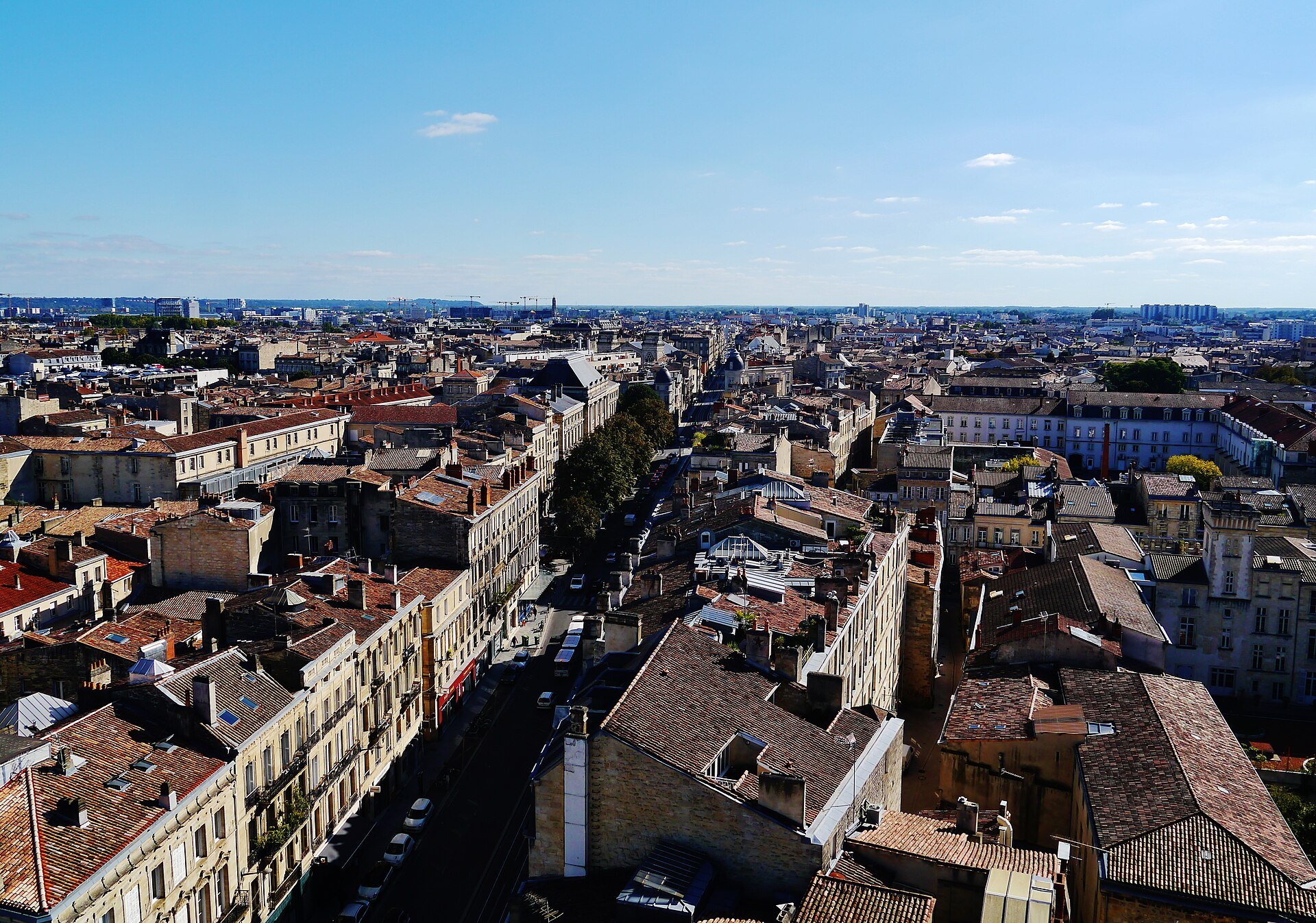
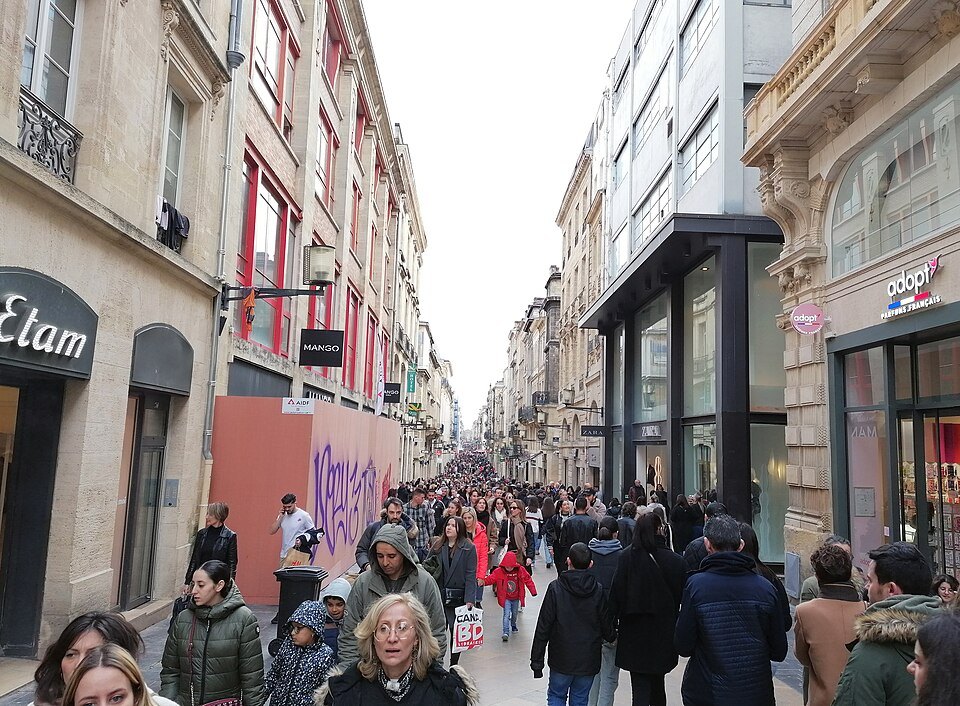
The old town of Bordeaux is the part inside the former city walls, which now run along a ring of wide boulevards: the cours de Verdun, the Place Gambetta, the cours d'Albret, the Place de la Victoire and the cours de la Marne, with the Garonne on the east. Two great axes cross it. The rue Sainte-Catherine, a pedestrian street of some 1,250 meters, runs north to south from the Grand Théâtre to the Place de la Victoire, and the cours Victor-Hugo runs west to east to the Pont de Pierre. West of the rue Sainte-Catherine the streets are full of shops; east of it, toward the quays, they are more residential.
Almost everything a visitor comes for lies inside that ring or along the quays, so the best rule is simple: stay within walking distance of the river between the Pont de Pierre and the Chartrons, or near a tram stop if you prefer somewhere quieter. The getting around page explains the tram.
The old town and the Golden Triangle
Saint-Pierre and Saint-Paul, the north-east quarter of the old town between the Place de la Bourse and the cathedral, is the classic first base. It is full of restaurants, hotels and bistros, the squares of the Place du Parlement and the Place Saint-Pierre are here, and the quays are at the end of every street. The trade-off is noise: the lanes stay lively late, so ask for a room on a courtyard.
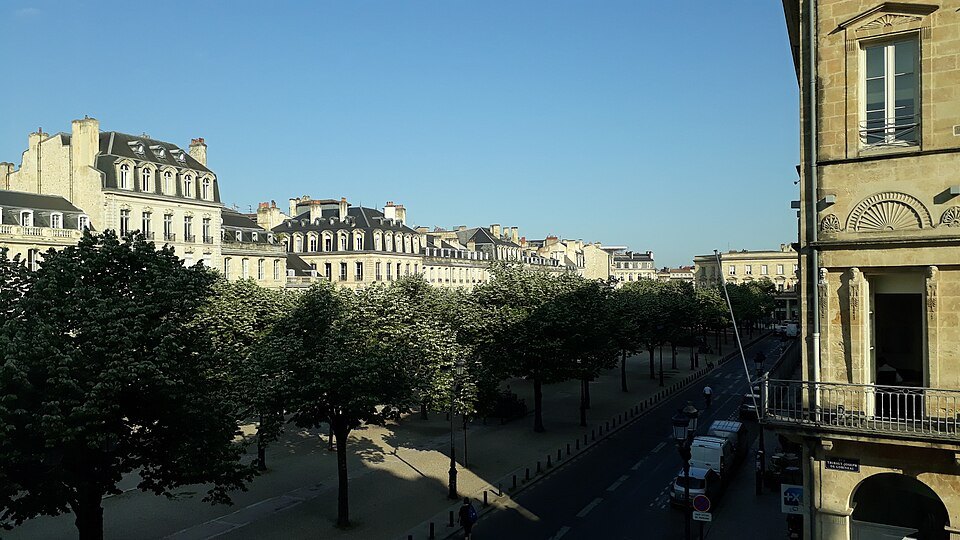
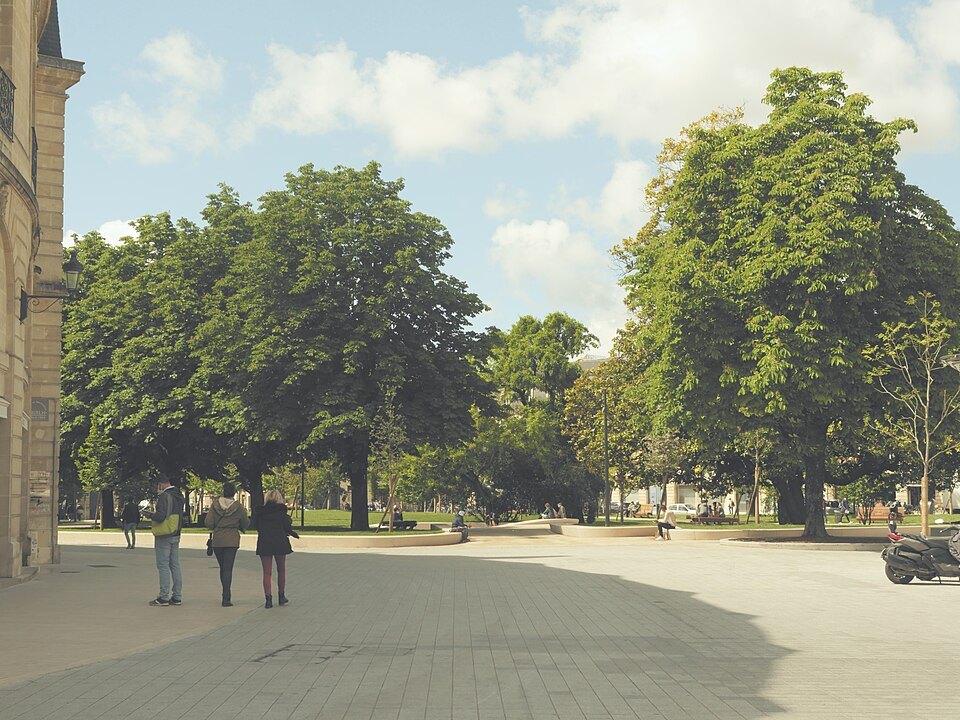
To the north-west, around the Grand Théâtre and the Quinconces, lies the Golden Triangle, the city's most elegant and expensive quarter, laid out in the 1790s on the land of former convents with a star of streets named for Montesquieu, Rousseau and Voltaire around the Place des Grands-Hommes. Its boulevards, the cours Clemenceau, the cours de l'Intendance and the Allées de Tourny, were made largely pedestrian when the tram came, and its cafés, banks and luxury shops make it the showcase of the city. It suits travelers who want comfort, calm and everything within a few minutes' walk.
North: the Chartrons and Saint-Seurin
The Chartrons, the old wine merchants' quarter north of the Quinconces, is the best choice for a longer stay. It has the feel of a village, with antique shops on the rue Notre-Dame, a covered market hall at its center, a Sunday market on the quay, and bistros along the river, and it is quieter at night than the old town. The tram along the quays takes you to the center in a few minutes, and the Jardin Public is on its doorstep.
West of the park, Saint-Seurin, around the basilica and the Palais Gallien, is a well-off residential quarter with many consulates, calm streets and the typical échoppes, the single-storey terraced houses of Bordeaux. It is a good choice if you want to sleep well and do not mind a ten- or fifteen-minute walk to the sights.
South: Saint-Michel, the Victoire and Saint-Jean
Saint-Michel, south of the cours Victor-Hugo around the basilica and the Marché des Capucins, is the city's most mixed and characterful quarter, and one of its poorer ones. It has the flea market round the church, the market hall, and a young, cosmopolitan crowd; it is lively and sometimes rough at the edges, and it suits travelers who like a neighborhood with its own life.
The south-west of the old town, around the Place de la Victoire, is the student quarter, close to part of the university and well served by the tram line to the main campus. Bars fill the square in the evening; it is fun for a night out and noisy for sleeping. Further south-east, the Saint-Jean quarter around the main station is being rebuilt as part of Bordeaux-Euratlantique, the largest urban project in France, with new offices, a cultural center and a new bridge. It is the practical choice for an early train, less so for atmosphere.
Across the river and on the docks
La Bastide, on the right bank, was annexed by the city in 1865 when the Pont de Pierre made it reachable. Its riverside gardens, the botanical garden and the Darwin eco-district in old barracks give it a different, greener character, and it has the view of the whole city front across the water. It is a tram ride across the bridge into the old town.
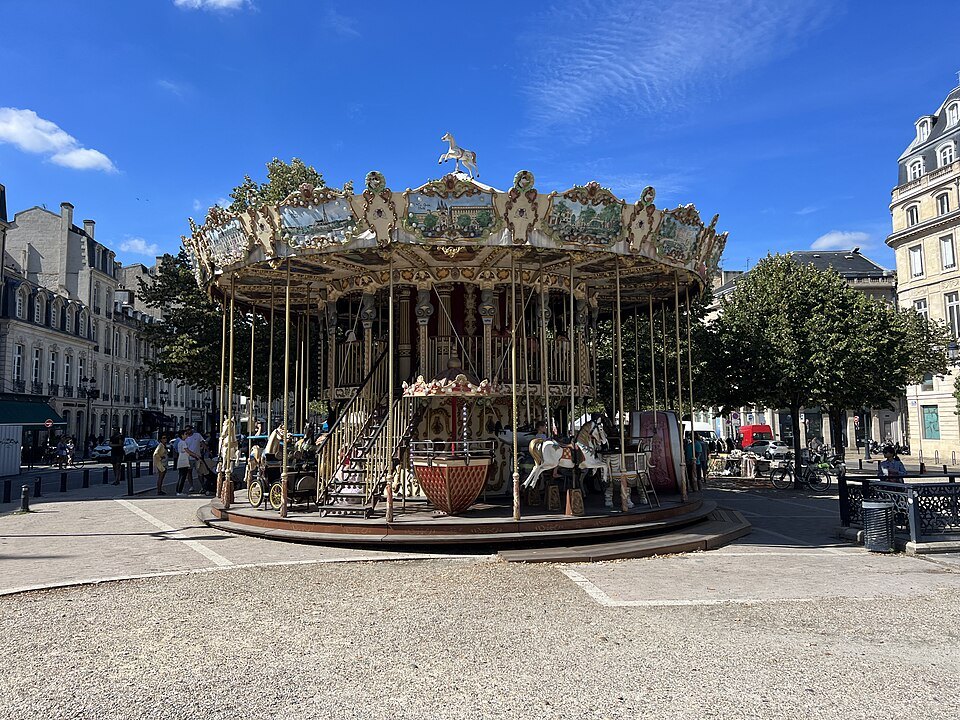
At the northern end of the quays, the Bassins à Flot quarter has grown on the old docks since the 2010s, with modern hotels, apartments, a food hall and the Cité du Vin. It is a good base for a short stay built around the waterfront and the wine museum, a tram ride from the center.
Practical notes
Two other areas turn up in searches. Mériadeck, west of the Palais Rohan, was rebuilt from the 1960s as the city's business quarter, with office blocks, a shopping center and a raised pedestrian deck over the traffic; it is convenient and central but has none of the old town's charm. Further west, Caudéran, a former suburb that merged with Bordeaux in 1965, is one of the calmest and most comfortable residential quarters in the city, with the large Parc Bordelais, but it is a bus or tram ride from the sights.
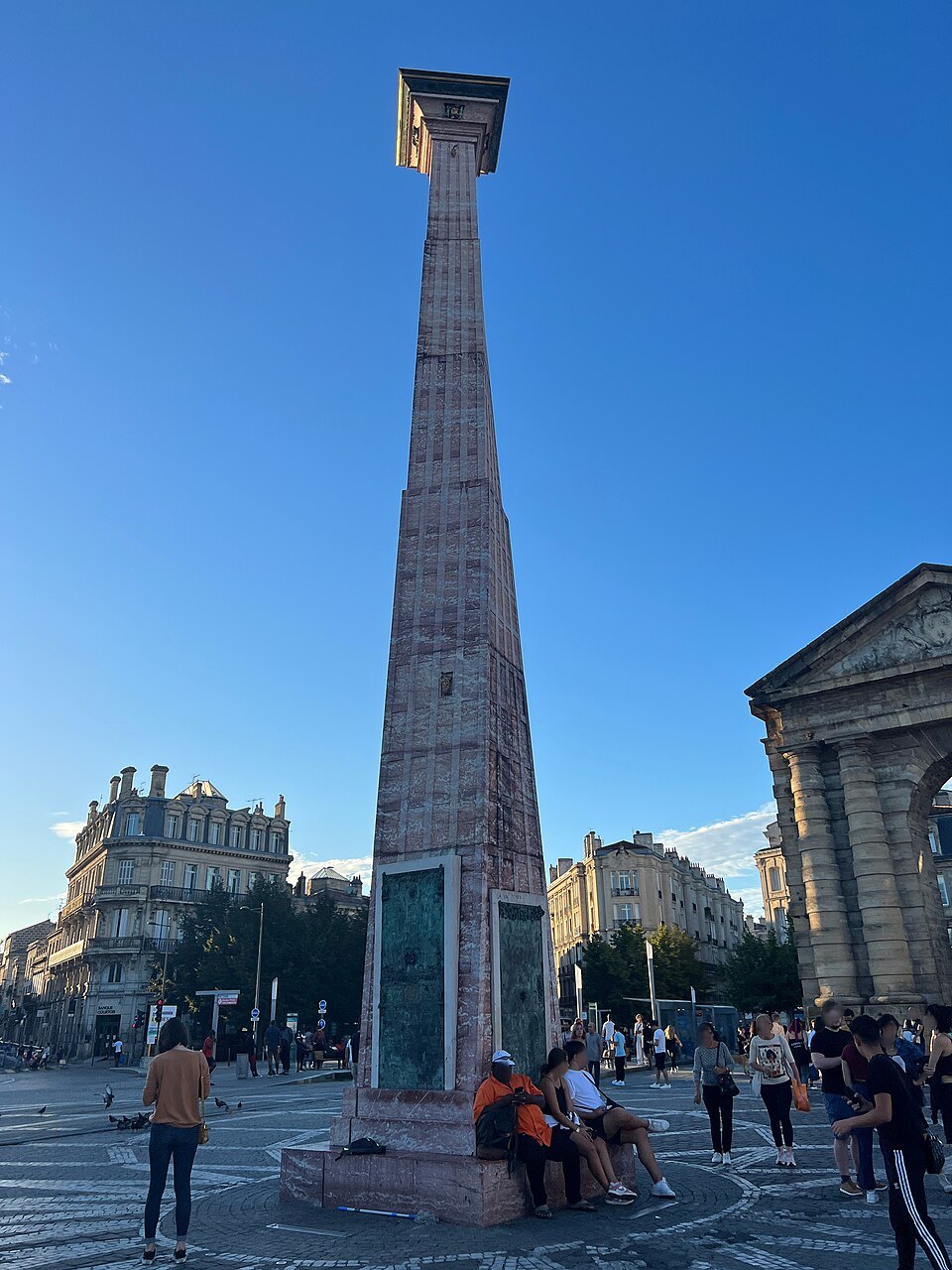
Wherever you stay, the old town is mostly pedestrian and parking is difficult; if you arrive by car, see getting here for the park-and-ride car parks. Rooms fill up in late June, during the wine festival, and around big events, so book early for those dates; see booking ahead. Much of the old town is eighteenth-century stone, so if stairs are a problem, check whether your building has a lift before you book.
More photographs
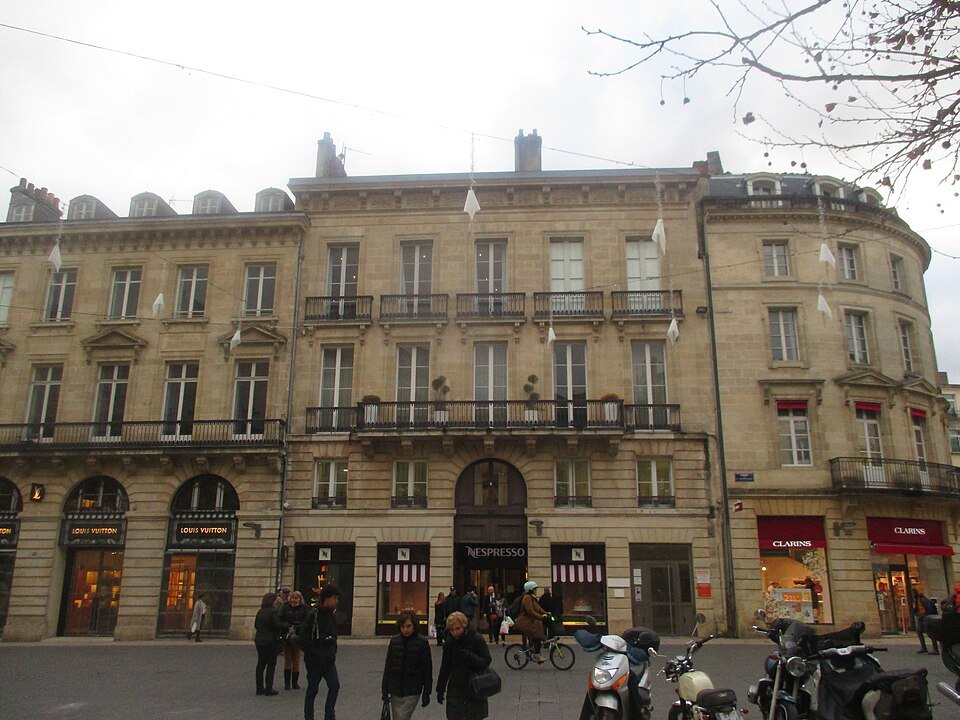
Stone buildings along the Cours de l'IntendanceThomon, Wikimedia Commons, CC BY-SA 4.0 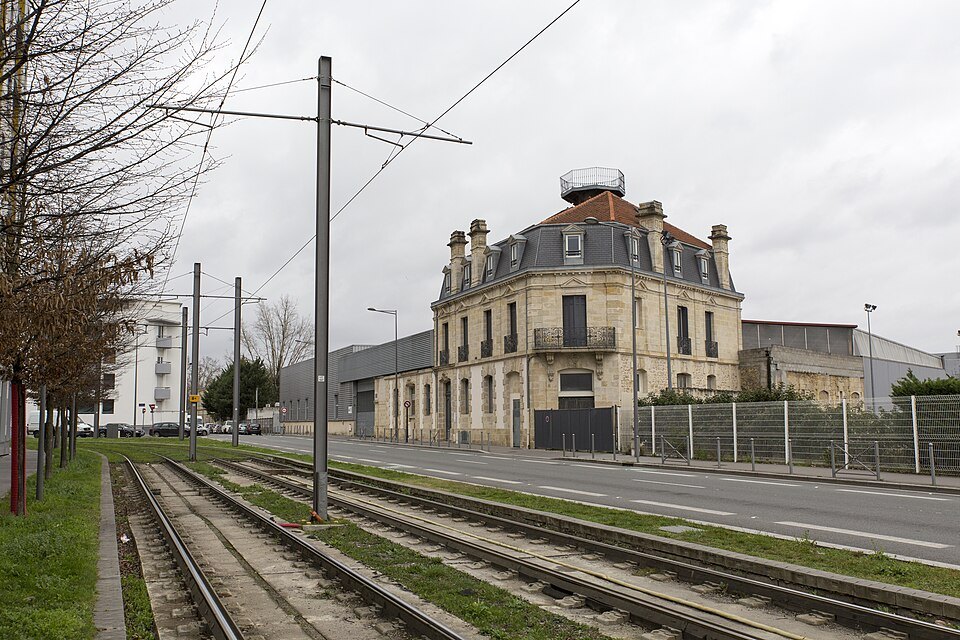
A tram line past an old house in Belcier, near Saint-JeanPA, Wikimedia Commons, CC BY-SA 4.0 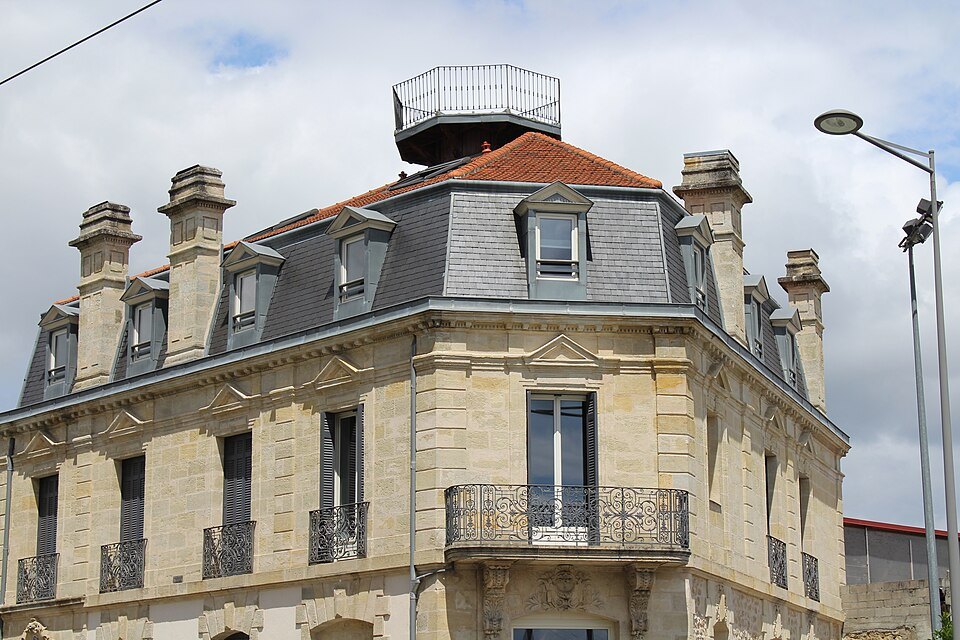
A slate-roofed stone house in the Belcier quarterBétium217, Wikimedia Commons, CC BY-SA 4.0 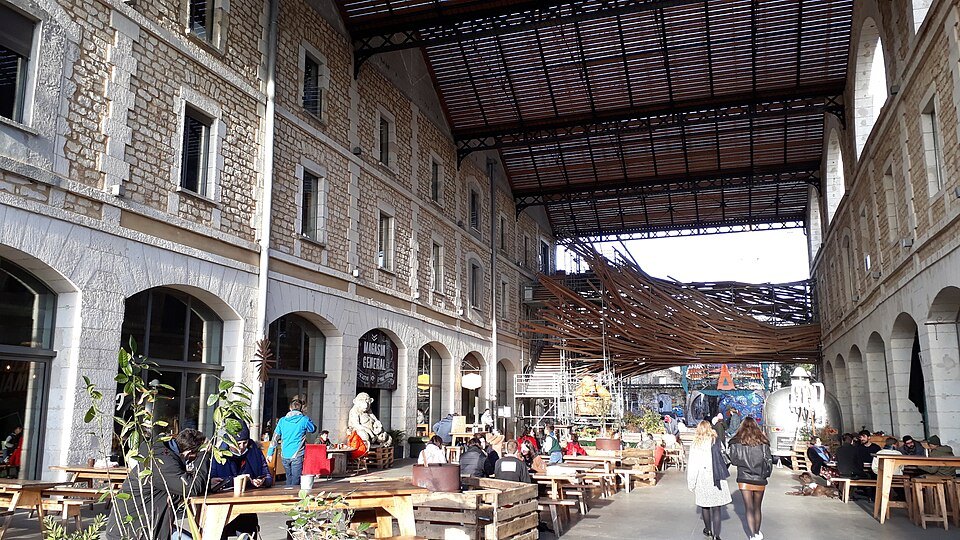
Tables and cafés in the old barracks hall of the Darwin site in La BastideJefunky, Wikimedia Commons, CC BY-SA 4.0 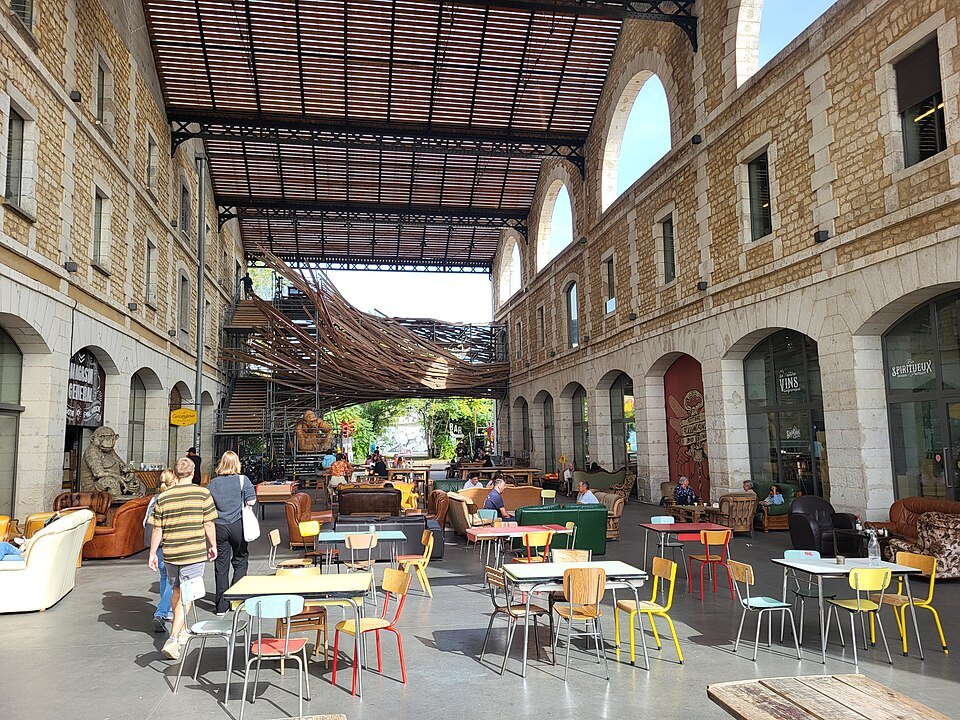
Colorful chairs under the iron roof of the Darwin eco-quarterBenreis, Wikimedia Commons, CC BY-SA 4.0