Home · Sights · The Palais Gallien
The Palais Gallien
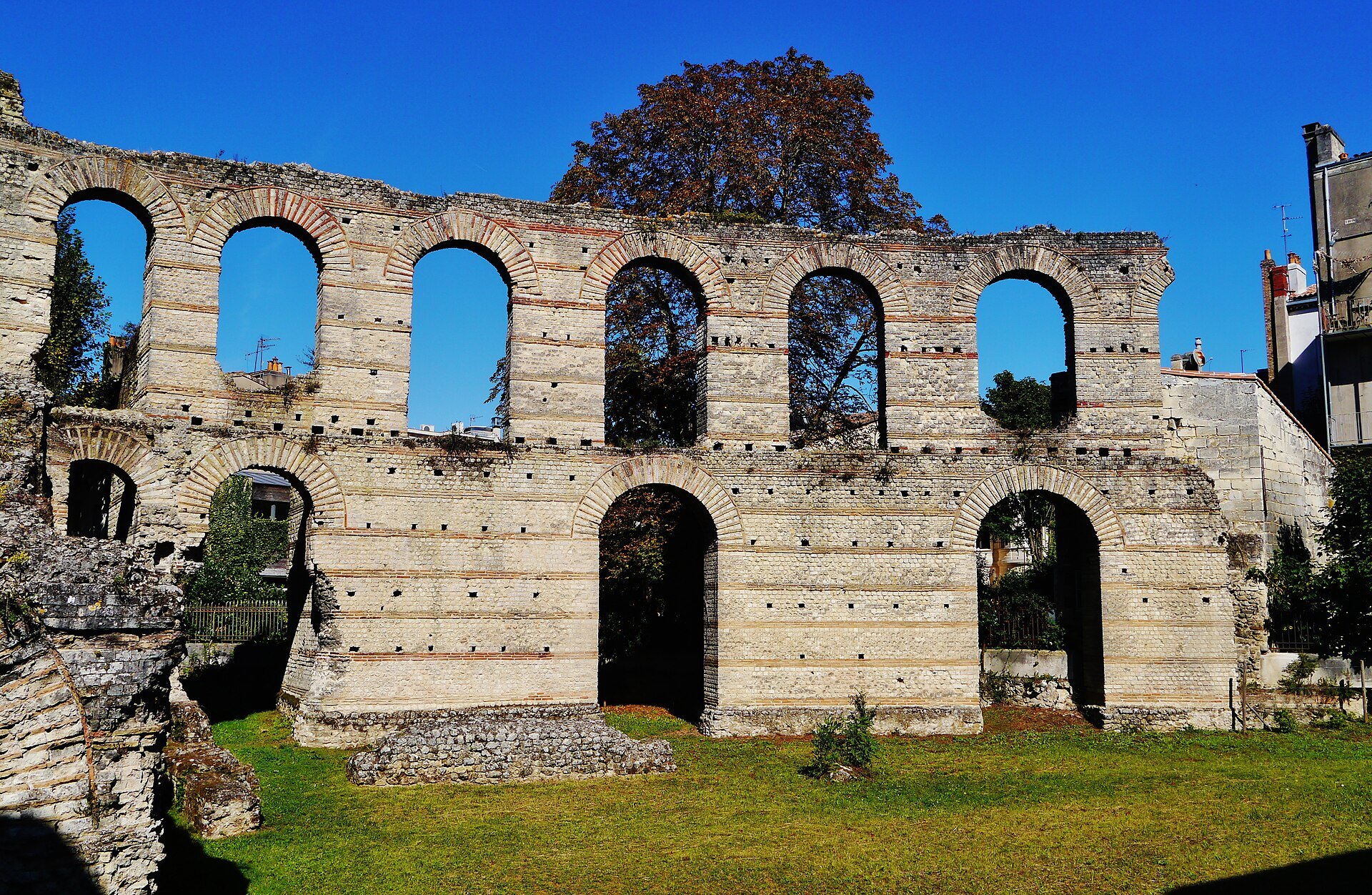
- 01The north-west gateTwo storeys of arches in alternating courses of brick and stone, the largest surviving part
- 02The ring wallsA curve of the second ring wall and a few bays and arches along the side streets
- 03The vanished ellipse132 by 111 meters, its outline still traced by the streets and backyards around it
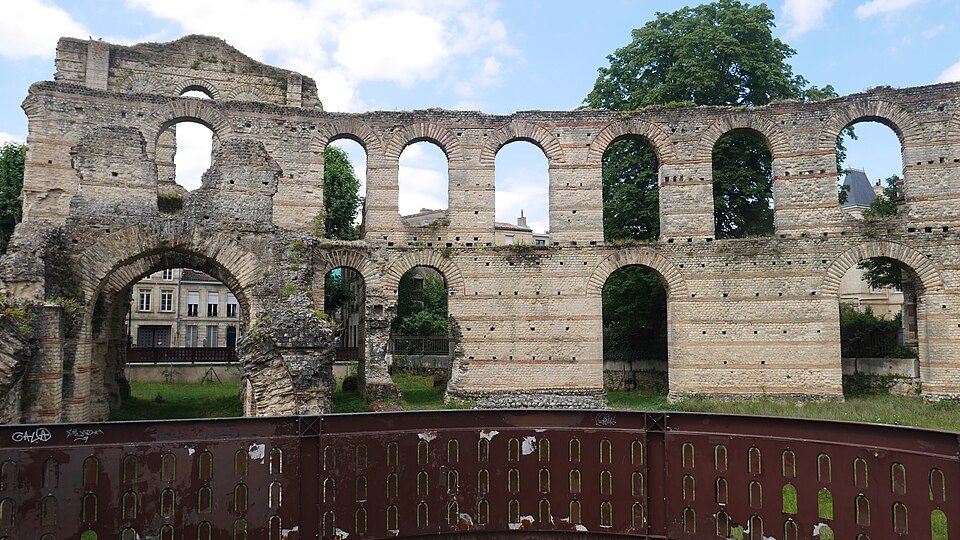
- 04The wooden seatsSquare holes in the walls where beams once carried timber stands
- 05Saint-SeurinA basilica on an early Christian cemetery, with a thirteenth-century carved porch
The story, and how to see it
Why it matters
Burdigala was a Roman provincial capital, but almost nothing of it stands above ground. The Palais Gallien is the exception: the ruined gate and walls of an amphitheater, embedded in a quiet residential quarter north-west of the center, that once held some 22,000 people. It is the only visible Roman monument in Bordeaux, and it is a strange and memorable sight, great arches of brick and stone rising out of a garden between townhouses.
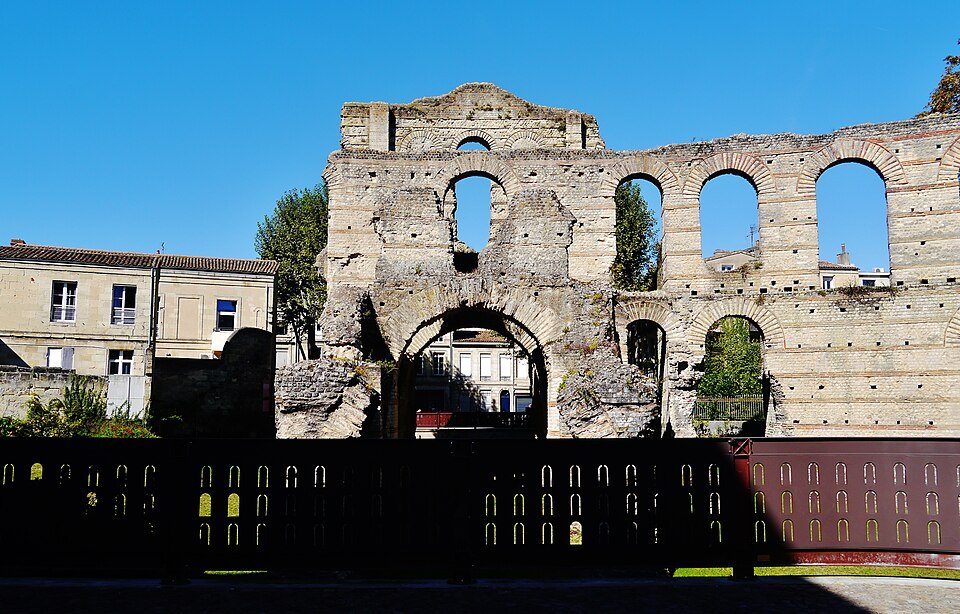
Even where the walls have gone, the amphitheater is still there. The streets and the buildings of the quarter follow its shape: from the air, and on the property map, much of the original ellipse can still be traced, with fragments of its walls surviving out of sight at the back of courtyards, inside houses and above the rooftops.
The story
The amphitheater stood at the northern edge of the ancient town, reached by a Roman road whose line the rue du Palais-Gallien still follows. Its date has been argued over: older estimates linked it to the emperor Caracalla or to the mid-third century, and the name suggested the emperor Gallienus, but excavations from 2010 to 2012 found pottery that places its construction at the end of the first century or in the first half of the second.
A popular tradition says it burned for two days during the Frankish raids of 275 and 276, which would fit its wooden seating, but the excavations found no proof of a fire, and no date can be given for its abandonment. In the Middle Ages it served as a quarry and was known as the Arènes; the name Palais Gallien appears only in 1367, when legends attached it either to the emperor or to Galienne, a legendary queen.
By the early seventeenth century two gates and a quarter of the seating still stood, a refuge for thieves and prostitutes. From 1789 to 1793 it was the city's rubbish dump, and during the Revolution it became a public quarry and was sold off in lots on 15 February 1793; parts of the structure, including the south-east gate, were demolished to open roads across the site. In October 1800 the interior minister, Lucien Bonaparte, ordered the destruction to stop. The remains were listed as a historic monument in 1840.
Archaeologists have kept coming back. Five seasons of excavation led by Robert Étienne ran from 1953 to 1964, and the campaigns of 2010 to 2012, run by the city, the state and the Ausonius research institute of the university, set out to fix the building's date, study how it was built and produce a three-dimensional reconstruction of it. The use of so much timber in so large an amphitheater is unusual; the amphitheater at Pula in Croatia is one of the few comparable cases.
What you actually see
The building measured 132 by 111 meters and stood about 25 meters high; the arena itself was 70 by 47 meters. Its frame was seven concentric ellipses divided into sixty-four bays, each opening in an arch on the outside. The seats were almost certainly wooden, carried on a timber frame whose beams were set into the ring walls; you can still see the square holes that held them.
The main survival is the north-west gate and the curve of the wall beside it. The gate rises in arches on two of its original three levels, with pilasters, Tuscan below and Doric above, and it shows the Roman building technique clearly: seven courses of small stone blocks alternating with three courses of brick. A few more bays and arches can be seen from the rue du Docteur-Albert-Barraud and the rue du Colisée, whose name remembers the arena.
Saint-Seurin
A few streets south-west, the basilica of Saint-Seurin stands on an ancient cemetery where Christian burials go back to the fourth century. It is named after Severinus, an early bishop and the patron saint of Bordeaux, and it was one of the great stops for pilgrims on the road to Compostela: legend said Charlemagne had laid Roland's horn on its altar, and the Song of Roland says so. With the cathedral and Saint-Michel, it is on the UNESCO list of the Routes of Santiago de Compostela.
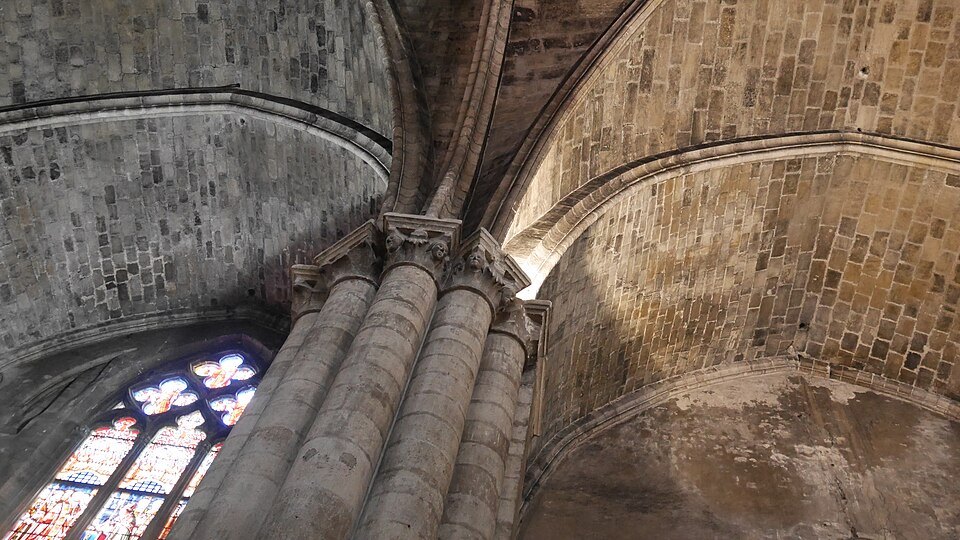
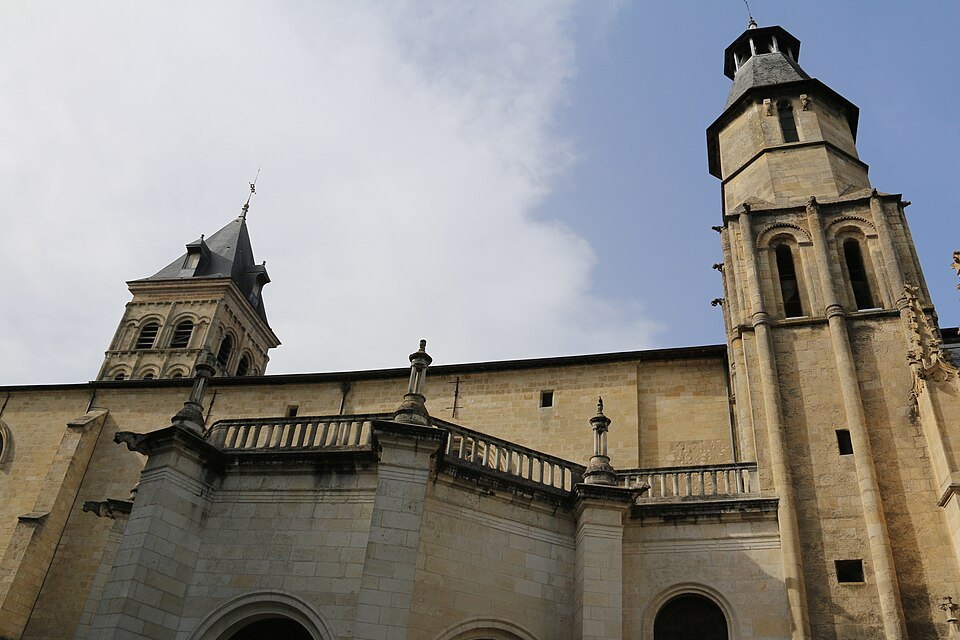
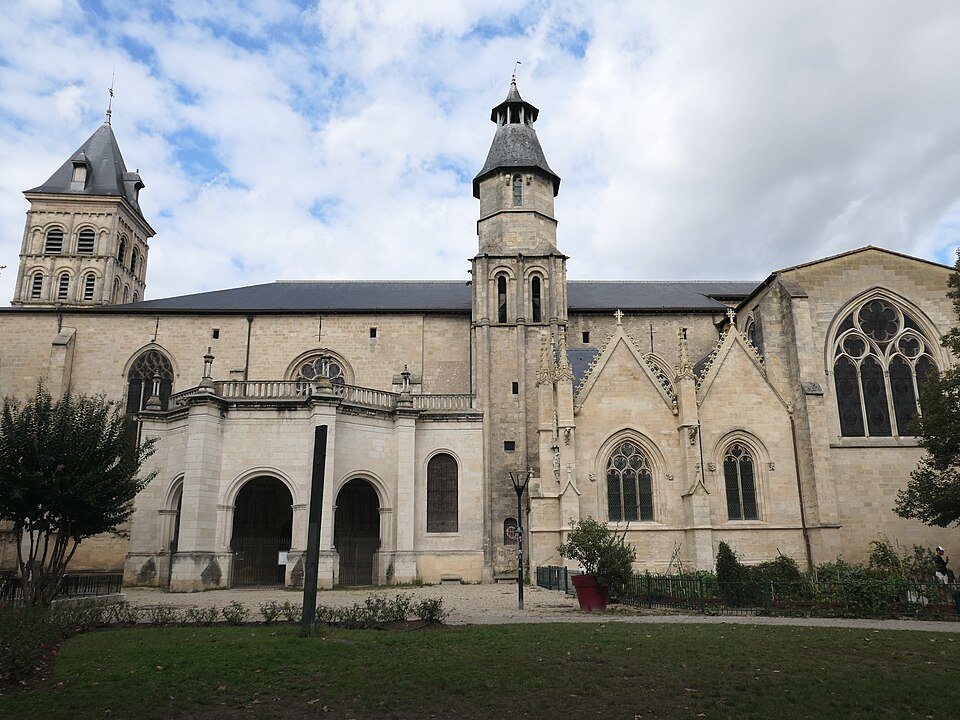
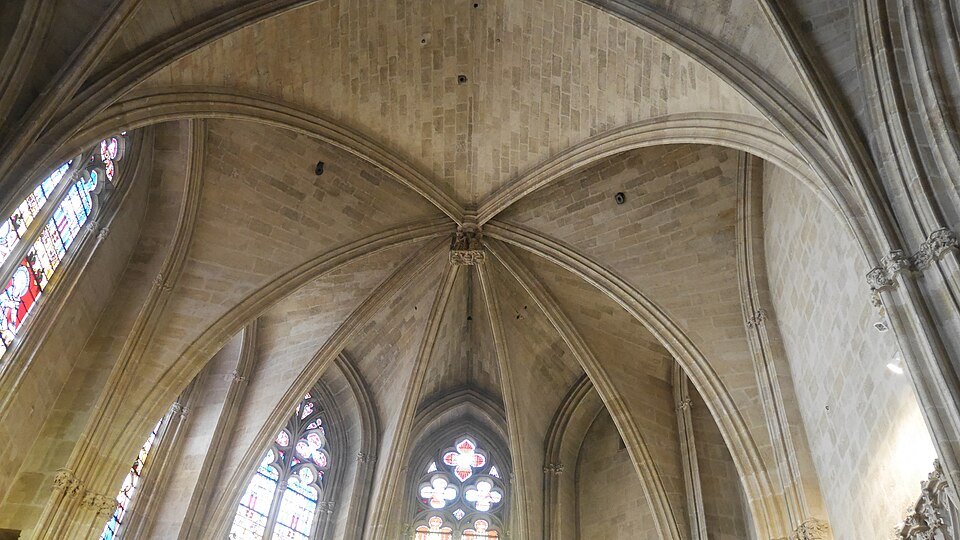
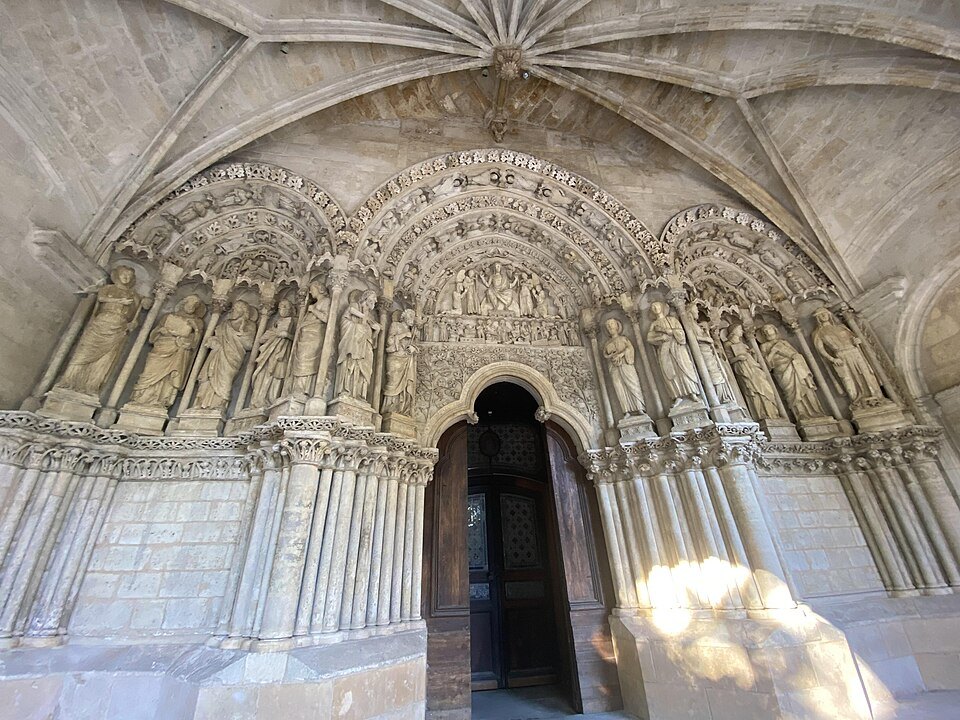
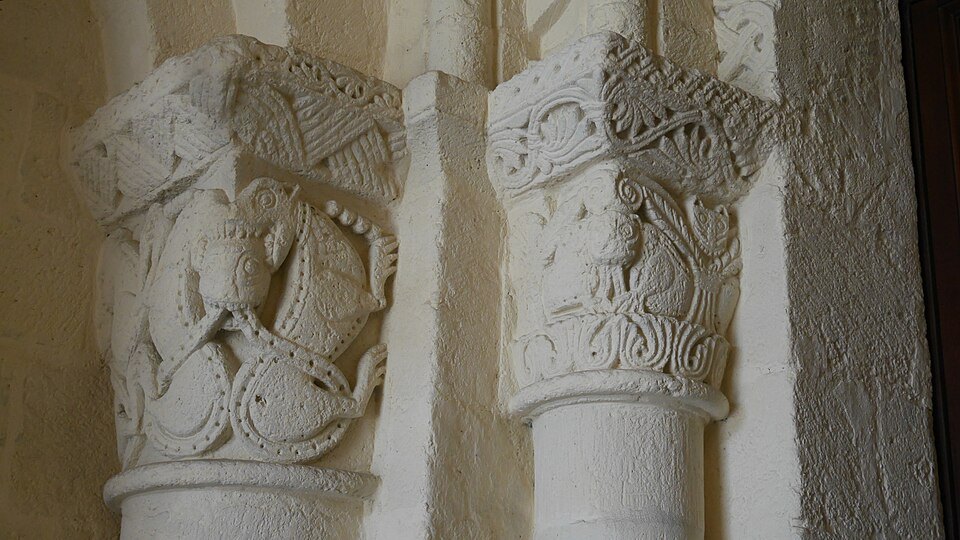
The church was rebuilt from the early eleventh century. Look for the thirteenth-century portal, carved with the twelve apostles and the figures of the Church and the Synagogue, the Last Judgment and the dream of Saint Amand, and inside for the flamboyant Gothic chapel of Notre-Dame de la Rose, whose altar was consecrated by Archbishop Pey Berland in 1444. Beneath the altar lies a crypt with the sarcophagus of the saint.
How to visit
The ruins stand in an enclosed garden, and most of what there is to see can be taken in from the street through the railings; entry to the enclosure itself is arranged by the city, so ask the tourist office if you want to walk inside. Allow twenty minutes, then another half hour for Saint-Seurin.
The nearest tram stops are Croix de Seguey and Fondaudège Muséum on line D. The Jardin Public is a short walk east, and the Grand Théâtre about fifteen minutes south-east. The Musée d'Aquitaine holds the finds from Roman Burdigala, including early Christian tombstones from the cemetery of Saint-Seurin.
Honest notes
This is a ruin, not a Colosseum: expect one great gate and some fragments rather than a complete arena, and set your expectations accordingly. The name is a medieval legend; Gallienus had nothing to do with it.
Nearby
- A short walk awayThe Jardin PublicThe city's garden since 1756.Read the page
- A short walk awayThe Grand ThéâtreVictor Louis's opera house of 1773 to 1780.Read the page
- A short walk awayThe Esplanade des Quinconces and the Monument aux GirondinsTwelve hectares laid out between 1810 and 1828 where the Château Trompette fortress stood.Read the page