Home · Sights · La Cité du Vin
La Cité du Vin
- 01The buildingA fifty-five-meter tower of curves, clad in 918 glass panels and 2,300 aluminum panels
- 02The permanent exhibitionEighteen themed spaces on the second floor, about two hours with a multimedia guide
- 03The belvedereThirty-five meters up on the eighth floor, a panoramic room over the city and the river
- 04The wine libraryA ground-floor shop and cellar of some 14,000 bottles from about seventy wine regions
- 05The temporary exhibitionsA gallery on the first floor, from bistros to Picasso and the wines of Georgia
- 06The pontoonA ninety-meter landing on the Garonne for river trips into the vineyards
The story, and how to see it
Why it matters
Bordeaux is a world capital of wine, and for a long time it had nowhere that told the story to visitors. The Cité du Vin, opened to the public on 1 June 2016, is its answer: not a museum of Bordeaux wine, but a cultural center about wine as a heritage of the whole world, somewhere between a museum and a theme park, as its founders put it. Around a million visitors had passed through by the autumn of 2018, and more than half come from abroad.
It is also the landmark of the city's newest waterfront. It stands on the site of the old forges of the port, on the island between the Bacalan quay, the entrance to the locks of the Bassins à Flot and the Garonne, at the downstream end of the regenerated quays. For the wider picture of wine in and around the city, see the wine city.
The idea took shape in 2009, when the region, the city, the metropolitan authority, the Bordeaux wine council and the chamber of commerce formed an association to study it. Since 2015 it has been run by a foundation for the culture and civilizations of wine, recognized as serving the public interest, which lives on ticket sales, its shop and private patronage rather than running subsidies. The actor Pierre Arditi and the wine critic Robert Parker have served as its ambassadors.
The building
The architects Anouk Legendre and Nicolas Desmazières of the XTU agency, working with the London exhibition designers Casson Mann, won the competition in 2011. They wanted a building visible from far off, and they shaped it all in curves, inside and out, like a knotted vine stock, or wine turning in a glass, or the eddies of the Garonne alongside it.
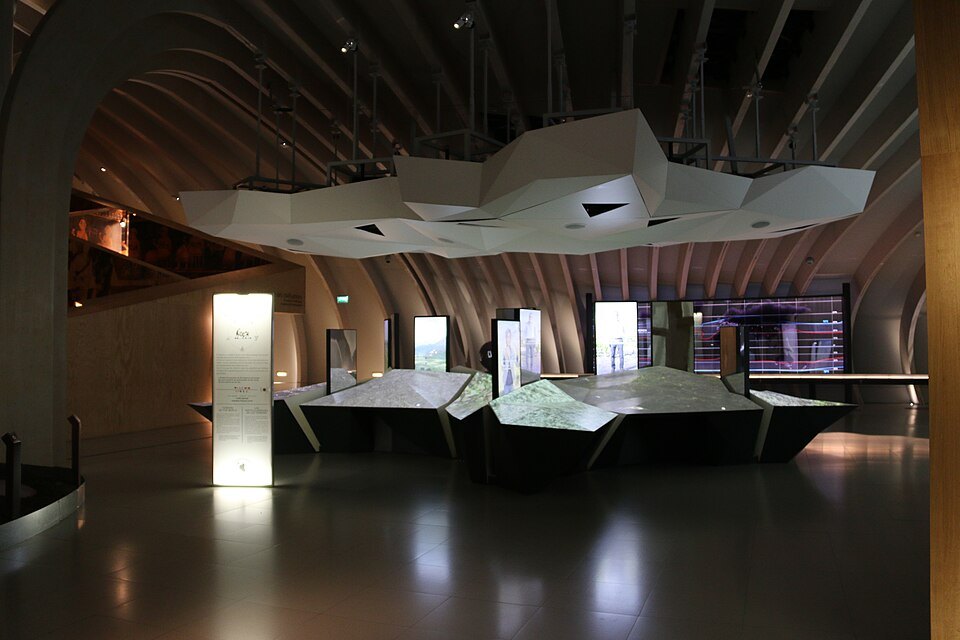
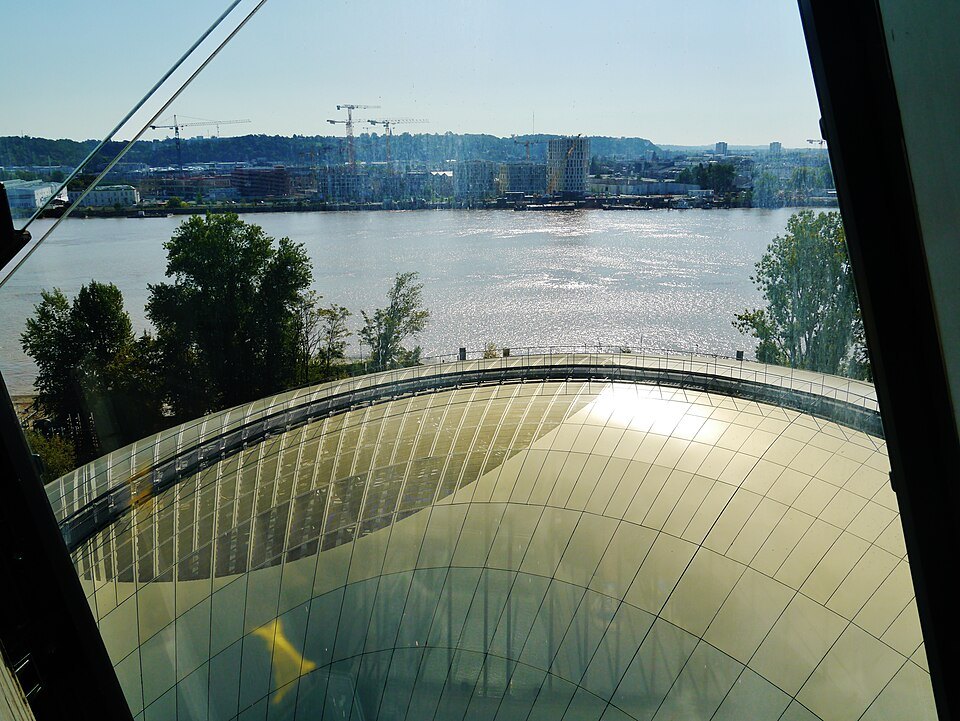
Nine thousand cubic meters of concrete sit on 300 concrete piles reaching thirty meters down into the riverbed. The skin is made of 918 glass panels in three colors, pale green, gray and gold, and 2,300 aluminum panels of different sizes, perforated and lacquered so that they shift color with the light. The tower rises to fifty-five meters, and the floors inside add up to about 13,350 square meters on eight levels.
What you actually see
The ground floor, a rounded room four meters high, needs no ticket at all. It holds a wine library of about 14,000 bottles from some seventy wine regions, which you can buy or taste in the adjoining bar and restaurant spaces, and a shop.
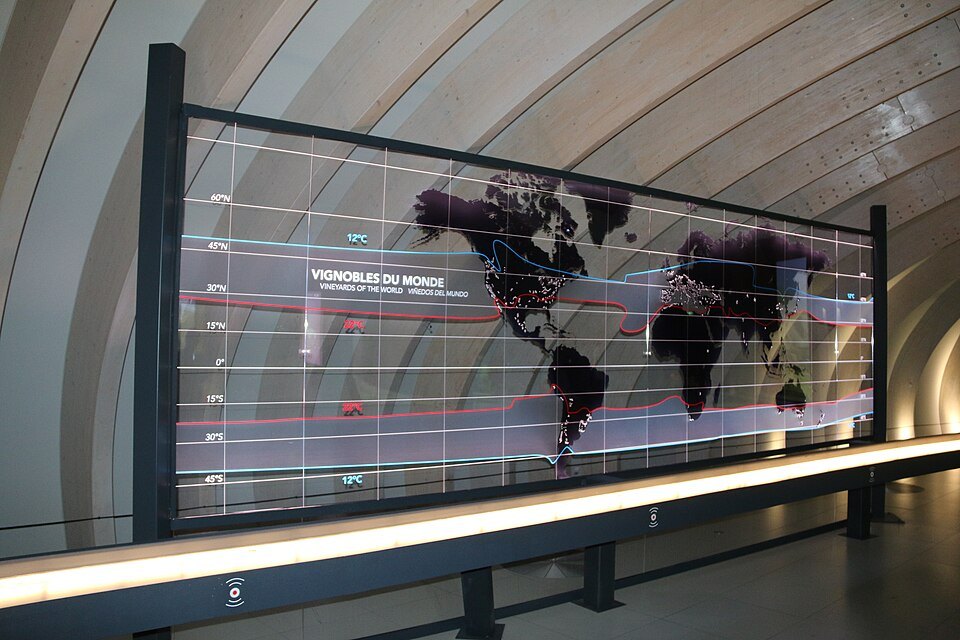
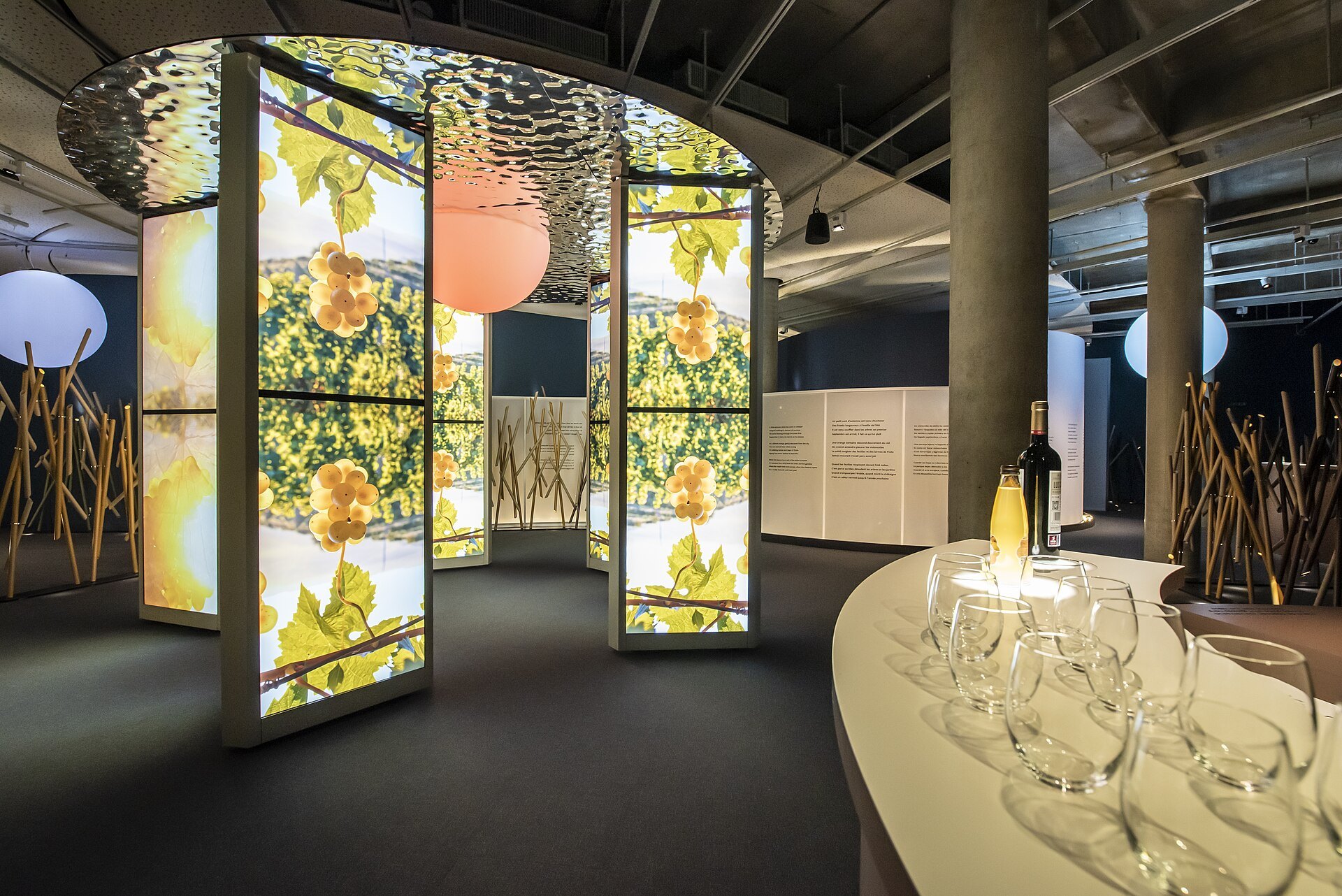
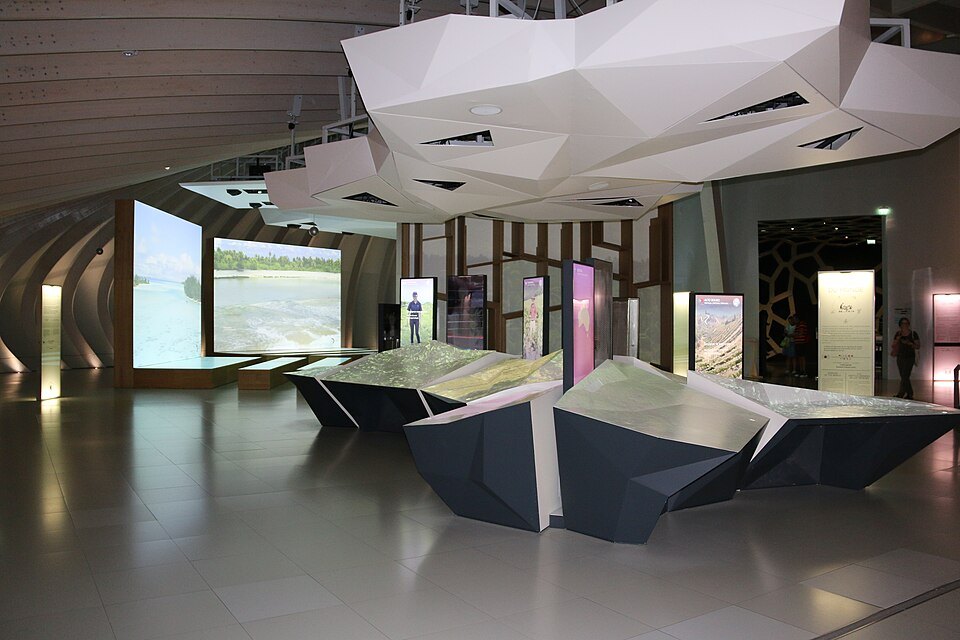
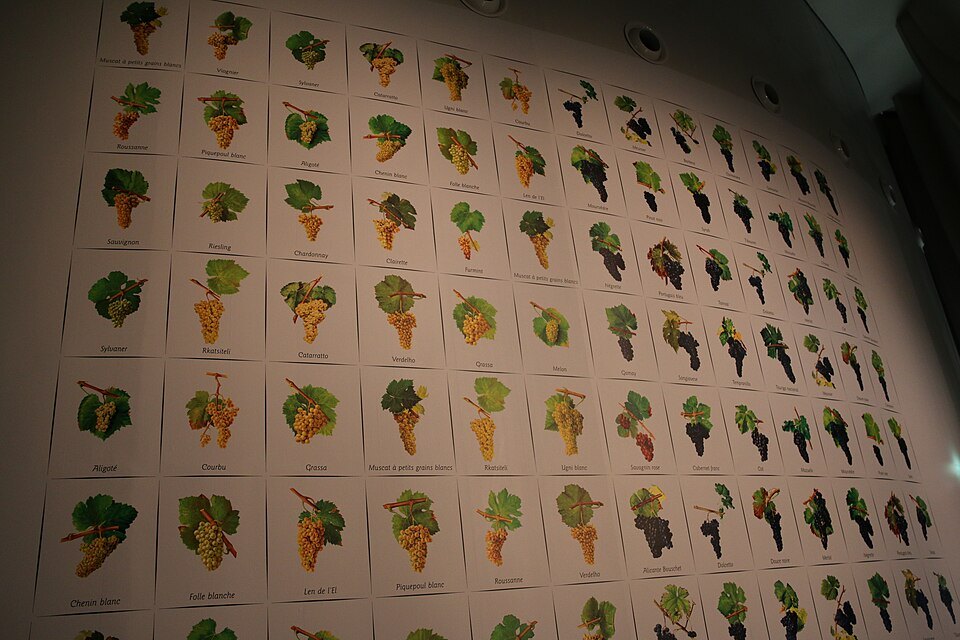
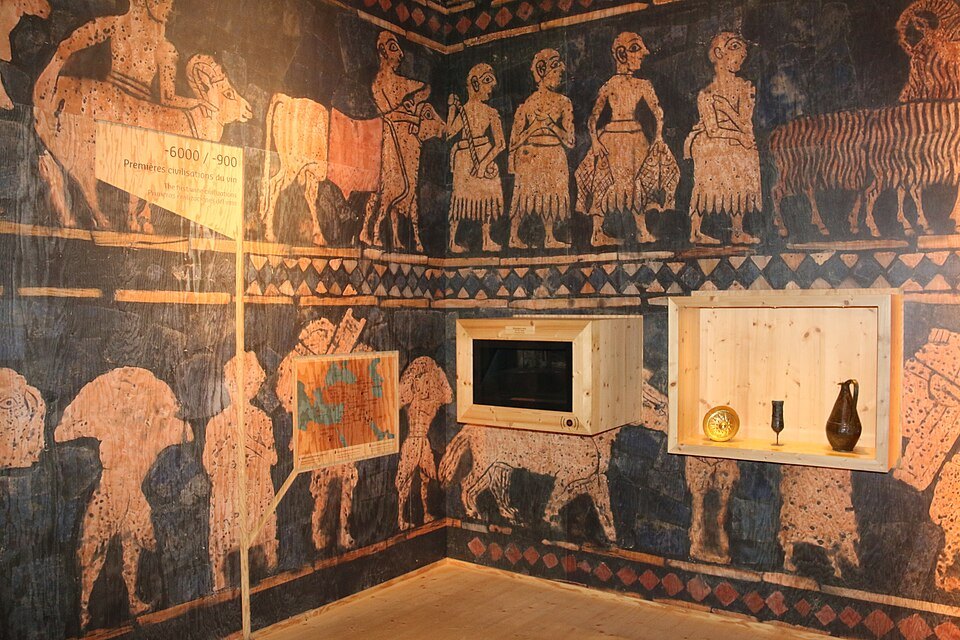
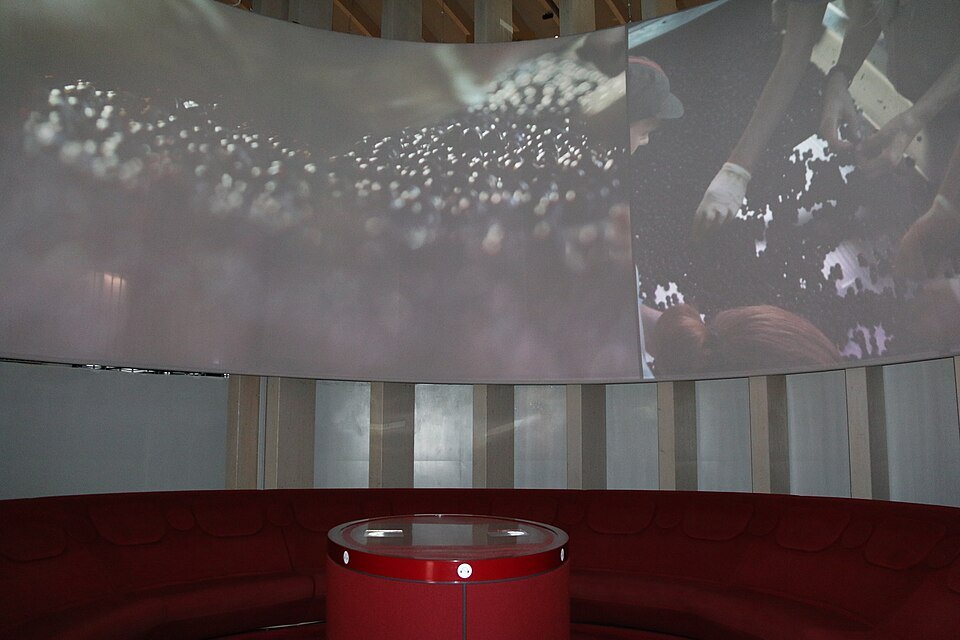
The heart of the visit is the permanent exhibition on the second floor: eighteen themed spaces that travel through time and around the world, from the vineyards to the table, from the history of the trade to the myths and the art of wine. Allow about two hours. A handheld companion triggers films, sounds and projections as you move and gives commentary in eight languages, so it works for visitors who speak no French.
The first floor has space for temporary exhibitions, a reading room, workshops and a 250-seat auditorium. Past exhibitions have covered the Paris bistro from Baudelaire to Picasso, the eight-thousand-year wine culture of Georgia, wine and music, glass in art and design, and Picasso's bottles and glasses.
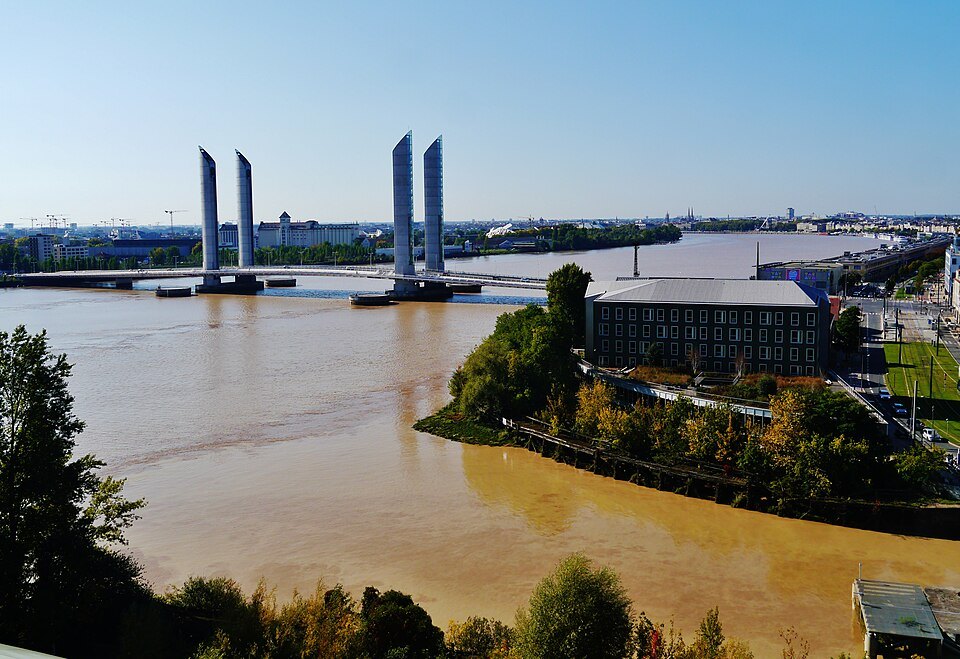
At the top, the seventh floor has a panoramic restaurant, and the eighth is the belvedere, thirty-five meters up, where the view runs back along the Port of the Moon to the old city, across the river and down to the lift bridge. The exhibition ticket includes a glass of wine at the belvedere, chosen from a changing list of about fifteen wines from partner estates.
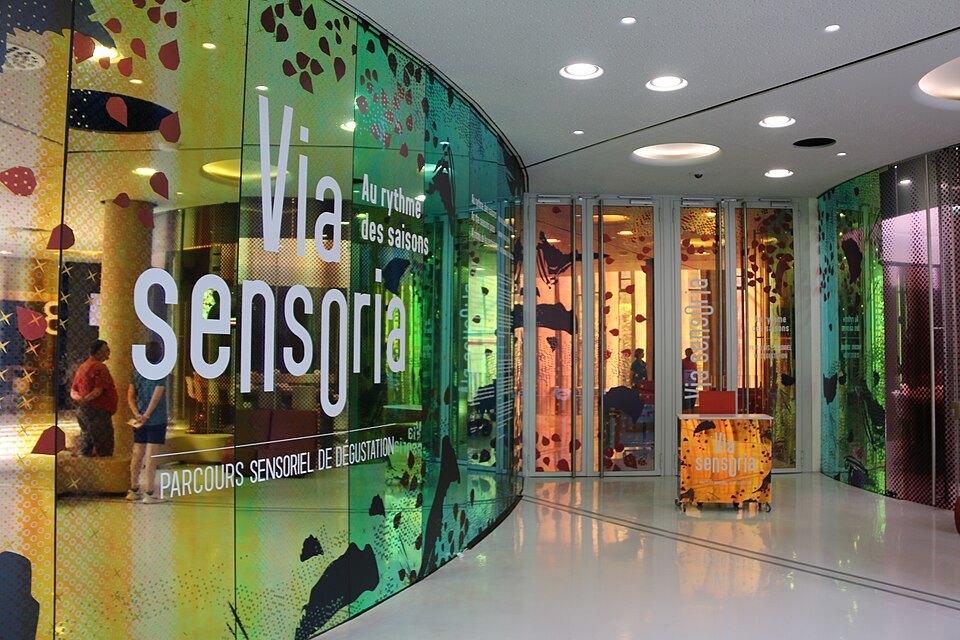
Since April 2023 there has also been Via Sensoria, a separate sensory tasting trail: a sommelier leads small groups through four dreamlike pavilions, one for each season, with a glass in each, or a soft drink for those who prefer one.
How to visit
Buy tickets for the permanent exhibition online if you are coming in summer or at a weekend, the busiest times; see booking ahead. Plan on two and a half to three hours for the exhibition and the belvedere together, and go up to the belvedere at the end, when you will want the glass. The ground-floor wine library and shop can be visited on their own if you only have half an hour.
The Cité du Vin has its own stop on tram line B, and the city's river shuttle stops at the pontoon beside it, which makes a pleasant way to arrive from the center; see getting around. The Pont Jacques Chaban-Delmas is in view from the forecourt, and the old wine merchants' quarter is a walk upstream along the quays. Wine tours to the vineyards also leave from the pontoon; the day trips page covers the wine country.
Honest notes
This is not a tasting room for Bordeaux wines and not a sales outlet for the local châteaux. It takes a deliberately global view, which some visitors expecting a celebration of Bordeaux find surprising. If what you want is the Bordeaux wine trade itself, pair it with the Musée du Vin et du Négoce in the Chartrons.
The project was not without argument. It ran about seventeen percent over its first budget and was paid for mostly with public money, around four fifths of the total. An anti-alcohol association objected to a public institution celebrating wine, and in 2015 the law on alcohol advertising was amended so that cultural and wine-tourism content about a wine region would not count as advertising.
Nearby
- A short walk awayThe Bassins à Flot and the Submarine BaseTwo locked basins of 1879 and 1912 that kept ships clear of the Garonne's tides.Read the page
- A short walk awayThe Pont Jacques Chaban-DelmasA vertical-lift bridge opened in March 2013 between Bacalan and La Bastide.Read the page
- A short walk awayThe ChartronsThe riverside suburb where English.Read the page