Home · Sights · The Grand Théâtre
The Grand Théâtre
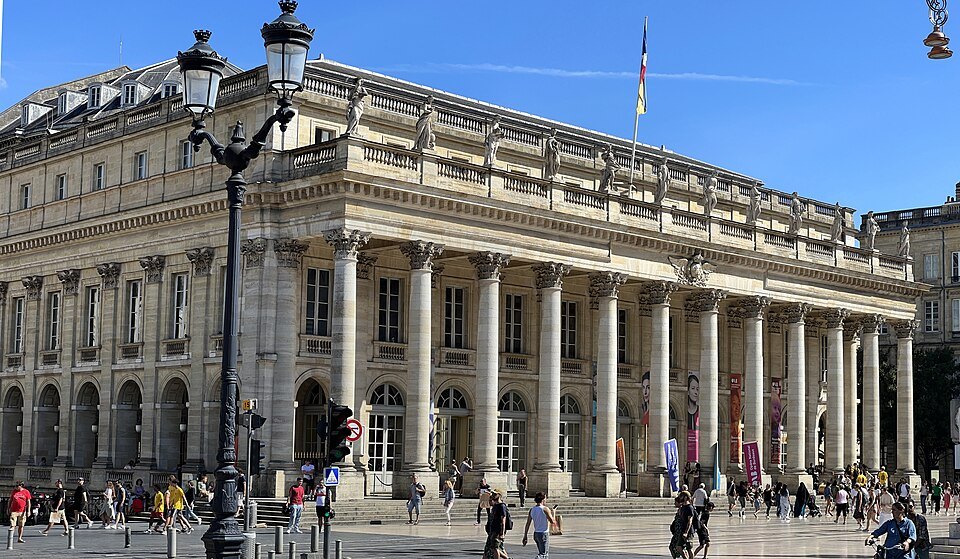
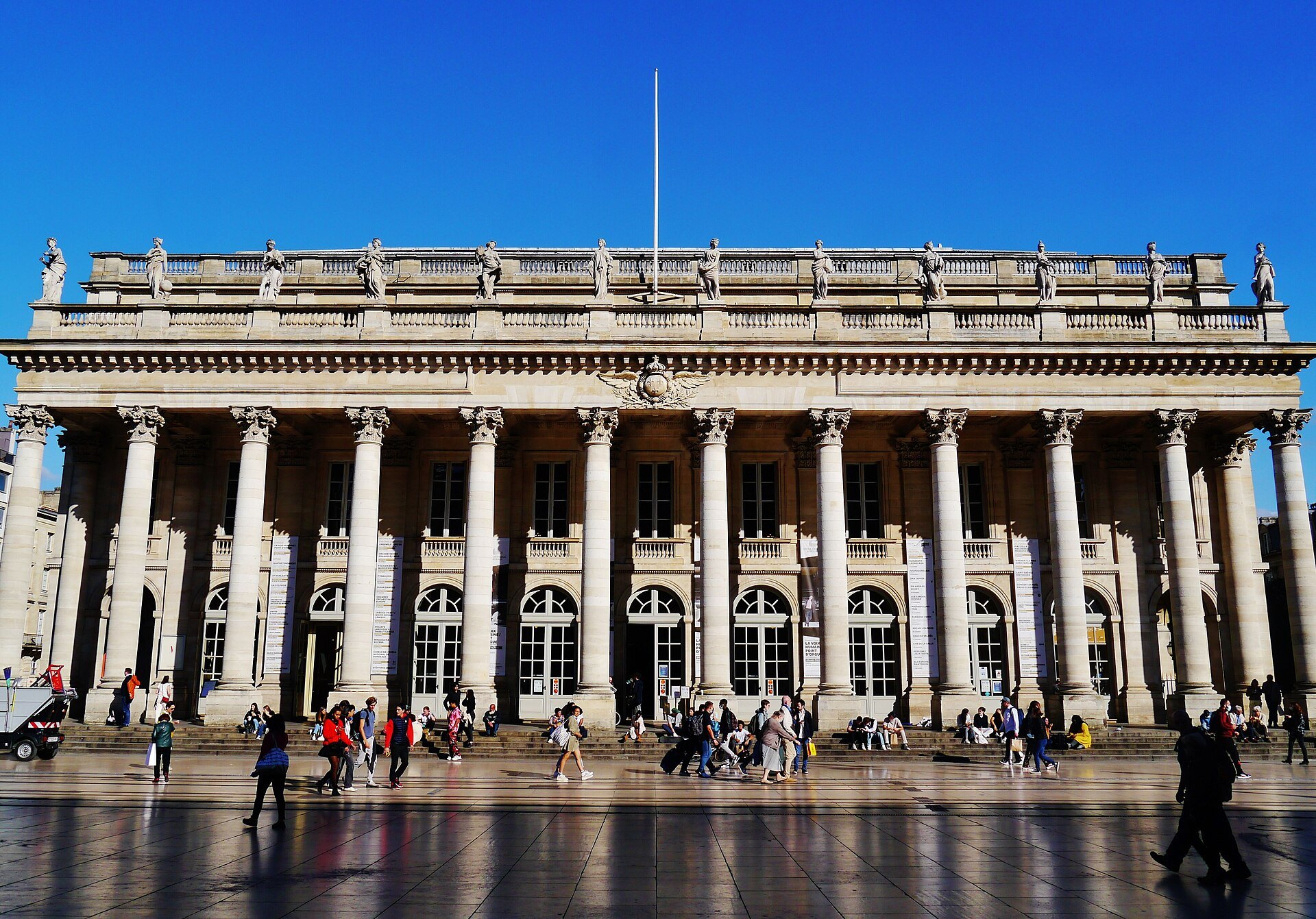
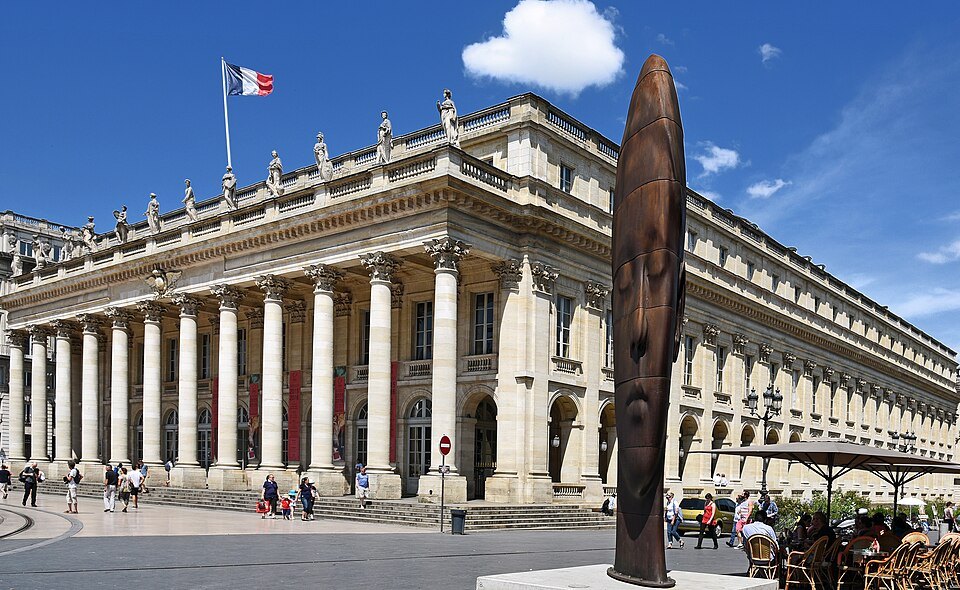
- 01The porticoTwelve colossal Corinthian columns across a front eighty-eight meters long
- 02The twelve statuesThe nine Muses with Juno, Venus and Minerva, each more than two meters tall
- 03The grand staircaseThree flights to a landing framed by two caryatids, then dividing in two
- 04The auditoriumAn Italian-style horseshoe in blue, white and gold, with about 1,100 seats
- 05The ceilingApollo and the Muses accepting a temple from the city, in a 1917 copy of the original
- 06The concert roomBouguereau's painted ceiling of 1865 and medallions of composers from Mozart to Auber
The story, and how to see it
Why it matters
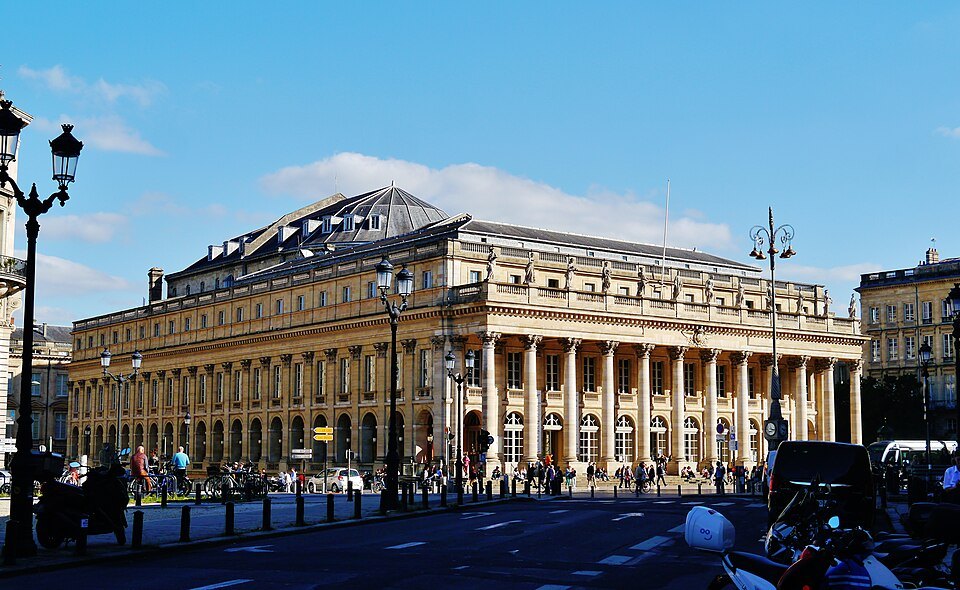
The Grand Théâtre is the building that tells you what eighteenth-century Bordeaux thought of itself. By the 1770s the city had its new squares, its promenades and its public garden; what it lacked was a theater worthy of them. The one it got is one of the purest neoclassical buildings in France, a temple front of twelve columns facing the Place de la Comédie, and inside it one of the oldest opera houses in Europe still working in its original timber structure, never burned and never rebuilt.
It is the home of the Opéra National de Bordeaux, which stages its opera and ballet seasons here. The ballet La Fille mal gardée had its premiere here in 1789, and a young Marius Petipa staged some of his first ballets on its stage.
The story
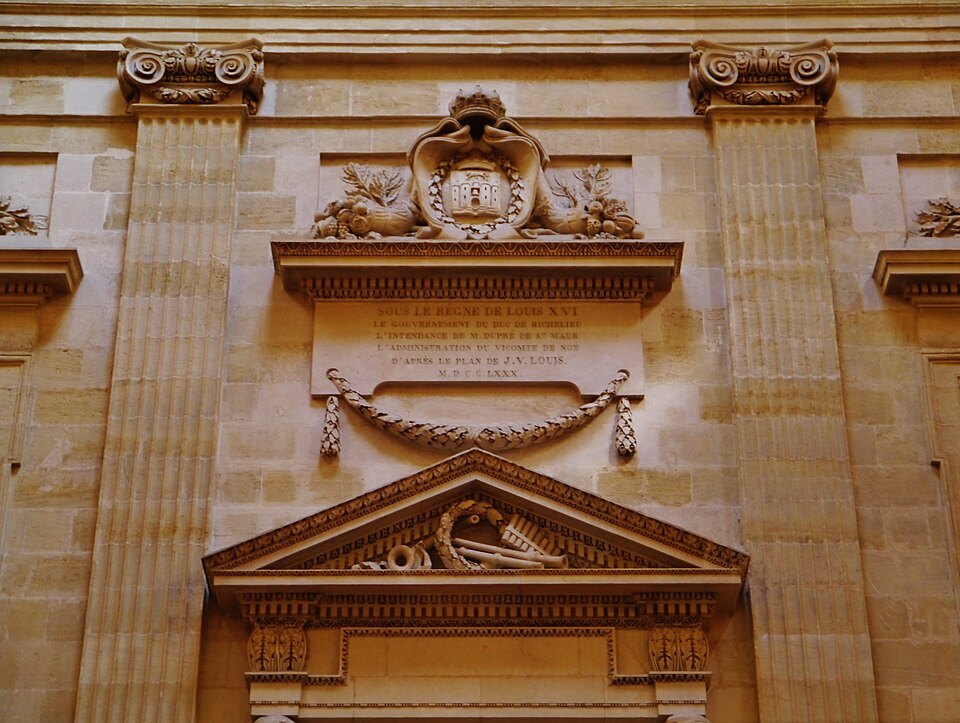
The commission went to Victor Louis, a Parisian architect, thanks to the governor of Guyenne, the maréchal-duc de Richelieu, who pushed him past a local favorite. Building began in 1773 on the slopes below the old Château Trompette fortress, on the site of the Gallo-Roman forum where a temple known as the Piliers de Tutelle had stood. On the river side the muddy ground needed 240 piles. The work was stopped at one point by royal order, and Louis talked the king into letting it go on. The theater opened in April 1780.
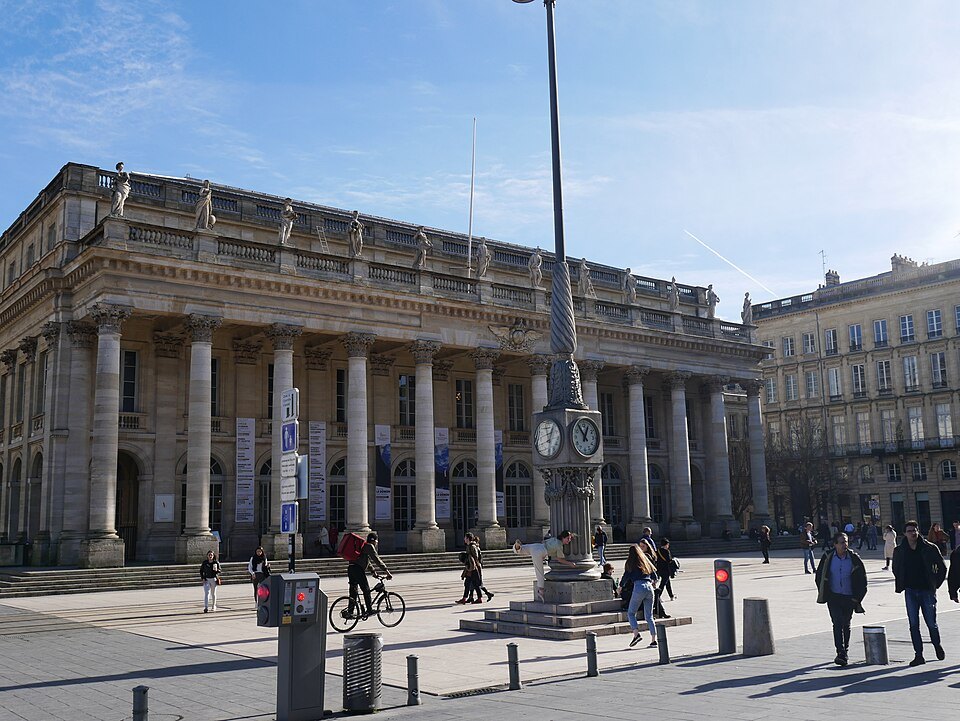
Louis solved one problem with an invention. To tie the twelve columns and the flat coffered ceiling of the portico back to the wall without a heavy abutment, he hid an iron frame in the corner bays, a device later called the clou de Louis and often compared to reinforced concrete. The whole building measures eighty-eight meters by forty-seven.
Its later history has its moments. In 1871 the French National Assembly briefly sat here, one of the times the government withdrew to Bordeaux. The interior was restored in 1991 and returned to its original blue, gold and white marble, and in 2006 the square in front and the street leading down to the river were redesigned so that the temple once again closes the view.
The front
Stand back on the Place de la Comédie. The portico's twelve Corinthian columns carry an entablature on which twelve stone statues, each more than two meters tall, stand against the sky: the nine Muses of Greece and three Roman goddesses, Juno, Venus and Minerva. The sculptor Pierre-François Berruer carved four himself, and his assistant Van den Drix carved the other eight from his models.
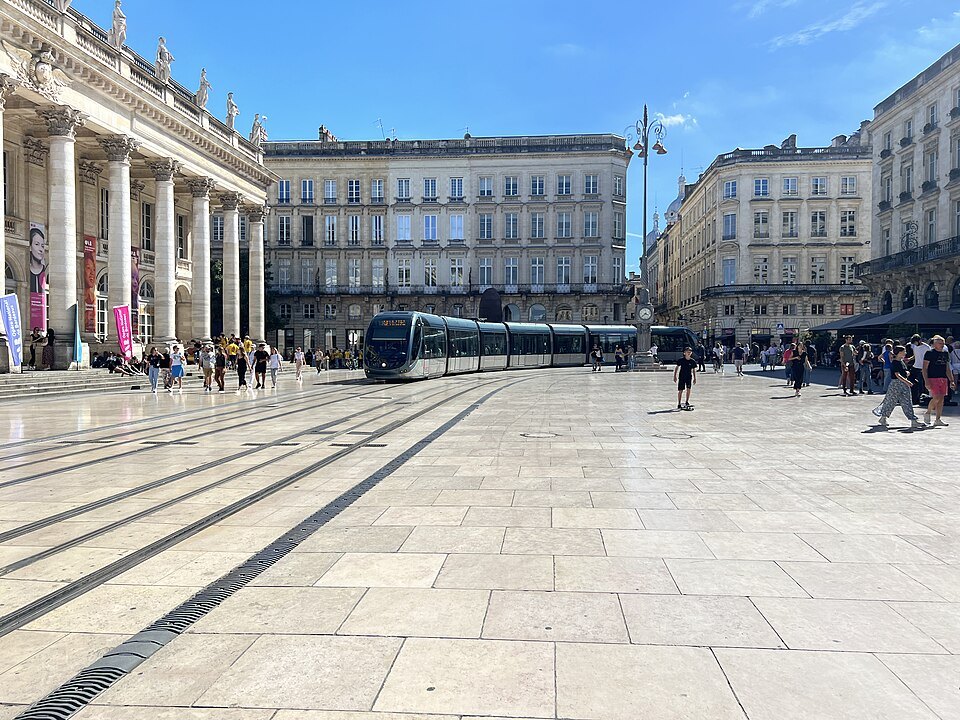
The flight of steps up to the portico was only added in 1848, when the square was lowered; originally the square and the theater stood at the same level. The side galleries were built for shops, and the building was meant as a place to stroll as well as to watch a play: there were cafés and apartments, and hawkers set up between the columns.
The inside
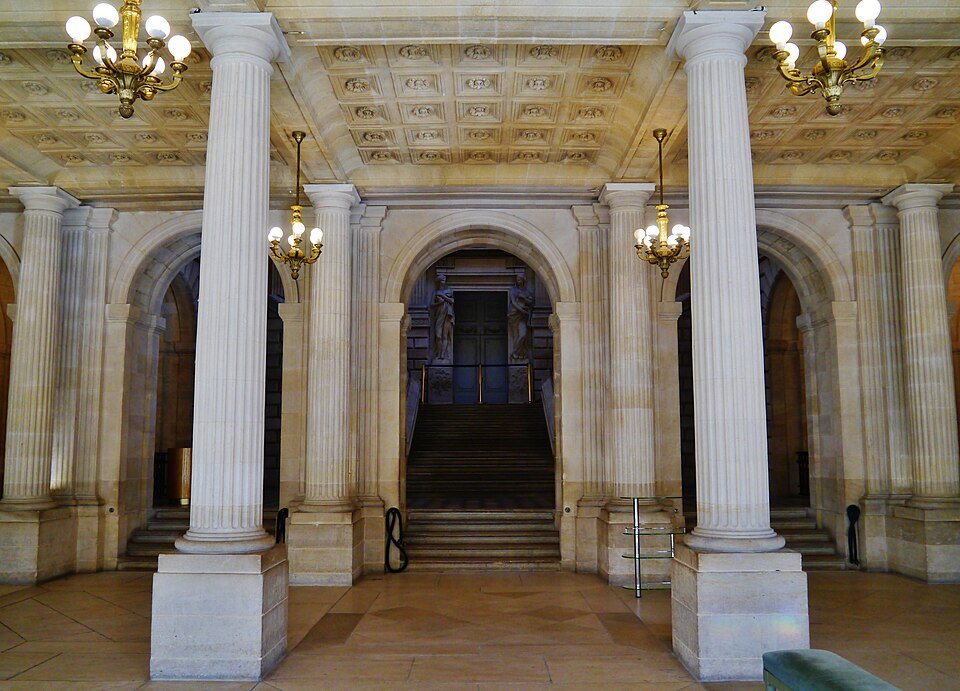
The grand staircase rises in three flights to a landing and a great door framed by two caryatids by Berruer, Thalia and Melpomene, and then divides into two ramps up to the auditorium and the foyer. Charles Garnier studied it before designing the Paris Opéra, and a former director of that house said Louis had invented almost everything Garnier later developed.
The auditorium is a horseshoe in the Italian style, decorated in blue, white and gold. It held about 1,700 people when it opened and seats about 1,100 now. The dome was painted by Jean-Baptiste-Claude Robin with Apollo and the Muses accepting a temple dedicated by the city of Bordeaux. The scene honors the arts, the craftsmen who built the theater and the city itself, shown as a woman guarded by Athena and Hermes, with the sources of her wealth at her feet: sea trade, wine and enslaved people. Candle smoke blackened Robin's work, and what you see is a faithful copy painted by Maurice Roganeau in 1917.
The concert room was remade by Charles Burguet in 1864 and 1865, and its oval ceiling of Apollo among the gods of Olympus is by William Bouguereau, with medallion portraits of composers including Mozart, Rossini, Beethoven and Meyerbeer.
How to visit
The best way in is a performance, which puts you in the auditorium with its lights and ceiling as they were meant to be seen: the opera and ballet seasons are announced by the Opéra National de Bordeaux, and popular evenings sell out, so see booking ahead. The house also organizes guided tours of the building on some days; check its programme. From outside, the portico and the square need twenty minutes and look their best in the late afternoon, when the sun is on the columns. Walk the side galleries too, where the shops of 1780 once stood.
The Grand Théâtre stands where the rue Sainte-Catherine, the city's long shopping street, begins, and the Grand Théâtre tram stop is just off the square on the cours de l'Intendance. The Esplanade des Quinconces and the Place de la Bourse are both within a few minutes' walk.
Honest notes
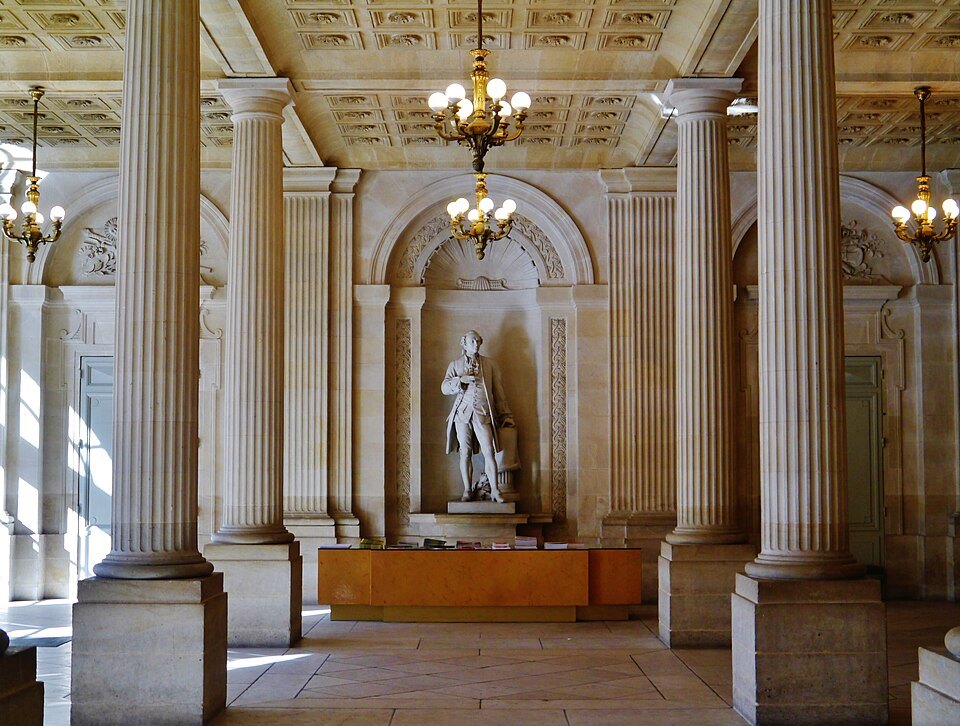
The opening date is given as 7 April 1780 in some sources and 17 April in others; both agree on the month. The famous ceiling is a copy, and the statue of Victor Louis in the vestibule, carved for the centenary in dark volcanic stone, flatters him: he was stocky and round-faced, not the slender figure you see.
Nearby
- A short walk awayThe Esplanade des Quinconces and the Monument aux GirondinsTwelve hectares laid out between 1810 and 1828 where the Château Trompette fortress stood.Read the page
- A short walk awayPlace de la BourseThe first square in France built open to a river.Read the page
- A short walk awayThe Jardin PublicThe city's garden since 1756.Read the page