Home · Sights · The Basilica of Saint-Michel and Its Spire
The Basilica of Saint-Michel and Its Spire
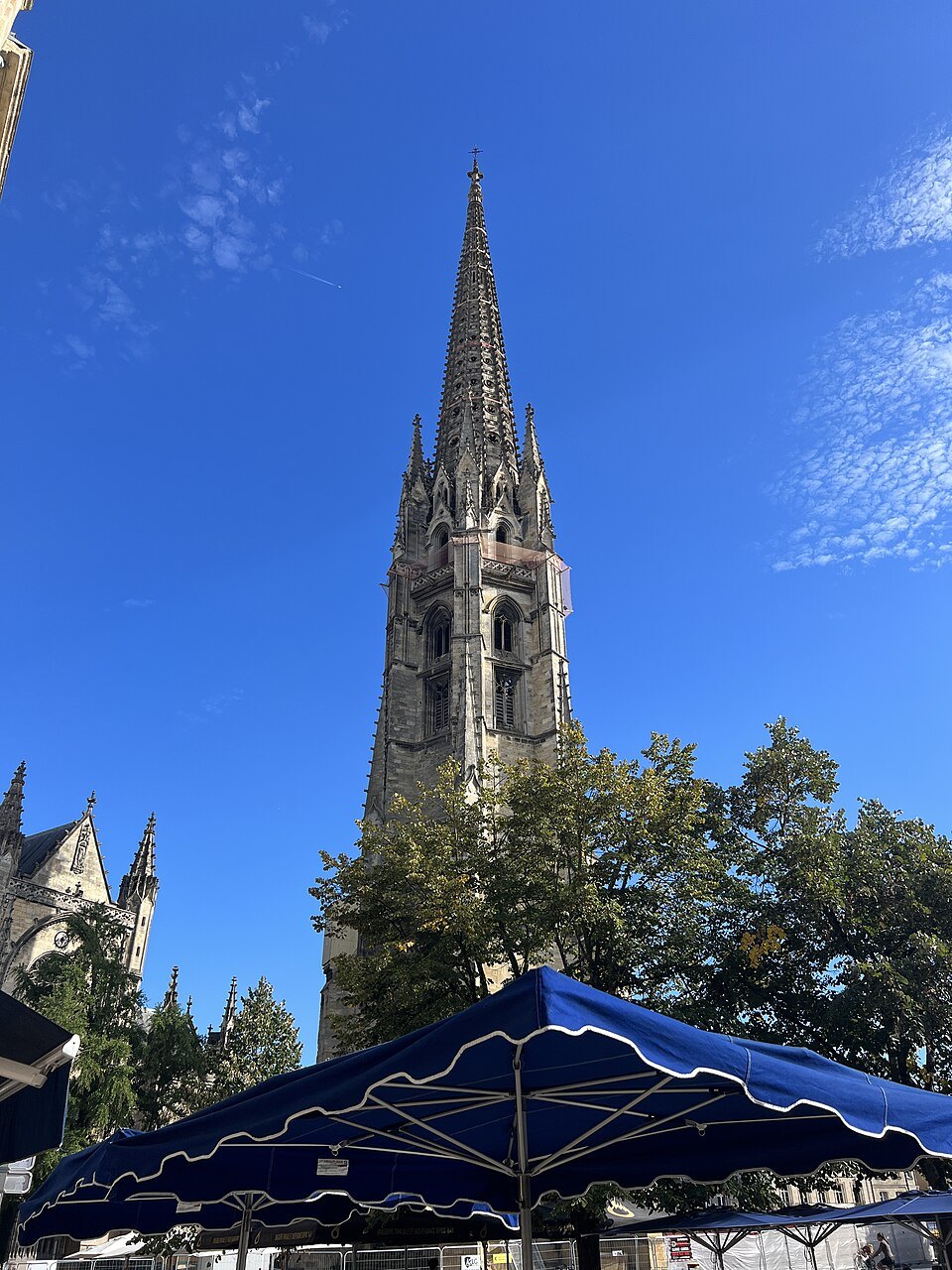
- 01The spire114 meters, the highest bell tower in the south of France, standing apart from the church
- 02The chapel of Saint-JamesBuilt from 1470 to 1475 for the pilgrims to Compostela, with a wooden altarpiece
- 03The Ferron chapelA carved Deposition from the Cross dated 1493
- 04The seventeen chapelsOne for each guild and confraternity, lining both aisles
- 05The pulpitEighteenth-century mahogany and marble, crowned by the archangel Michael
- 06The windowsA Tree of Jesse among the oldest, and postwar glass by Max Ingrand in the choir
The story, and how to see it
Why it matters
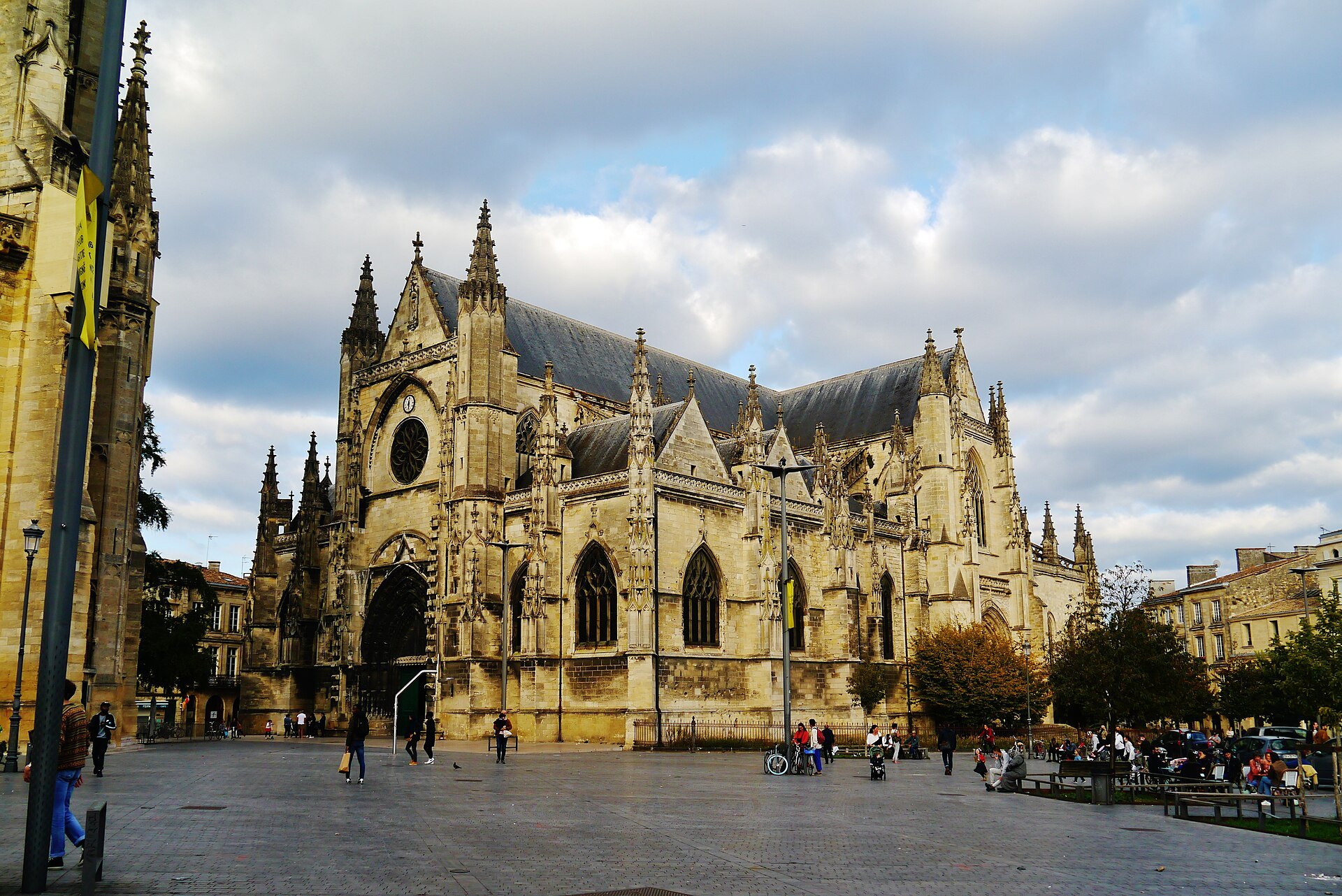
Saint-Michel is the second-largest church in Bordeaux and the one that belongs most to its neighborhood. It was built by and for the merchants and craftsmen of the riverside suburb south of the old walls, the carpenters and coopers of a port that lived on wine, and it gave its name to the quarter around it. Its free-standing spire, known simply as la flèche, is the tallest in the south of France at 114 meters, and after the cathedrals of Rouen, Strasbourg and Chartres, the fourth tallest in the country.
Like Saint-André and Saint-Seurin, it is on the UNESCO list of the Routes of Santiago de Compostela, inscribed in 1998. It has been a listed monument since 1846 and a minor basilica since 1903.
The story
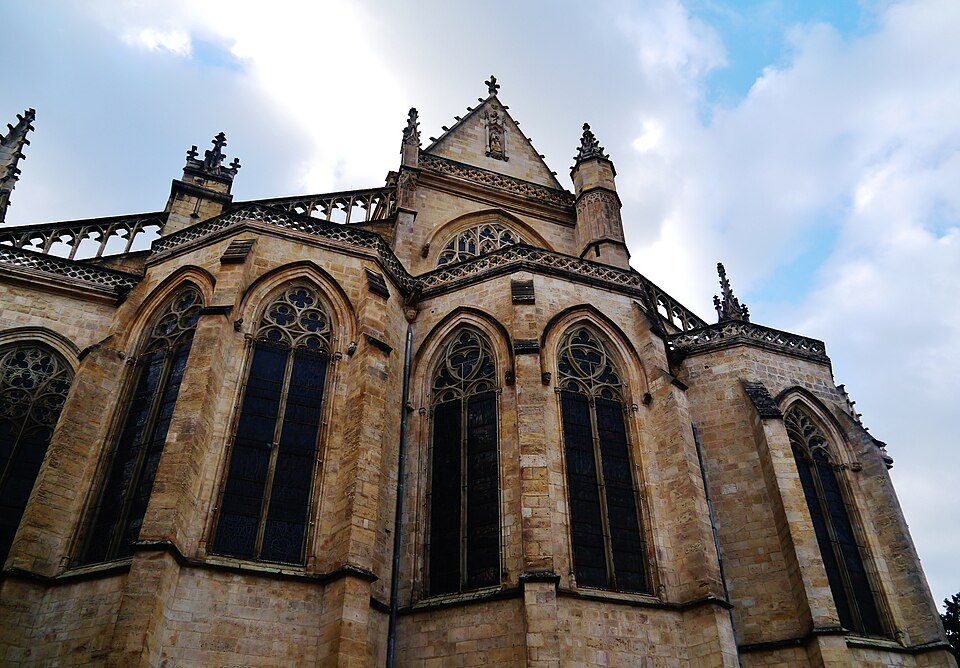
Work began around 1330, replacing an older parish church outside the walls. The following century of calamities, the Hundred Years' War, the plague of 1348 and floods, slowed it badly, and the hall church only rose in 1430. The parish then decided to raise the central nave in the new flamboyant style. Louis XI, who had placed France under the protection of the archangel Michael, gave generously when he visited in 1462.
The bell tower was built from 1472 to 1492 by a master builder from Saintes, Jean Lebas, and his sons, fifteen meters in front of the church on the site of an old charnel house. As at the cathedral, keeping the bells apart protected a building on marshy ground from their vibration. When the stone spire reached its full height in September 1492, the chronicler reports, no workmen could be found willing to take the risk of finishing it, and two of the master masons did it themselves.
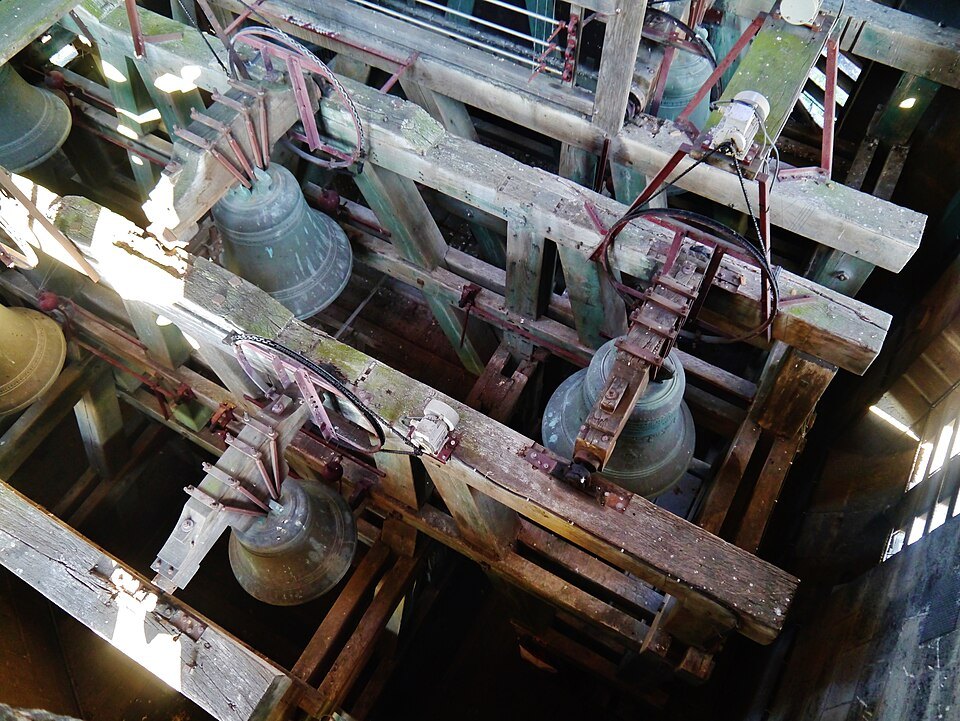
The tower has had a hard life. After Bordeaux rose against new taxes in 1675 and rang the alarm from Saint-Michel, Louis XIV ordered the spire demolished; Vauban, who called it one of the finest pieces in Europe, talked him out of it. An earthquake in 1759 damaged the church and a hurricane took the spire down in September 1768. For decades it stood truncated; Victor Hugo in 1843 called it the skeleton of a bell tower. Paul Abadie finally rebuilt the spire in Gothic style between 1861 and 1869.
What you actually see
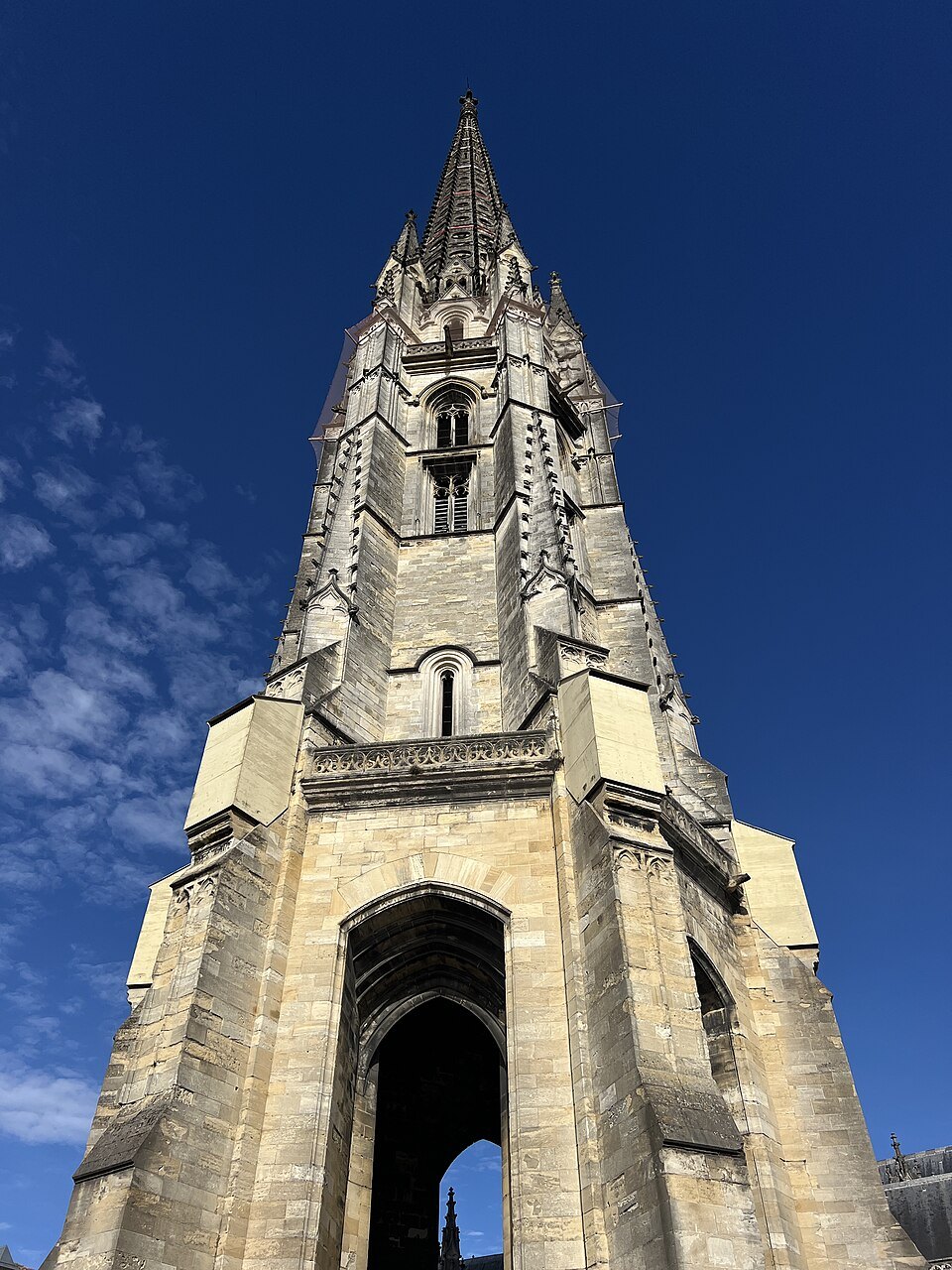
Start at the tower, across the square from the church. Its octagonal base, pierced by six massive arches, rises forty-six meters in three open storeys before the drum and the openwork spire. Statues of six bishops and archbishops stand on the buttresses. The tower holds a carillon of twenty-two bells, working again since 1999, and restoration work on the spire began in November 2020.
The church itself is seventy-five meters long and thirty-eight wide across the transept, a Latin cross with three vessels under rib vaults twenty-three meters high. Seventeen side chapels line the aisles, each once belonging to a guild or confraternity. Find the chapel of Saint-James, built from 1470 to 1475 for pilgrims bound for Compostela, with a seventeenth-century wooden altarpiece and the tomb of a pilgrim; the Ferron chapel with its carved Deposition of 1493; and the chapel of Saint Catherine of Alexandria, patron saint of the river boatmen.
In the nave, the eighteenth-century pulpit combines mahogany and marble under a statue of Saint Michael. There is a late fifteenth-century pietà, and a Saint Ursula sheltering the virgin martyrs of Cologne under her cloak. Numbered and engraved slabs in the floor mark the graves of the well-off, buried inside the church until the custom faded in the eighteenth century.
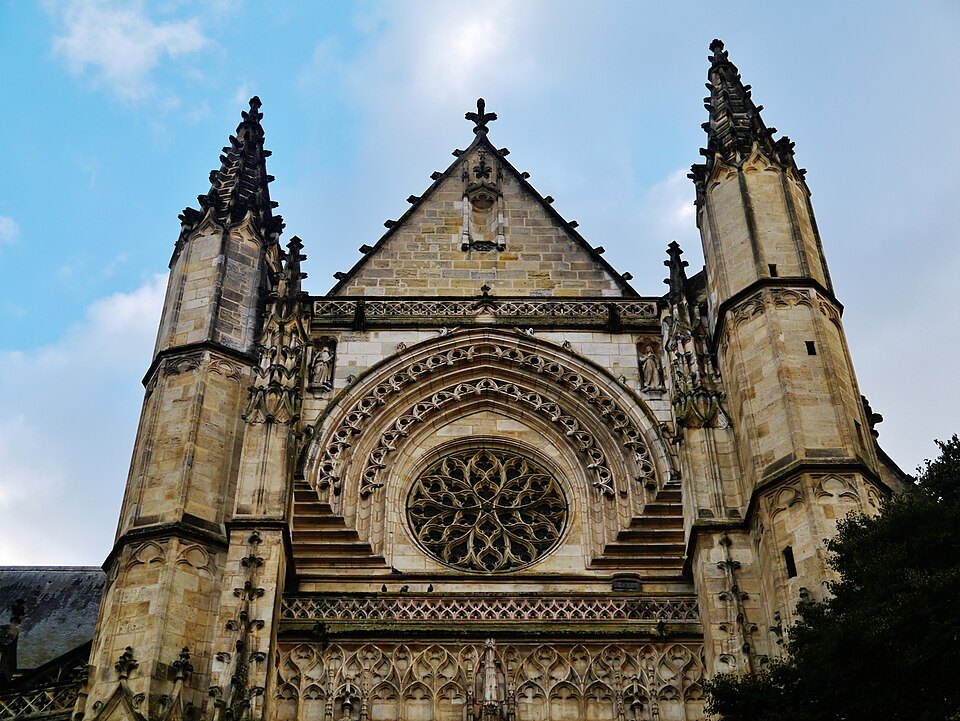
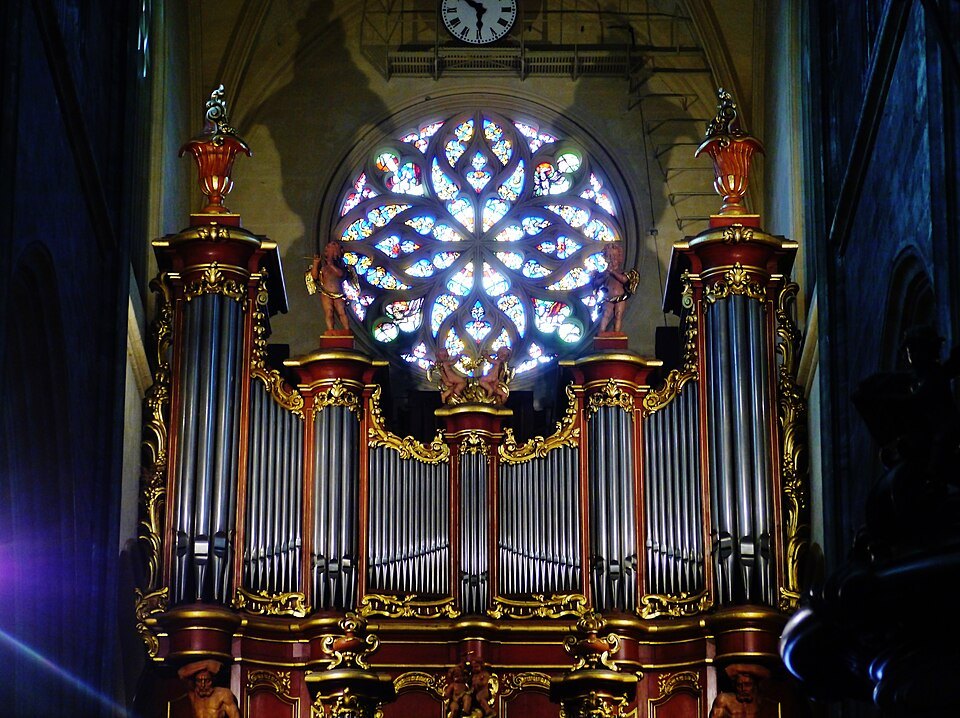
Among the windows, a Tree of Jesse in reds, yellows and blues is one of the oldest; the choir glass is by Max Ingrand, replacing windows blown out by German bombing on the night of 19 to 20 June 1940, when the French government had taken refuge in Bordeaux. Shrapnel scars from that night still mark the facade and the spire. The organ case, in Louis XV style, dates from 1762 to 1765.
The mummies
In 1791 the parish cemetery around the church was cleared, and the bones were piled in the crypt under the bell tower. The workmen found some sixty bodies mummified by the clay soil. Placed in a circle in the crypt, the mummies of Saint-Michel became a morbid attraction: Victor Hugo came to see them in 1843, and Théophile Gautier after him. The crypt closed to the public in 1979, and the bodies were reburied in the Chartreuse cemetery in 1990. There is nothing to see of them now, whatever older guidebooks say.
The quarter and how to visit
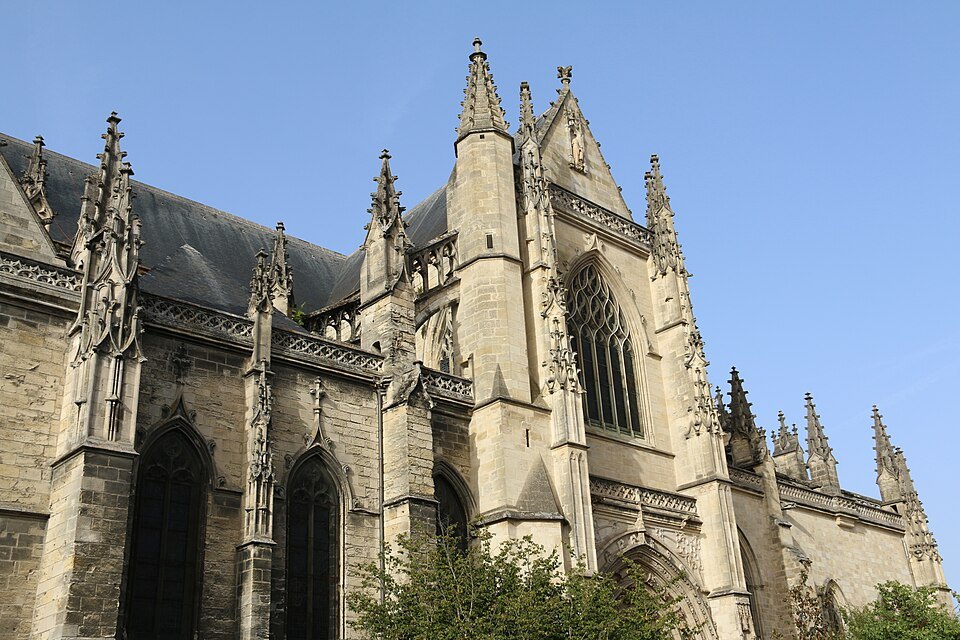
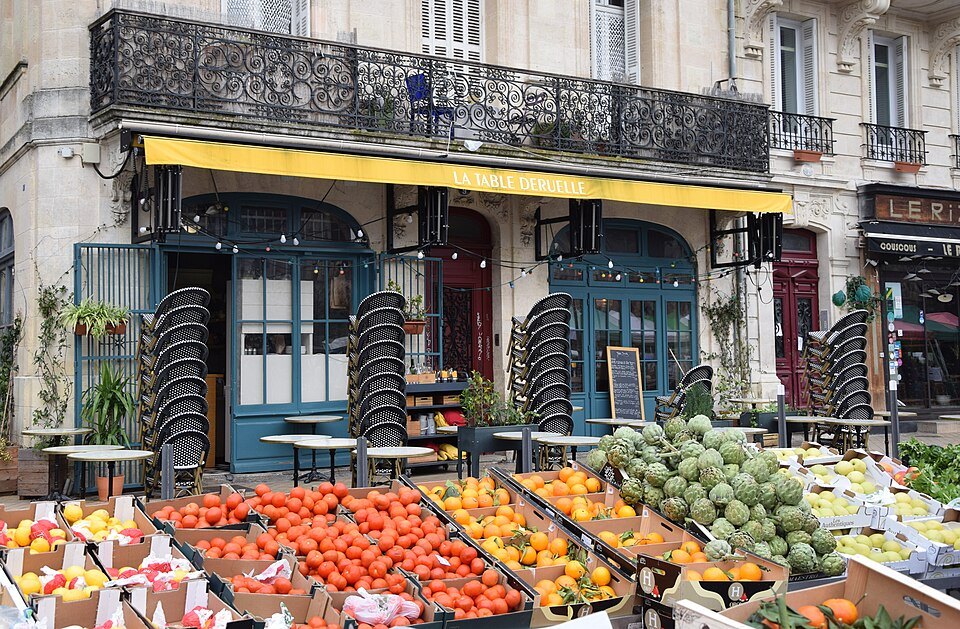
The church stands on a low rise the old locals called Pichadey, south of the cours Victor-Hugo, in a lively, mixed and slightly rough-edged part of the old town. The squares around the basilica host a flea market, especially on Sunday mornings, and the Marché des Capucins, once the city's wholesale food market and now a neighborhood market hall, is a few streets south; see eating and drinking.
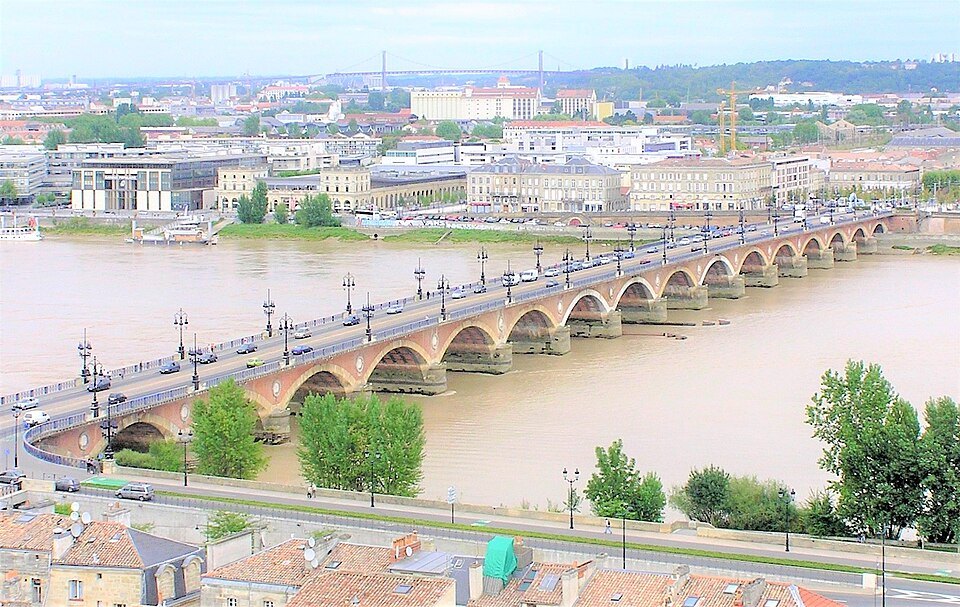
The basilica is a working parish church; visits pause for services. Give the church half an hour and the square and tower another fifteen minutes. The tram along the quays stops at Porte de Bourgogne and Saint-Michel is a short walk up from the river. The Grosse Cloche and the Pont de Pierre are both close, and the neighborhoods page describes the quarter as a place to stay.
Nearby
- A short walk awayThe Grosse Cloche and Rue Saint-JamesA gate of the medieval walls that pilgrims to Compostela passed under.Read the page
- A short walk awayThe Pont de PierreSeventeen arches of brick and stone over 487 meters of tidal river.Read the page
- A short walk awayThe Porte Cailhau and Place du ParlementA fortified gate of 1493 to 1496.Read the page