Home · Sights · The Jardin Public
The Jardin Public
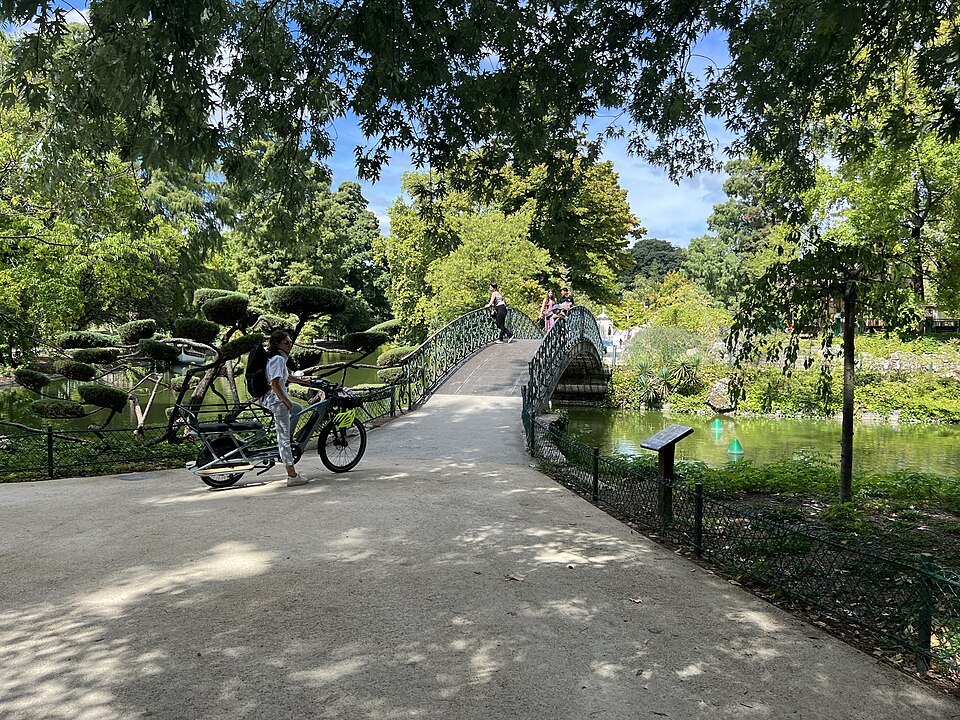
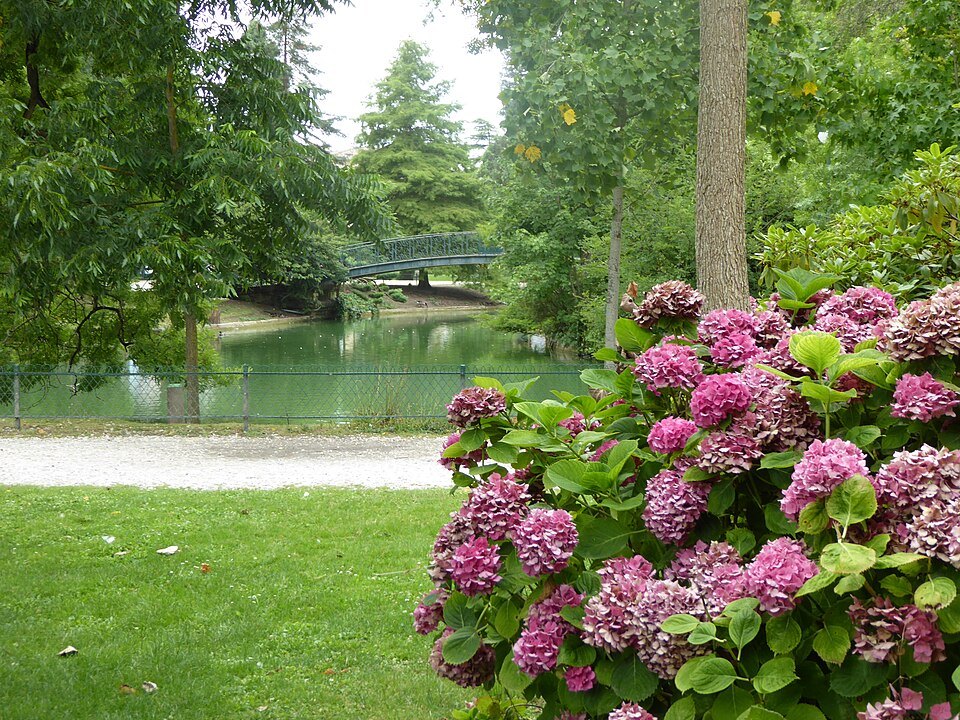
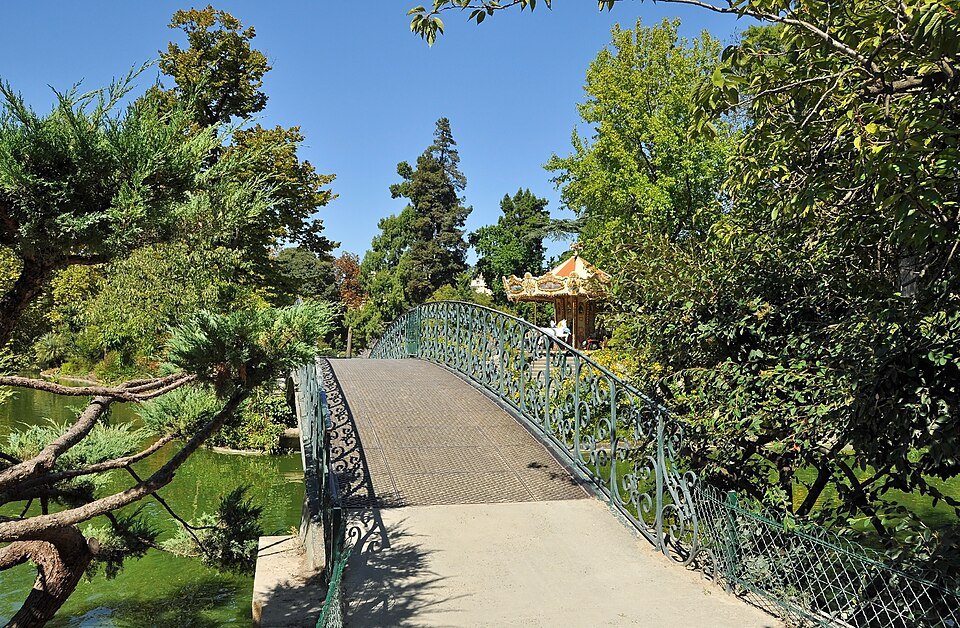
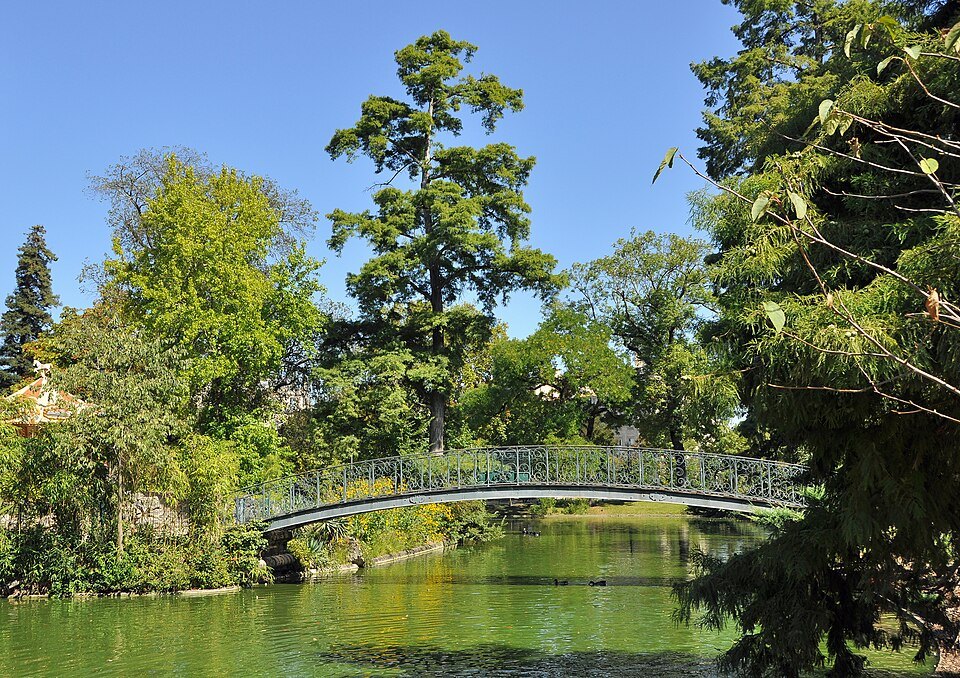
- 01The lake and its islandsA winding stretch of water with two islands and footbridges from the 1850s
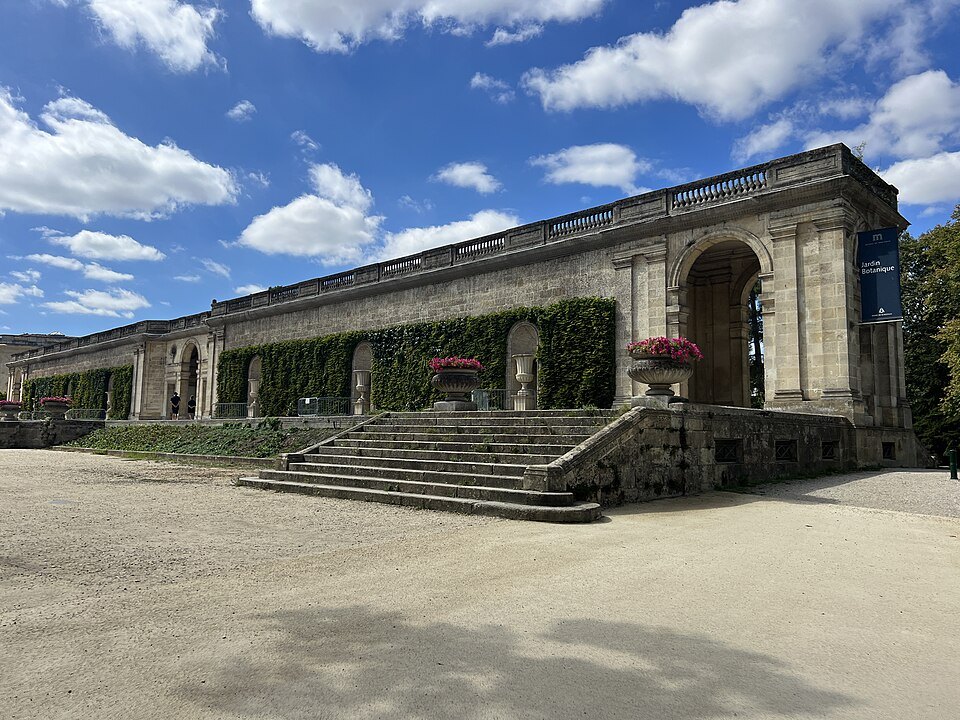
- 02The terraceThe stone esplanade of the old greenhouses, with Medici vases in its niches
- 03The Ionic porticoesTwo colonnades of 1749 on the south side, from the first French garden
- 04The gilded gatesThe railings on the cours de Verdun, regilded in 1970 with 7,500 sheets of gold leaf
- 05The statuesGoddesses taken down from the Grand Théâtre's roof, and busts of Bordeaux's writers
- 06The remarkable treesA Mexican swamp cypress and a pecan tree thirty-eight meters tall, the highest in the garden
The story, and how to see it
Why it matters
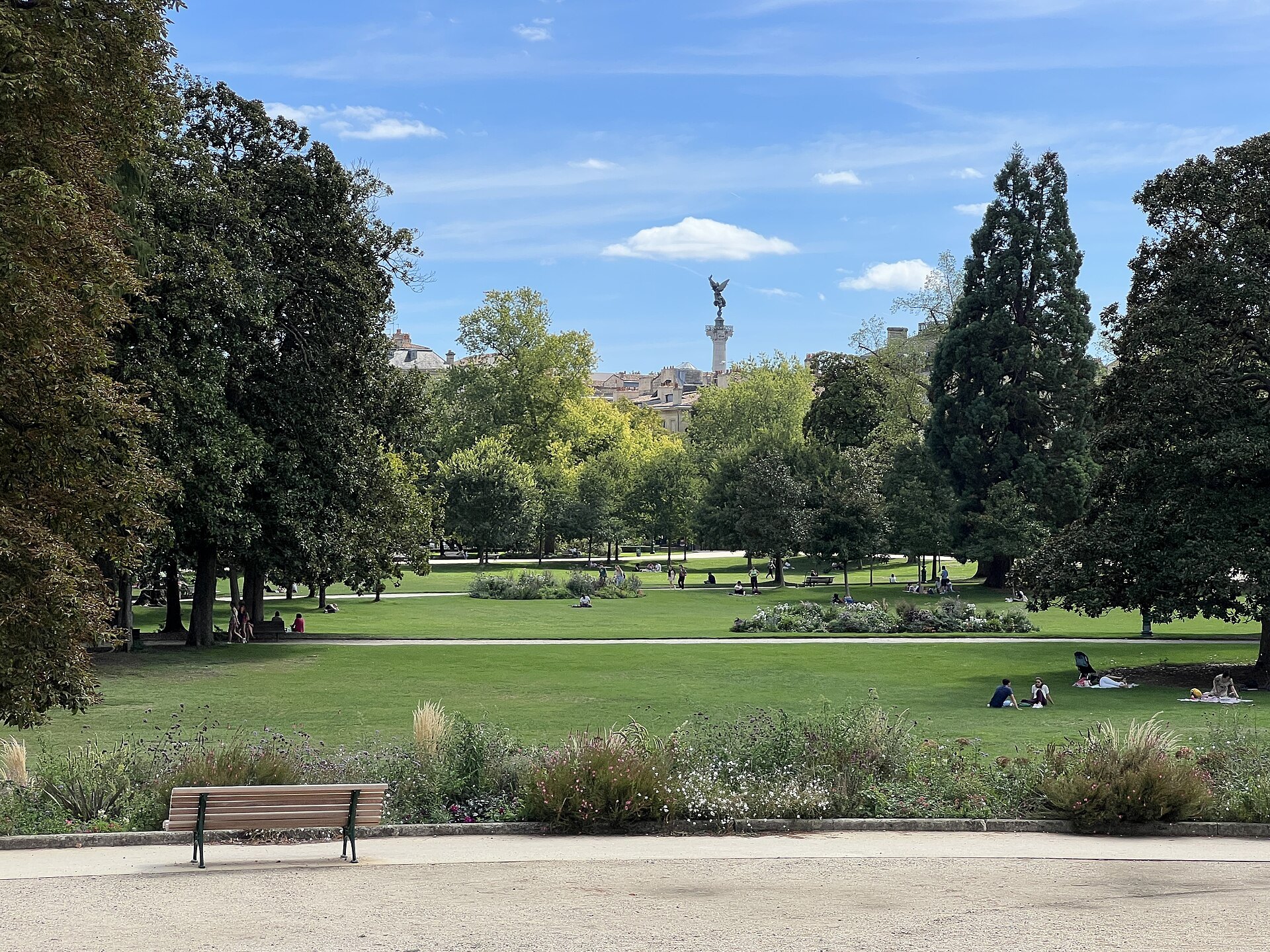
The Jardin Public is where Bordeaux goes to breathe. Ten minutes from the Grand Théâtre, behind gilded railings on the cours de Verdun, it is a green, shaded, slightly old-fashioned park of lawns, winding paths, a lake and some remarkable trees, and it is one of the few places in the stone city where you can sit under a tree for an hour.
It is also a good example of how the eighteenth-century city was planned. The intendant Tourny, who drove so much of the rebuilding, founded it in 1746 for health and for business: in a trading city, he wrote, a garden where merchants could meet would bring them more deals, a kind of second exchange, an evening exchange.
The story
The garden was laid out on the edge of the town over land of poor vines and kitchen gardens and opened in 1756. Ange-Jacques Gabriel, the architect of the Place de la Bourse, designed it in the French style on about twelve hectares: a great round basin with a fountain between four parterres planted with box, laurel, thyme and flowers, and elms and limes clipped into arbors, balls and fans. The two Ionic porticoes on the south side date from 1749, and a royal riding school stood at the north end.
The garden has seen its share of history. On 3 May 1784 eight thousand people gathered for the first balloon launch in Bordeaux; the wind defeated it and the disappointed crowd rioted. On 20 July 1789, hearing of the fall of the Bastille, thirty thousand people met here to hear speakers call for volunteers for the National Guard. Under the Revolution the flowers gave way to grass and the garden became a parade ground.
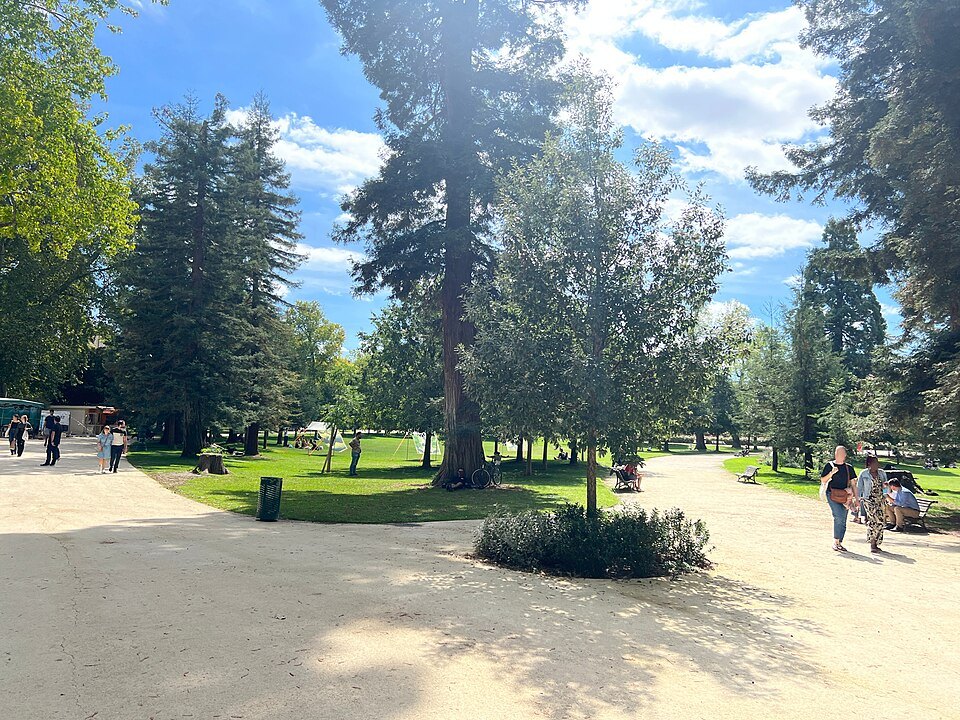
In 1856 the city had the landscape gardener Louis-Bernard Fischer remake it as an English park, the romantic style it keeps today: lawns, winding paths and a stretch of water with two islands, crossed by footbridges built wide enough for crinolines. He planted rare trees, giant sequoias among them. Great iron and glass greenhouses went up the same year, their central pavilion seventeen and a half meters high; they were demolished in the 1930s and replaced by the stone terrace you see.
What you actually see
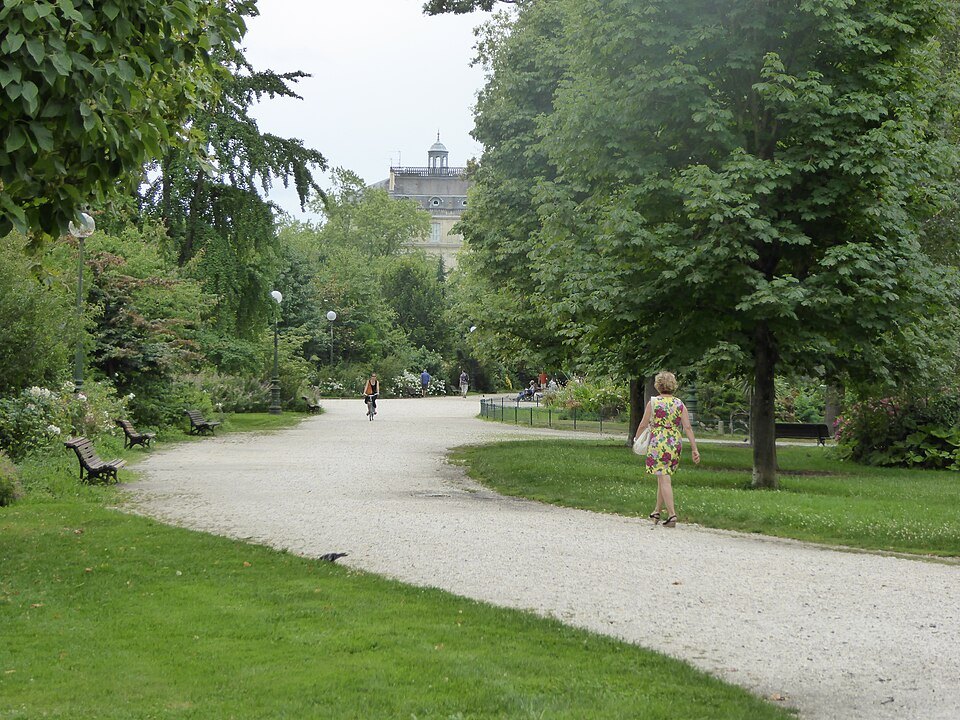
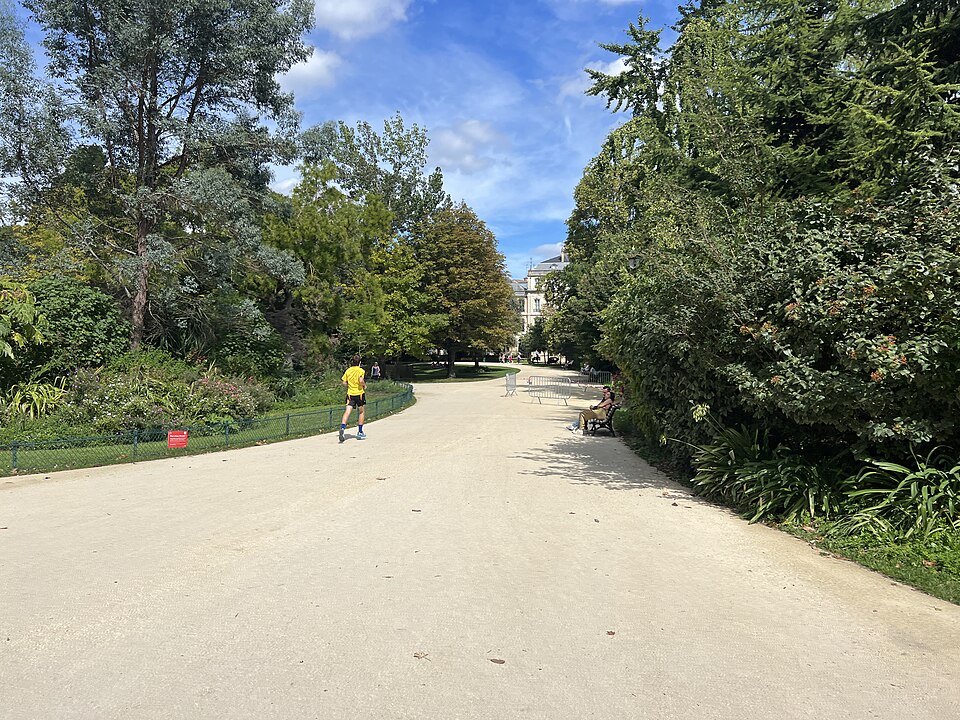
Enter by the gilded gates on the cours de Verdun; their railings were regilded in 1970 with 7,500 sheets of gold leaf. The terrace laid out in the 1930s, with six niches holding Medici vases, looks over the lawns to the water. Follow the paths round the lake and look for the statues: Juno with her peacock at the tip of one island and Calliope, muse of epic poetry, at the end of the other are two of the goddesses carved by Pierre-François Berruer for the roof of the Grand Théâtre, moved here from it; Venus holding two doves stands above the great cascade.
Around the garden stand busts and statues of the city's writers and scientists, among them François Mauriac in bronze by Ossip Zadkine at the south-east entrance, and a statue of the animal painter Rosa Bonheur. Two trees were listed among the remarkable trees of France in 2012: a Mexican swamp cypress thirty-one meters high and a pecan, at thirty-eight meters the tallest tree in the garden.
On the edge of the park, the Hôtel de Lisleferme, a mansion by the architect Bonfin, houses the city's natural history museum; under a clump of trees nearby stands a prehistoric stone circle, the cromlech de Lervaut, brought here in 1875 by the naturalist J. B. Gassies. The botanical garden that Fischer set up in a corner of the park in 1858 moved in 2001 to a new site on the right bank, in La Bastide.
Between the two porticoes on the south side, the Champ-de-Mars gate of 1938 is crowned with groups of carved children by Claude-Clair Francin, brought from the old Place Saint-Germain, now the Place Tourny, and a bronze of the painter Carle Vernet by Raymond Martin stands by the south portico.
How to visit
The park is free and needs no planning; the city sets its gate times, which change with the season. Allow an hour to walk the paths and sit by the water, more with a book or a picnic. It is at its best in spring, when the lawns are fresh and the trees in new leaf, and on hot summer afternoons, when the shade is the point.
The Jardin Public tram stop is at the corner of the garden. It sits between the Chartrons to the east and the Palais Gallien to the west, with the Quinconces a few minutes south-east, so it fits naturally into a morning in the northern half of the old city.
Honest notes
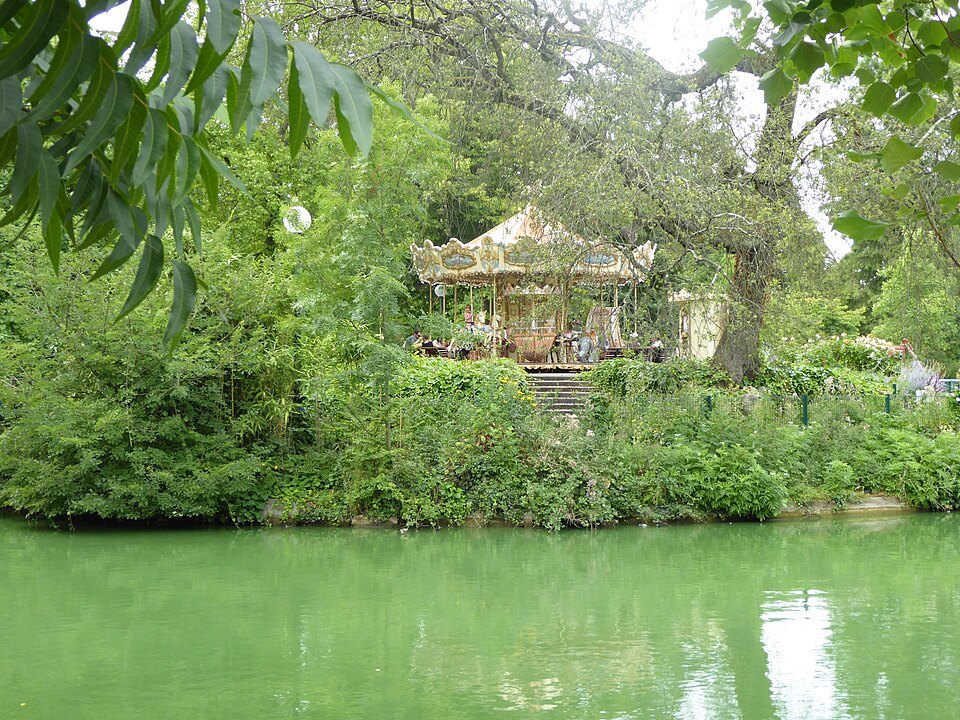
In the nineteenth century the chairs cost money and the lawns were off limits, and the garden was the promenade of the elegant quarters, where children rode donkeys, sailed on a little boat called Le Petit Mousse and watched the Guignol puppet theater. For about ten years from 1880 there was even a small dairy at the west entrance, with a cowshed for three or four cows and a counter selling milk. The park has relaxed since, but it keeps something of that polite nineteenth-century character: it is a garden for walking and sitting, not for wild games.
Nearby
- A short walk awayThe ChartronsThe riverside suburb where English.Read the page
- A short walk awayThe Palais GallienThe ruins of Burdigala's amphitheater.Read the page
- A short walk awayThe Esplanade des Quinconces and the Monument aux GirondinsTwelve hectares laid out between 1810 and 1828 where the Château Trompette fortress stood.Read the page