Home · Sights · The Palais Rohan and the Musée des Beaux-Arts
The Palais Rohan and the Musée des Beaux-Arts
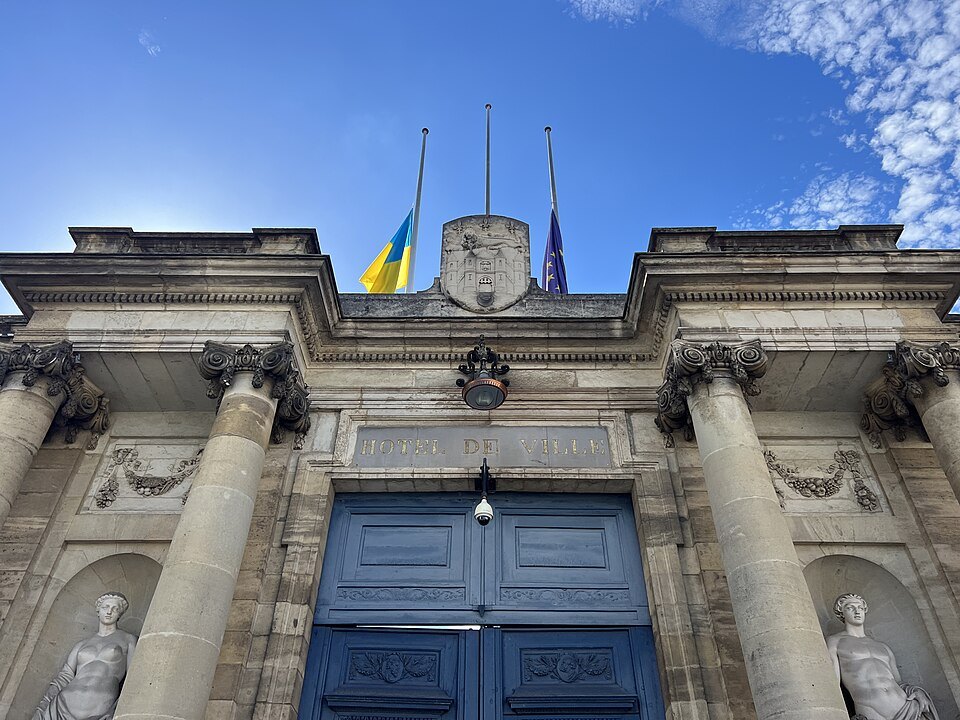
- 01The courtyardA square court closed by an Ionic arcade and a monumental gate, the carriage door remade in 2025
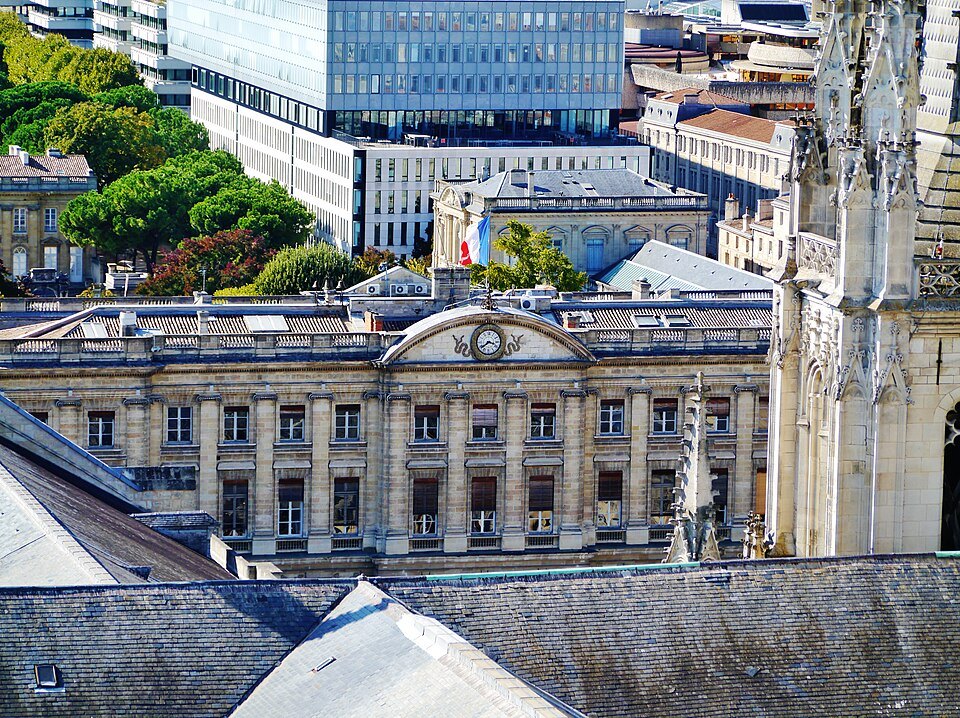
- 02The main frontA sober neoclassical facade whose pediment has held a clock since 1871
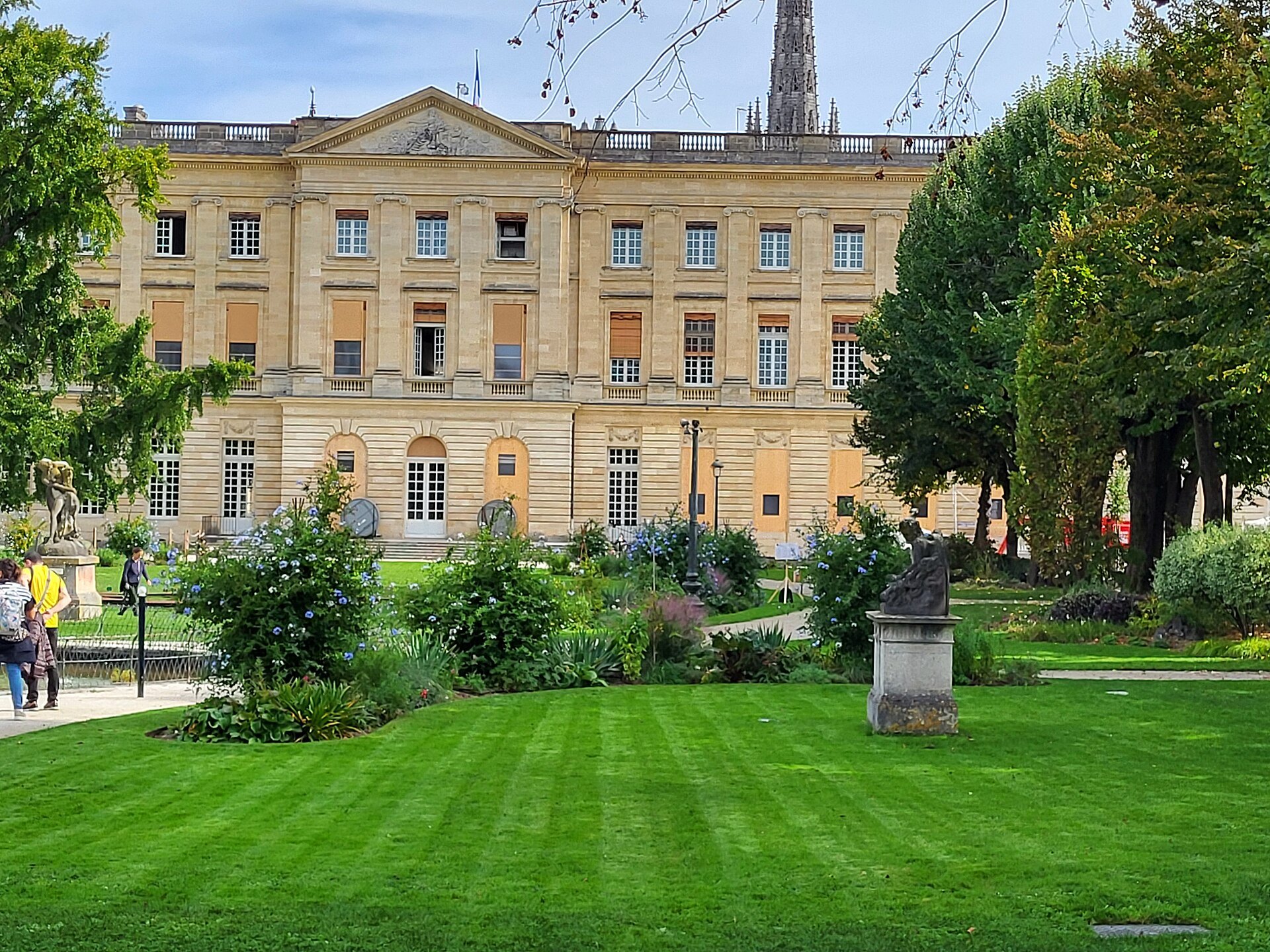
- 03The garden frontBalustraded pavilions and a carved pediment of Liberality over the garden
- 04The painted dining roomPompeian trompe-l'œil of 1783 and 1784 by Giovanni Antonio Berinzago
- 05The fine arts museumTwo wings of 1880 on the garden, paintings from the fifteenth to the twentieth century
- 06The Hôtel de LalandeA mansion of 1778 that houses the museum of decorative arts and design
The story, and how to see it
Why it matters
The Palais Rohan sums up how power moved through Bordeaux. Built for an archbishop on the eve of the Revolution, it housed in turn the revolutionary tribunal, the prefect of Napoleon, the emperor himself in 1808, the restored kings from 1815, and finally the city council, which has sat here since 1 January 1836. It faces the cathedral across the Place Pey-Berland, and behind its garden stands the city's museum of fine arts.
It is one of the purest examples of the city's late eighteenth-century style, a palace built between courtyard and garden in the manner of a Paris town mansion, and its restraint owes much to Victor Louis, who was building the Grand Théâtre in the city at the same time.
The story
Ferdinand-Maximilien-Mériadec de Rohan became archbishop of Bordeaux in 1769 and set about rebuilding the old archbishop's palace that had stood at the north-west corner of the cathedral since the Middle Ages. He planned to pay for it by selling off the surrounding land, which became the Mériadeck quarter, and with the diocese's income. The first engineer, Joseph Étienne, drew a large complex; the archbishop replaced him with the city architect Richard-François Bonfin, and as the costs mounted he had to spend his own fortune. He left Bordeaux in 1781, and the palace was only finished in 1784.
From 1791 the new departmental council and the revolutionary tribunal sat here. In 1800 the prefect moved in; Charles Delacroix, officially the father of the painter Eugène Delacroix, died here as prefect. Napoleon stayed in 1808, when it became an imperial palace, and after 1815 the white flag of the kings flew over it. In 1835 the state exchanged it with the city for the old town hall by the Grosse Cloche, which the army wanted for a barracks.
Royalty kept coming. The duchess of Angoulême stayed four months in 1823, and in 1828 the duchess of Berry was the palace's guest when she opened the new Saint-André hospital and laid the first stone of the rostral columns on the Quinconces. In 1839 the mayor David Johnston received the king's eldest son here, on his way to open the railway station for the line to the coast.
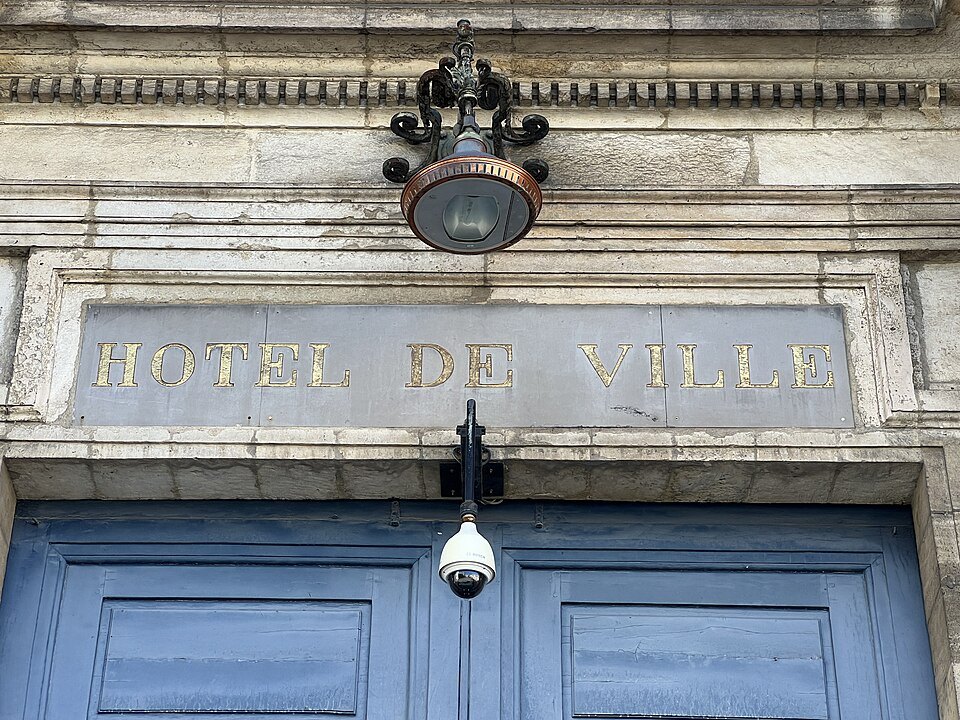
A fire on 13 June 1862 destroyed the city archives, though most of the paintings were saved. In the night of 5 to 6 October 1996, when Alain Juppé was both prime minister and mayor, a bomb claimed by a Corsican separatist group exploded under the mayor's office windows, without casualties. The carriage door burned during a night of protests in March 2023; a new door, made identical to the old, was hung in December 2025.
What you actually see
From the street, a screen of arcades with Ionic columns closes the square courtyard, with a monumental gateway in the middle and two niches holding figures of the Spirit of Commerce and Industry and the Spirit of Science and the Arts, carved in 1869. At the back of the court the main front is flat and austere; the carved relief in its pediment was destroyed in the Revolution and replaced by a clock in 1871. The garden front is almost the same, but it kept its carved pediment, an allegory of Liberality by Barthélemy Cabirol.
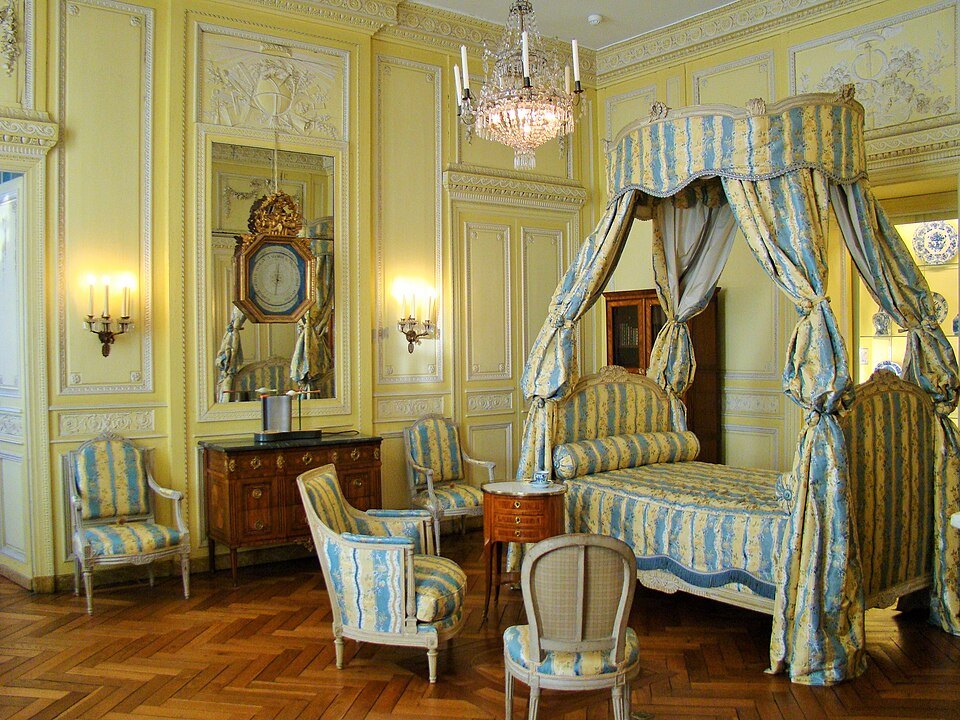
Inside, the reception rooms are paneled in carved lime wood in the Louis XVI style. The archbishop's dining room was painted in Pompeian trompe-l'œil in 1783 and 1784 by Giovanni Antonio Berinzago; the story goes that the young Eugène Delacroix, son of the prefect, found his vocation there in 1802 watching Pierre Lacour restore the paintings. The council chamber, installed in 1889 in the old courtroom, keeps its paneling of that date.
The museums
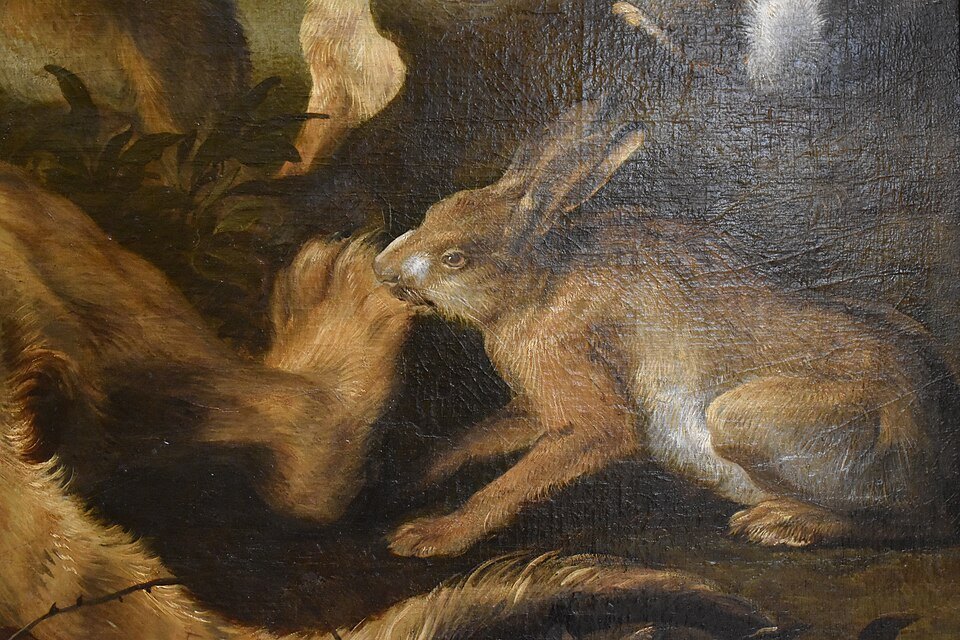
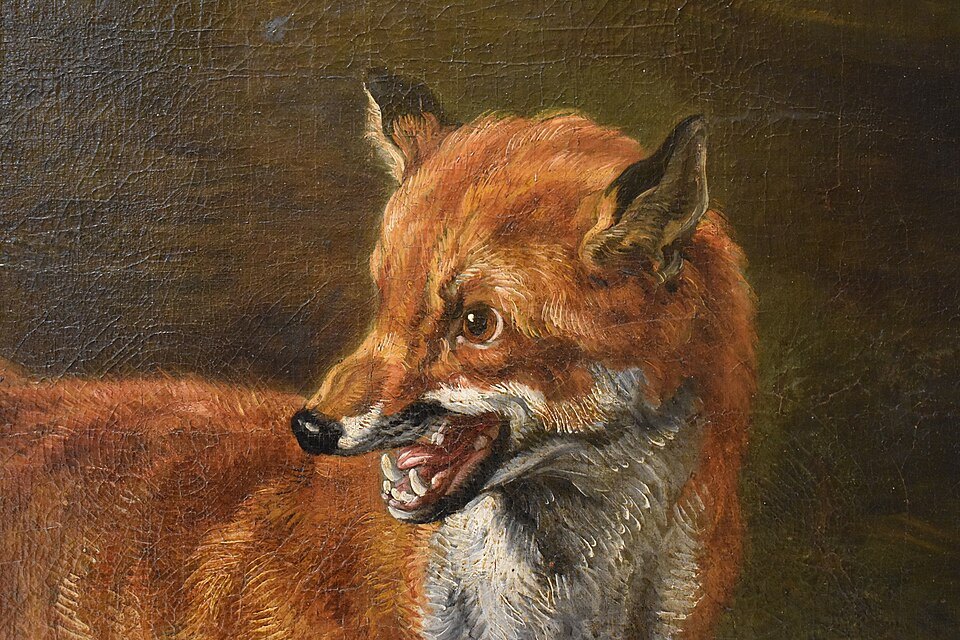
The Musée des Beaux-Arts, founded in 1801 when the state shared out works from the Louvre among fifteen provincial cities, occupies two wings built by Charles Burguet on either side of the town hall garden and opened in 1881. Its collection runs from the fifteenth century to the twentieth; the huge Lion Hunt that Delacroix painted in 1855 is here, its upper part lost in a fire in 1870. Temporary exhibitions are held in a separate gallery across the cours d'Albret.
A few streets north, the Hôtel de Lalande, a mansion built in 1778 for Pierre de Raymond de Lalande, houses the Musée des Arts décoratifs et du Design: furniture, faience, glass, silver and the objects of daily life of eighteenth- and nineteenth-century Bordeaux, and design exhibitions since 2013. It reopened in part on 22 April 2026 after three years of works.
How to visit
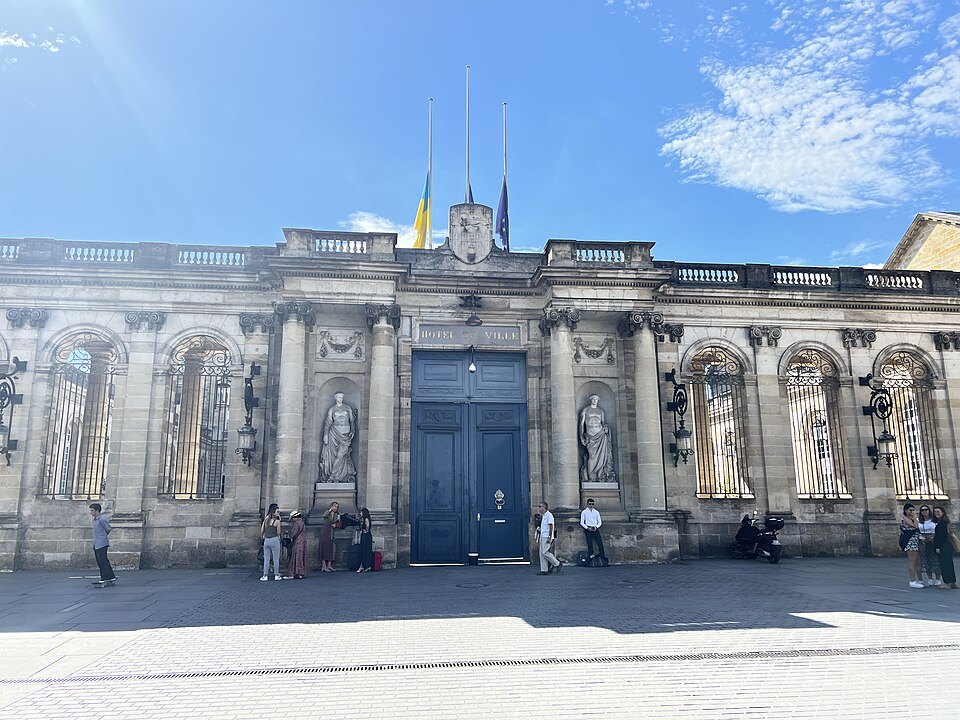
The courtyard and the main front can be seen through the gate at any time, and the garden front and the museum wings from the rue Montbazon side. The town hall is a working building, so its reception rooms can only be seen on the days the city opens them to visitors; the tourist office can tell you if one falls during your stay. Both museums set their own days and admission; check before you go, and allow an hour and a half for the fine arts collection.
The Hôtel de Ville tram stop is at the gate, served by lines A, B and F. The Pey-Berland Tower is across the square and the Musée d'Aquitaine a few minutes south.
Nearby
- A short walk awaySaint-André CathedralConsecrated by Pope Urban II in 1096 and rebuilt in Gothic over three centuries.Read the page
- A short walk awayThe Pey-Berland TowerThe cathedral's bell tower.Read the page
- A short walk awayThe Musée d'AquitaineMore than 70,000 objects from the Venus of Laussel to the port of the twentieth century.Read the page