Home · Sights · The Pey-Berland Tower
The Pey-Berland Tower
- 01The terraceAbout fifty meters up, a gallery running round the base of the spire, reached by 233 steps
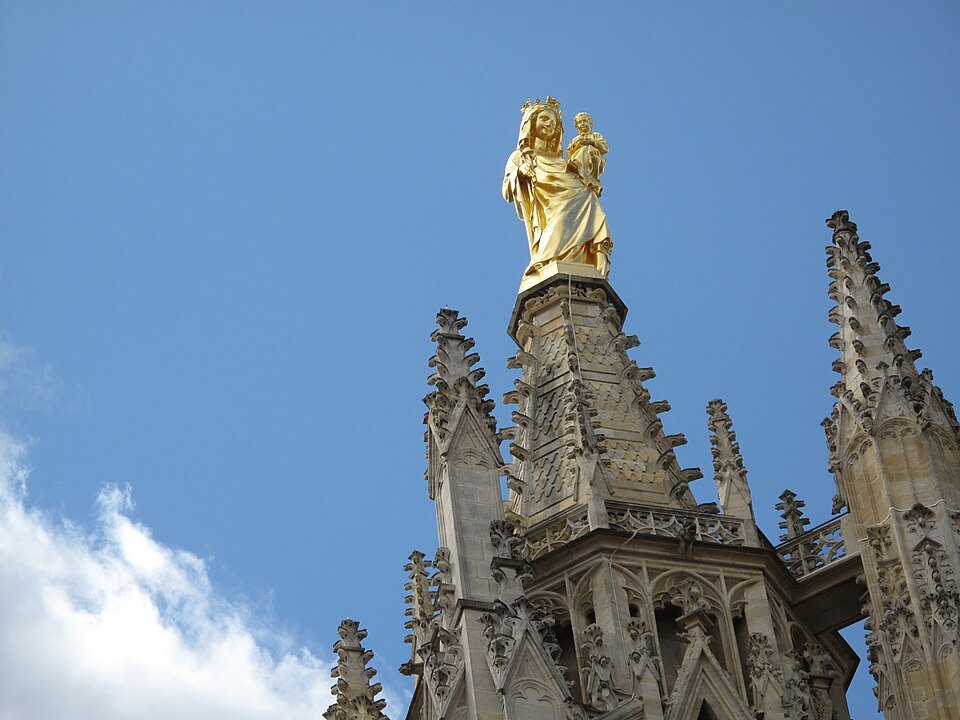
- 02Notre-Dame d'AquitaineA gilded Virgin and Child six meters tall, set on the summit in 1863
- 03The great bellA bourdon weighing more than eight tonnes hangs in the tower
- 04The Latin inscriptionSeven lines on the north face recording the laying of the first stone in 1440
- 05The distance from the churchAbout twenty meters from the cathedral's east end, so the bells never shake its vaults
The story, and how to see it
Why it matters
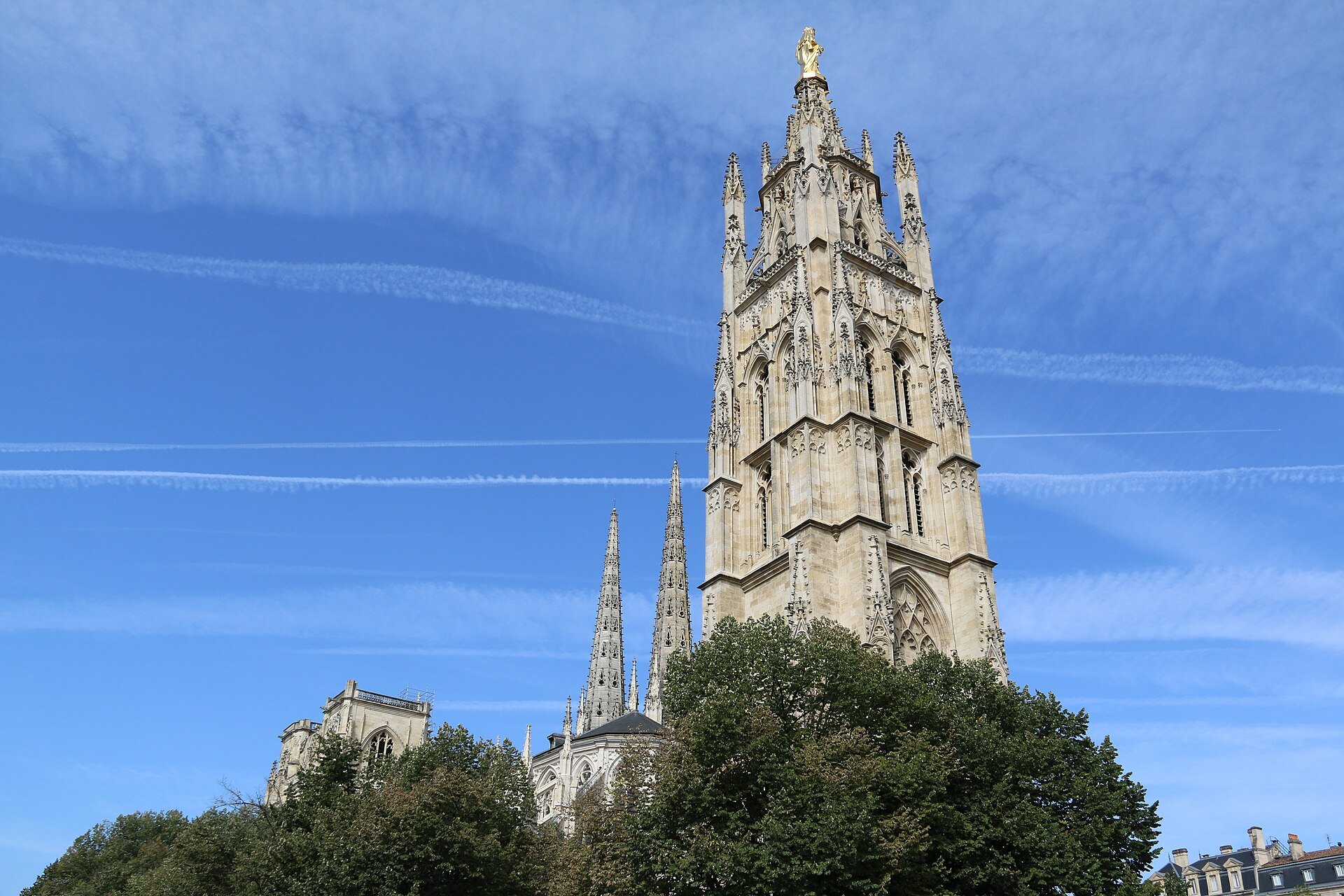
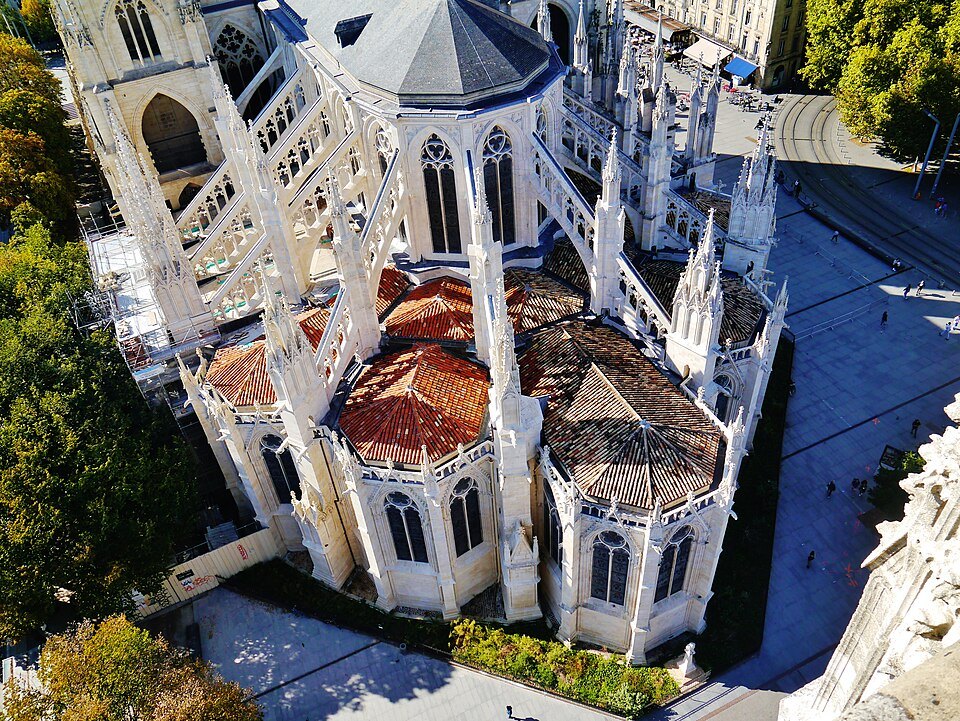
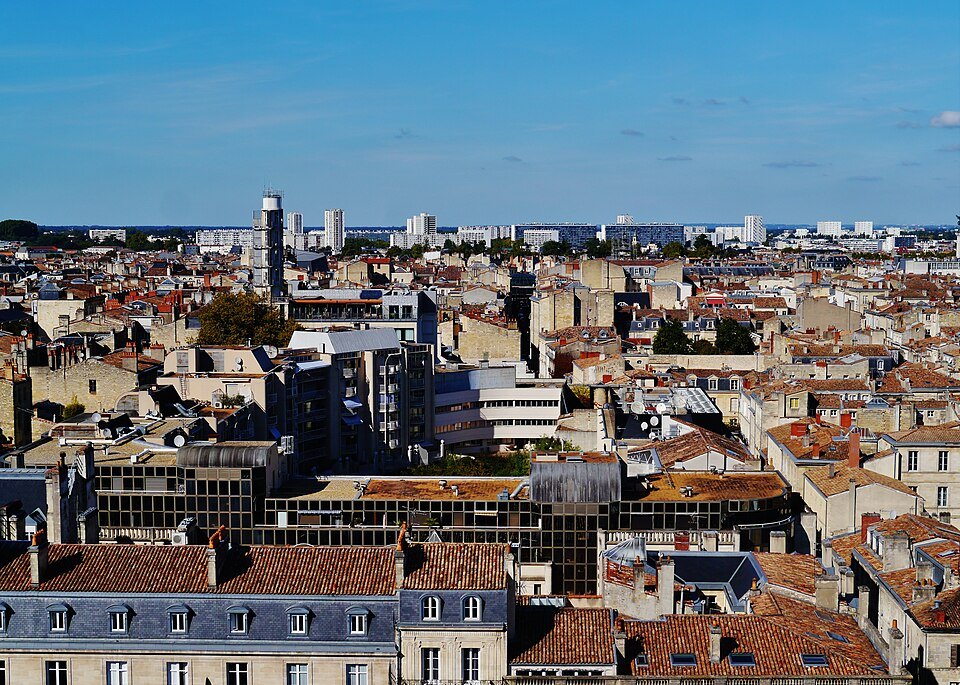
The Pey-Berland Tower is the bell tower of Saint-André Cathedral, and the first surprise is where it stands: not on the cathedral at all, but on its own a short distance from the east end, like an Italian campanile. The second is that you can climb it. From the terrace near the top the whole of Bordeaux lies below, from the cathedral's roofs and spires at your feet out to the curve of the Garonne and the bridges.
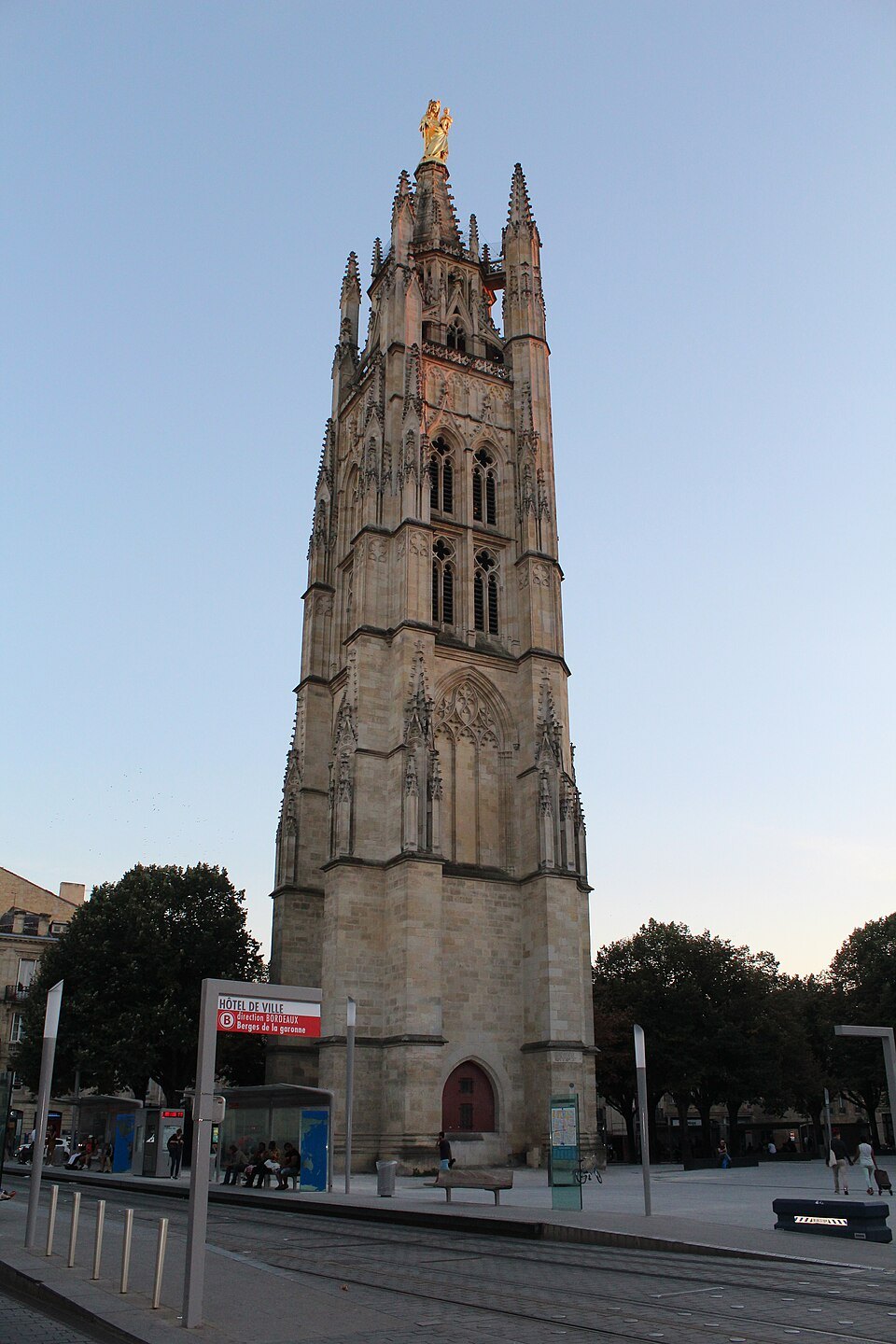
It is the tallest thing in the old center apart from the spire of Saint-Michel, and with its gilded statue it is the landmark people use to find their way back to the Place Pey-Berland. It is listed as a historic monument and, as part of the cathedral, belongs to the UNESCO listing of the Routes of Santiago de Compostela.
The story
The tower is named after Pey Berland, the Gascon form of Pierre Berland, who was elected archbishop of Bordeaux in 1430. He laid the first stone himself in October 1440, and the work went on until 1500. The same archbishop asked the pope for a university for Bordeaux, which was founded in 1441, while the city was still under the English crown.
Why build it apart? Detached bell towers are common in the Gironde. The ground here is marshy, and keeping the bells in a separate tower spared the cathedral the vibration of their ringing, which could have weakened a building on soft foundations. The tower was not always as isolated as it looks now: in the past it was joined to the cathedral by the houses of the canons, as was the custom across western France.
The spire was meant to rise much higher than it does. A storm with hurricane-force winds cut it short, and during the Revolution the tower was sold off as national property and turned into a factory for lead shot and a store for fodder. A decree of 29 June 1851 returned it to religious use. The gilded statue of the Virgin and Child, called Notre-Dame d'Aquitaine, by the sculptor Jean-Alexandre Chertier, was placed on the summit in 1863.
What you actually see
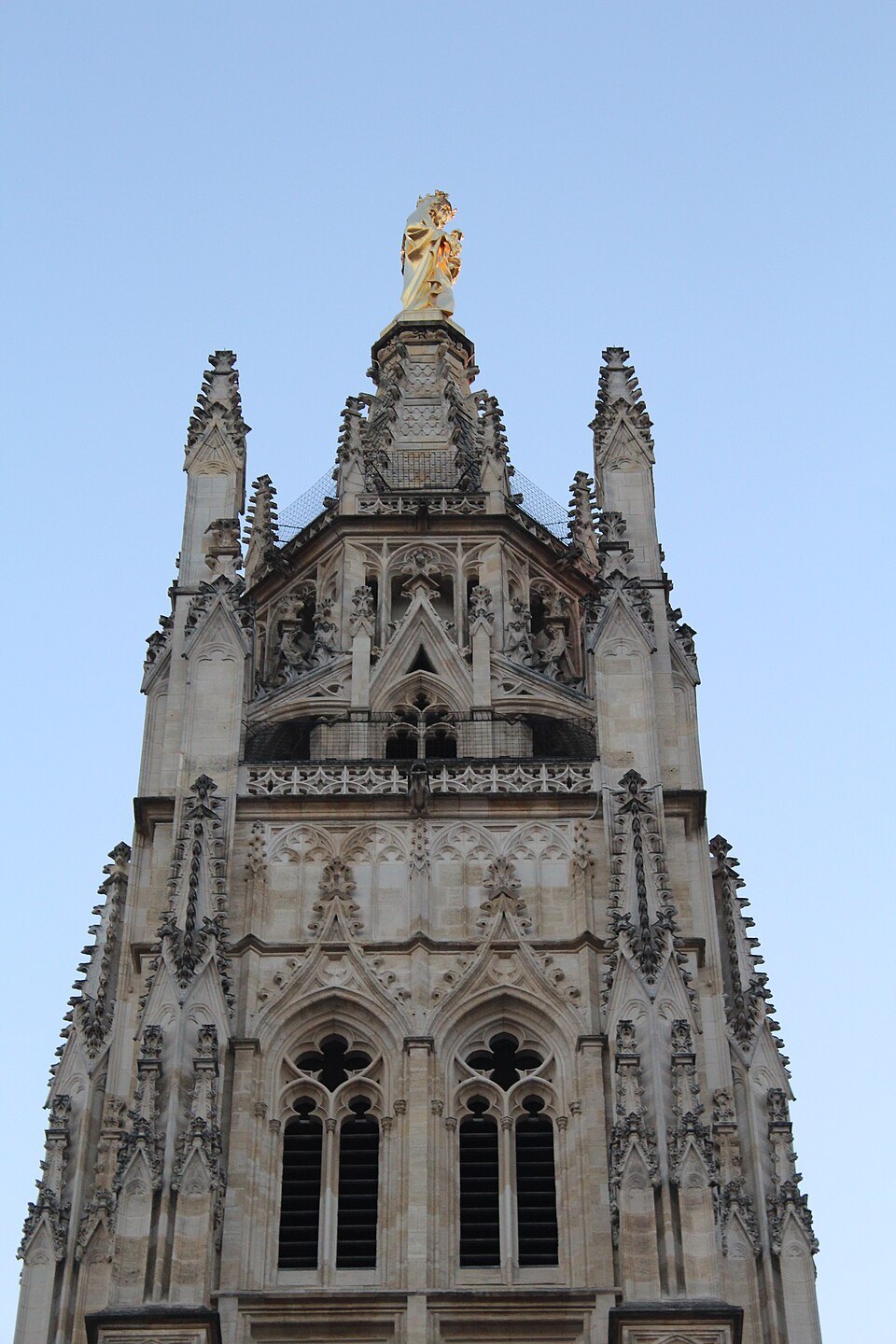
From the square, the tower rises in the flamboyant Gothic style, its walls worked with tracery and niches. It stands on a base about eight meters across, and the Latin inscription set into its north face explains, in seven lines of verse, when the first stone was laid and by whom. The inscription begins with an odd word, disquadram, not square, and scholars have read it as an admission that the base is irregular, justified by the great height it had to carry.
The statue at the top is six meters tall and stands about sixty meters above the ground. It faces north-west, toward the village where Pey Berland was born. Inside the tower hangs a great bell weighing more than eight tonnes.
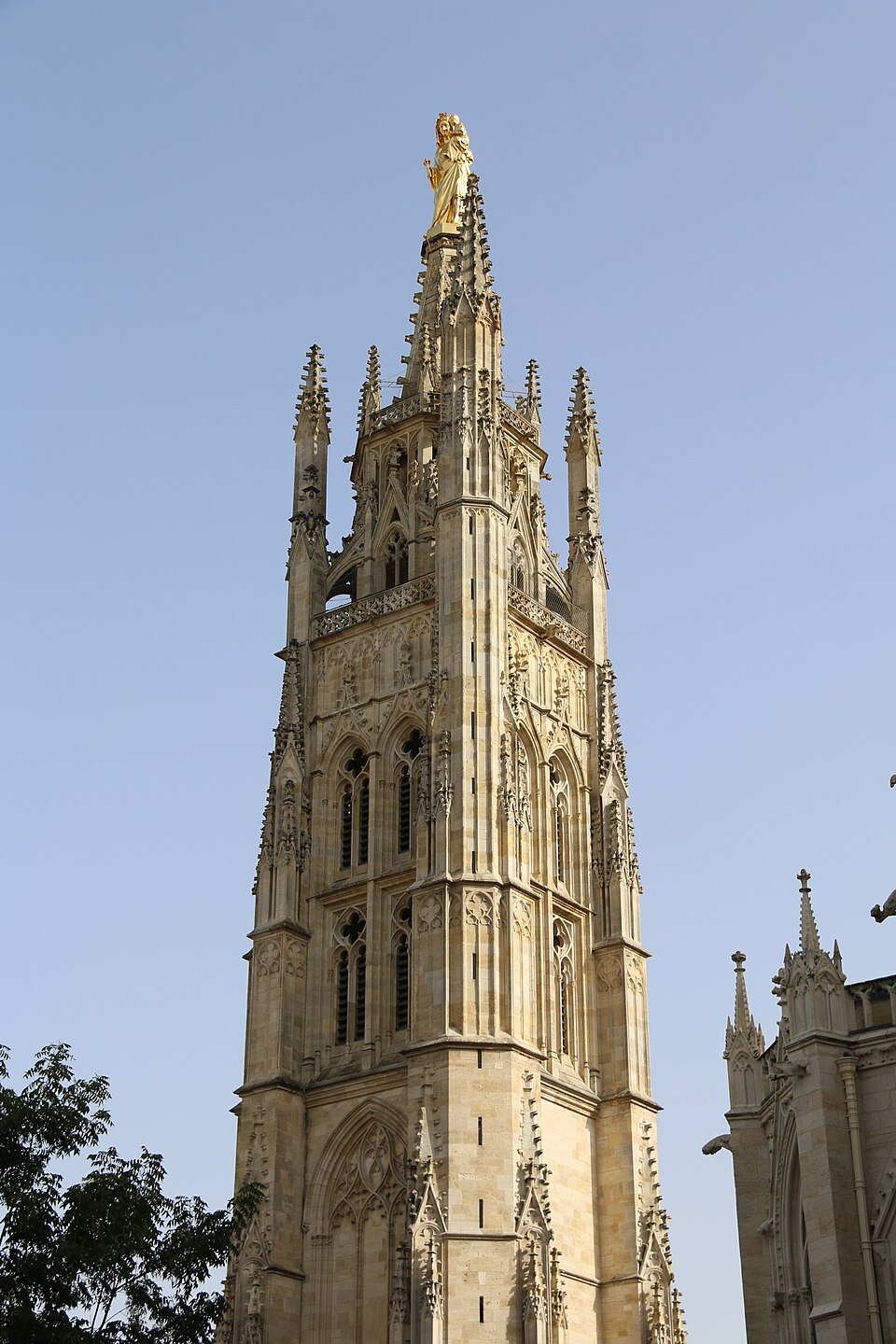
The climb itself is part of the visit: 233 steps up a narrow spiral staircase to a terrace about fifty meters up, a gallery that runs round the base of the spire. From there you look straight down on the cathedral's roofs, its flying buttresses and the twin spires of the north transept, and out over the terracotta roofs of the old town to the river.
How to visit
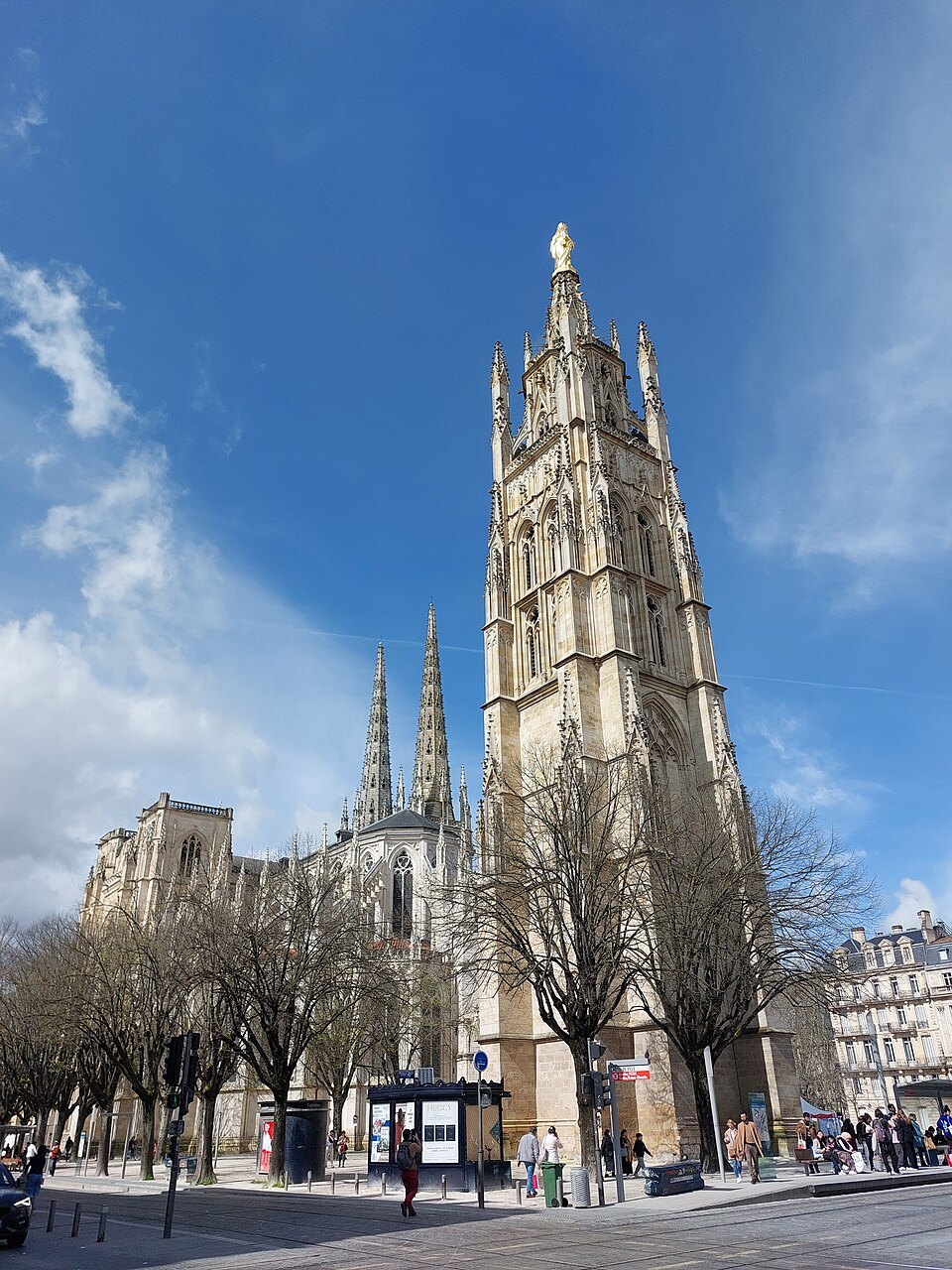
The tower belongs to the state and is opened to visitors by the Centre des monuments nationaux, which sets the visiting times and admission; check them on its site before you go. Allow three quarters of an hour including the climb and time on the terrace.
The staircase is narrow and steep, with no lift, so it is not suitable for anyone who finds stairs difficult or dislikes tight spaces. Shoes with grip help, and the stair is easier without a large bag; the booking ahead page covers what is worth arranging in advance in Bordeaux.
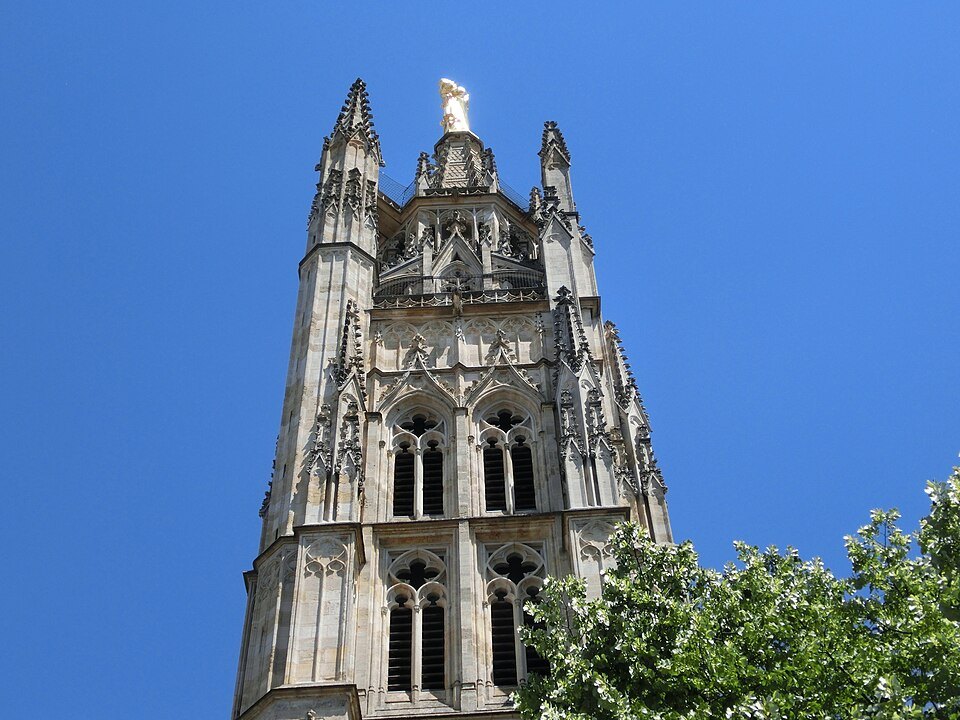
The tower stands on the Place Pey-Berland, where the Hôtel de Ville tram stop serves lines A, B and F. The Palais Rohan faces it across the square, and the Grosse Cloche and the Musée d'Aquitaine are a short walk south.
The square around it
The Place Pey-Berland takes its name from the same archbishop. Part of the Gallo-Roman ramparts once crossed it, and excavations before the tramway works from 1999 found an old porch; more recent digs uncovered the cellars of houses that, in the eighteenth century, stood much closer to the cathedral than anything does now. The square is largely pedestrian, and trees were planted in its center in 2021.
In November 2012 a statue of Jacques Chaban-Delmas, mayor of Bordeaux for nearly half a century and a former prime minister, was unveiled here, facing the Palais Rohan. It is by Jean Cardot. The lift bridge downstream, the Pont Jacques Chaban-Delmas, also carries his name.
Honest notes
The height of the tower is given differently depending on what is measured: the terrace is about fifty meters up, the foot of the statue about sixty, and the statue adds six more. Figures of sixty-odd meters for the tower as a whole are counting the statue.
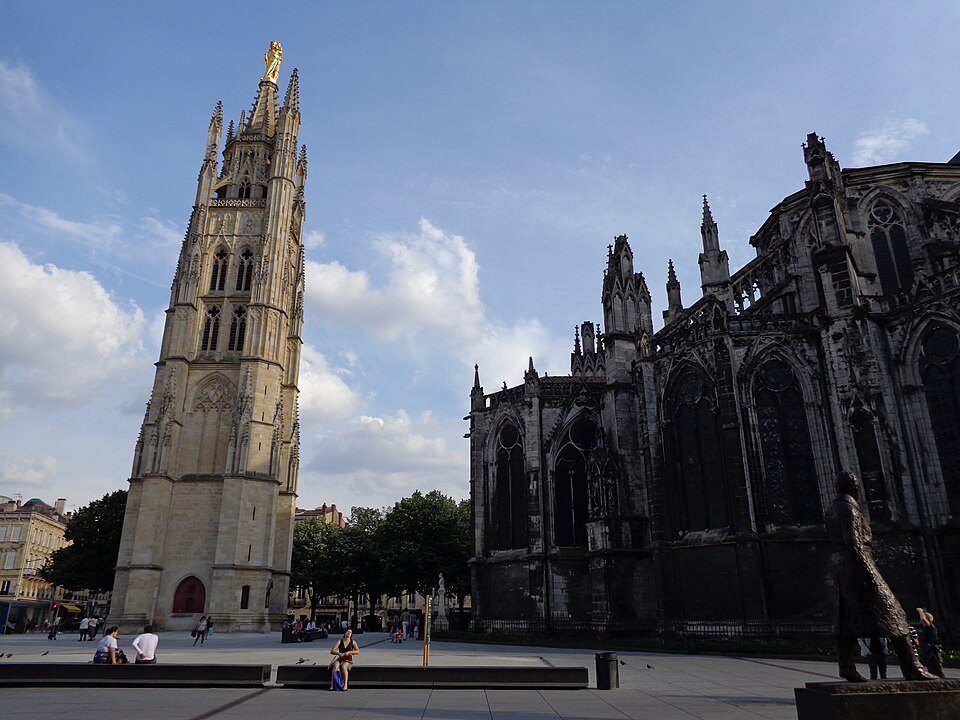
The spire you see is not the medieval one. It was truncated by a storm and rebuilt in the nineteenth century, which is when the statue went up.
Nearby
- A short walk awaySaint-André CathedralConsecrated by Pope Urban II in 1096 and rebuilt in Gothic over three centuries.Read the page
- A short walk awayThe Palais Rohan and the Musée des Beaux-ArtsThe palace an archbishop built himself between 1771 and 1784.Read the page
- A short walk awayThe Grosse Cloche and Rue Saint-JamesA gate of the medieval walls that pilgrims to Compostela passed under.Read the page