Home · Sights · The Esplanade des Quinconces and the Monument aux Girondins
The Esplanade des Quinconces and the Monument aux Girondins
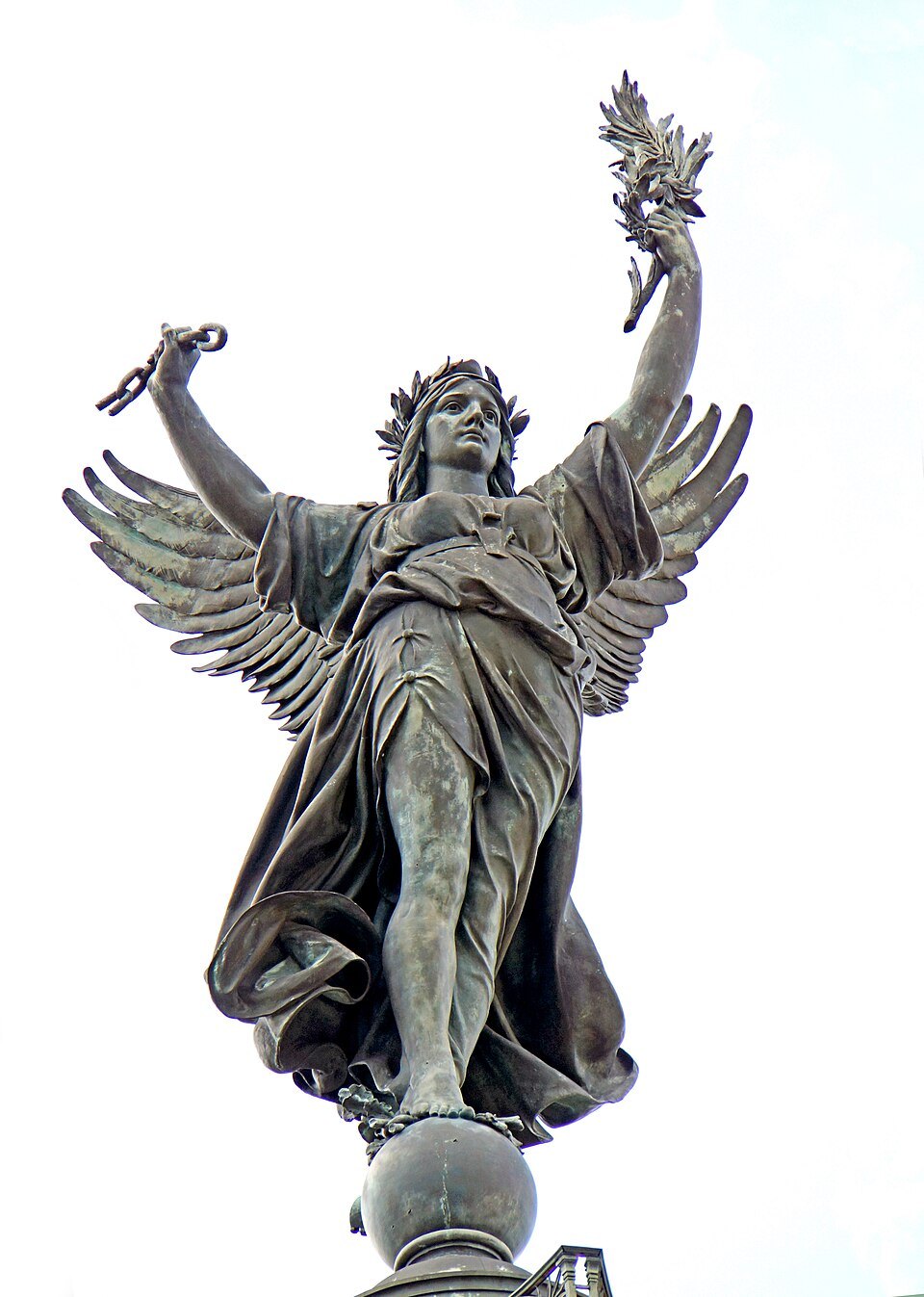
- 01The columnForty-three meters of stone carrying the Spirit of Liberty breaking its chains, fifty-four meters up
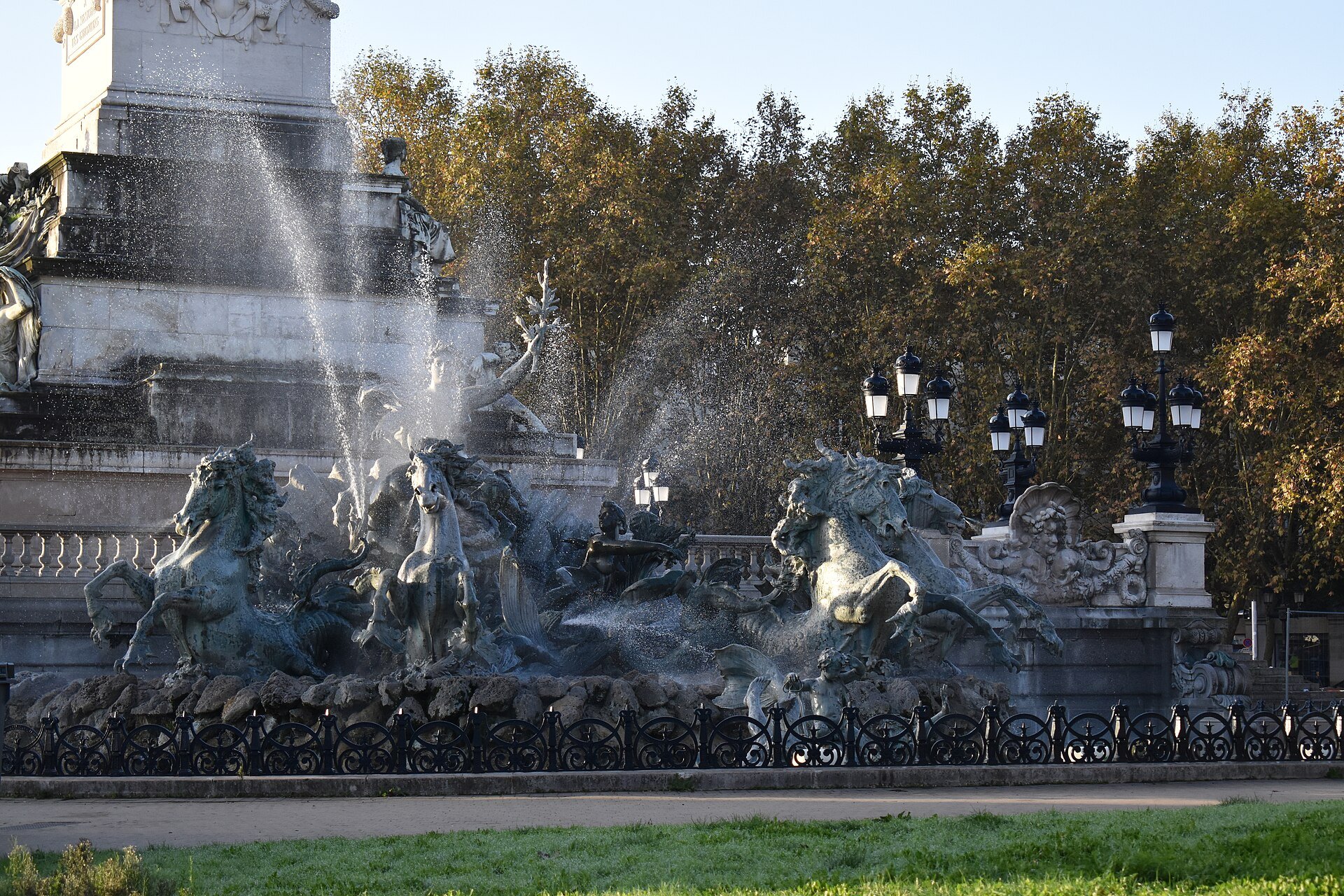
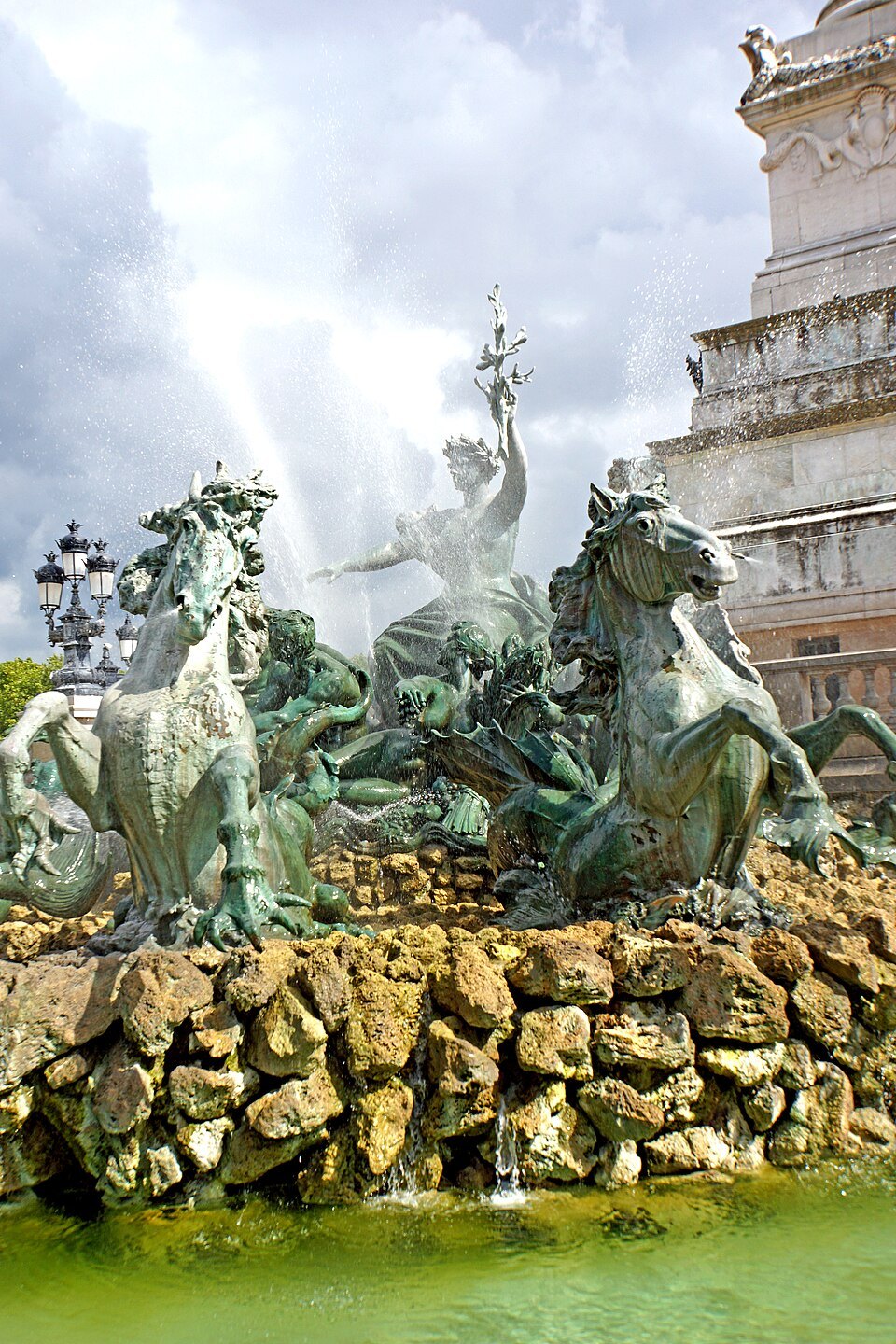
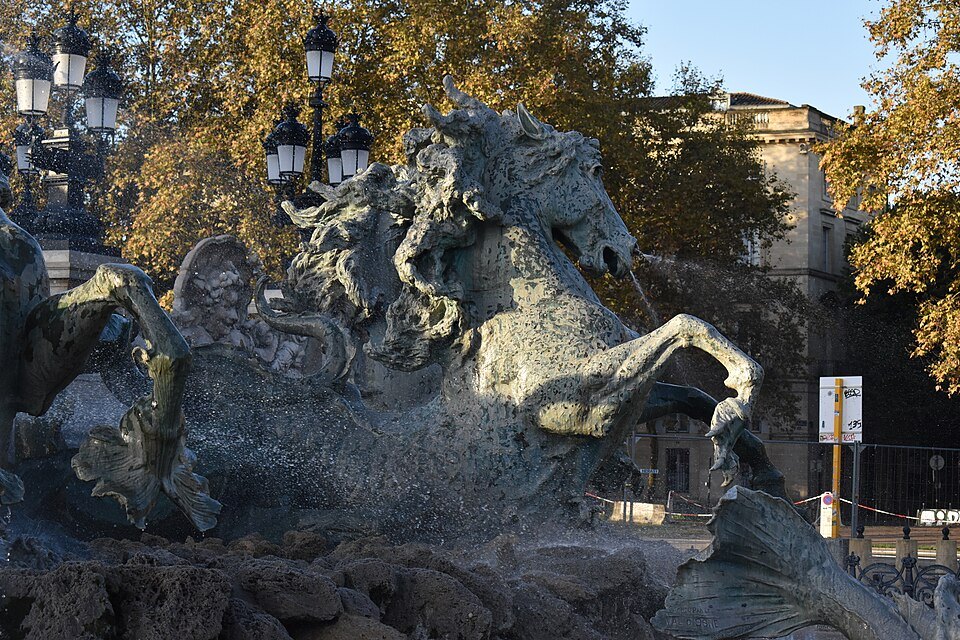
- 02The two fountainsSea-horse chariots of the Republic and of Concord, taken away in 1943 and returned in 1983
- 03The treesPlanted in 1818 in quincunx, the pattern of five that gave the square its name
- 04Montaigne and MontesquieuTwo white marble statues by Dominique Maggesi, placed here in 1858
- 05The rostral columnsTwo twenty-one-meter columns by the river, celebrating commerce and navigation
- 06The hemicycleA curved row of uniform facades on arcades, closing the square on its west side
The story, and how to see it
Why it matters
The Quinconces is the biggest open space in the city, and it is often called the largest square in France and one of the largest in Europe: twelve hectares of esplanade running gently down to the Garonne, framed to north and south by rows of trees, with a monumental column at the city end and two tall columns at the river end. It is where Bordeaux holds its fairs, its circus and its big outdoor concerts, and, since the tramway arrived, it is the busiest interchange in the city's public transport.
It is also a lesson in what the eighteenth-century city did with its fortifications. The square exists because a fortress built to keep Bordeaux in order was pulled down to make room for promenades.
The story
The Château Trompette, named after a stream called the Tropeyte that ran through the quarter it replaced, was built under Charles VII, originally to hold down a city inclined to rebel against the French crown. Vauban strengthened it under Louis XIV. By the eighteenth century it had lost its purpose, and after it was handed to the city in 1816 it was demolished.
The plan was fixed in 1816: a long rectangle framed by trees, from a curved row of buildings on the west side down to the river. The hemicycle's uniform facades went up from 1817 to designs by Jean-Baptiste Dufart. The trees were planted in 1818 in quincunx, the arrangement of five, four in a square and one in the middle, which repeated gives rows offset by half a step; the square is named after it. The two rostral columns celebrating commerce and navigation followed in 1829. The name changed with the regimes, from Place Louis-XVI to Place Louis-Philippe, until the present name was settled after 1848.
The Monument aux Girondins
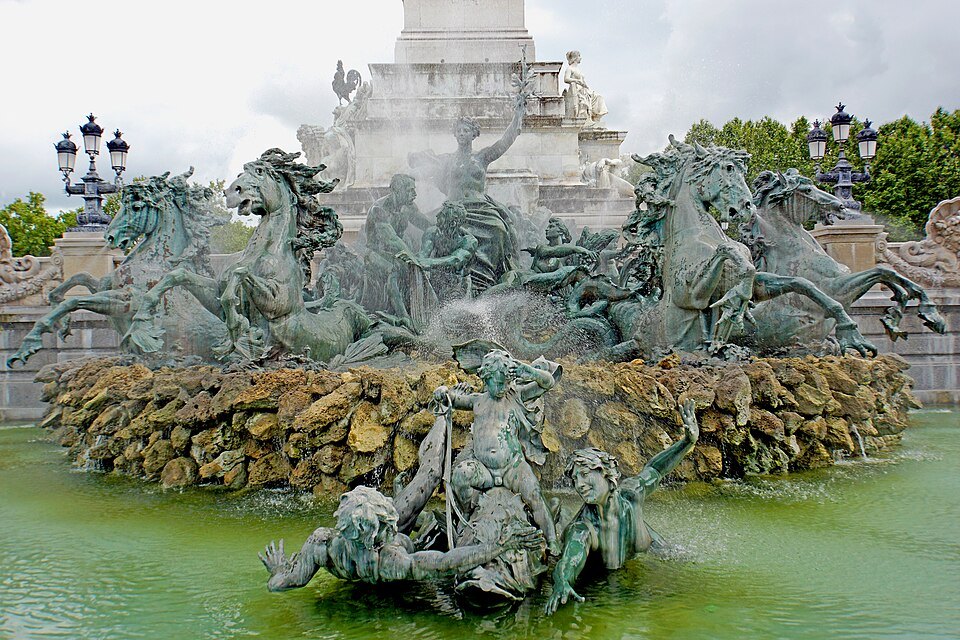
The column honors the Girondins, the deputies of the Revolution from the Gironde and their allies who were sent to the guillotine during the Terror. The city voted for a monument in 1881; the winning design was set aside for one by the sculptor Alphonse Dumilatre and the architect Victor Rich. Meanwhile the city had commissioned a monumental fountain from Bartholdi, then decided it was too expensive; Lyon bought it instead. Bordeaux merged the two projects, and the monument became a column with two fountains. Work began in 1894 behind a wooden scaffold fifty-four meters high and ended in 1902.
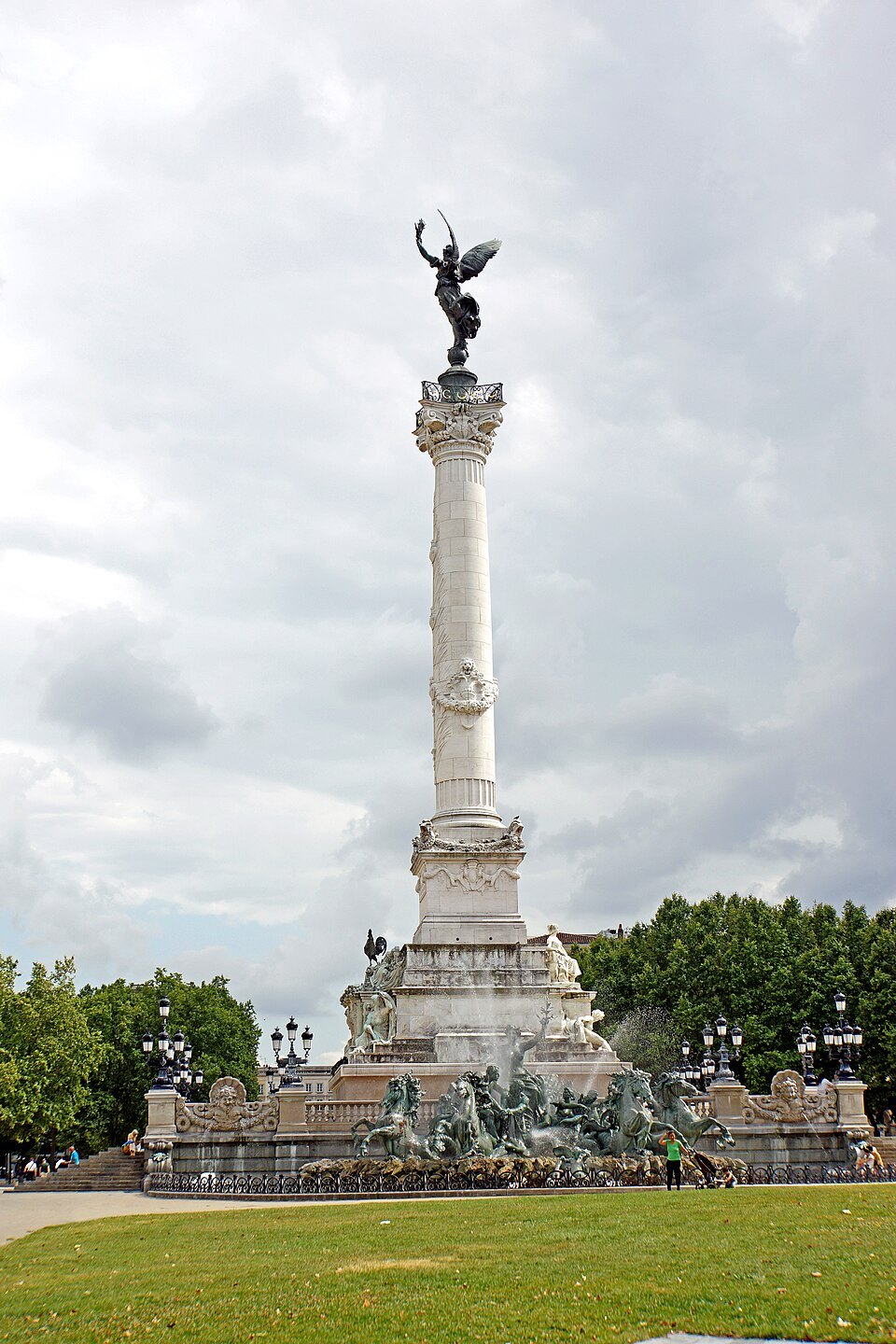
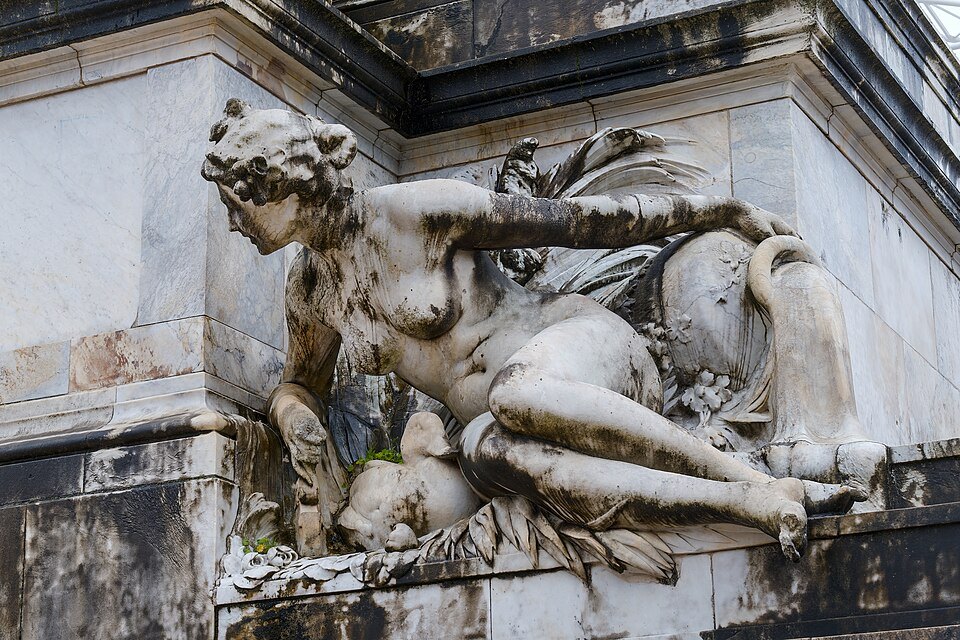
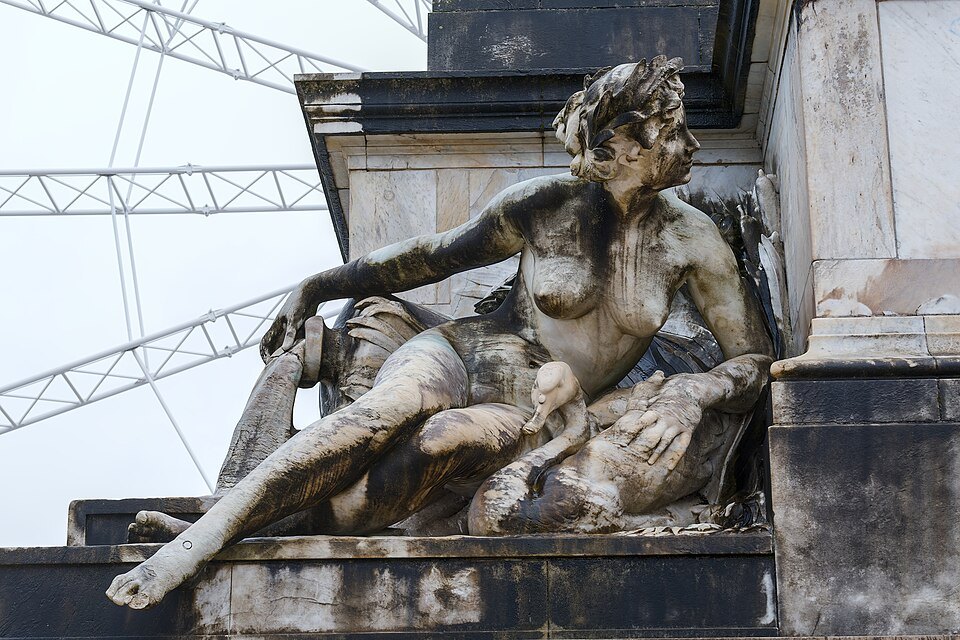
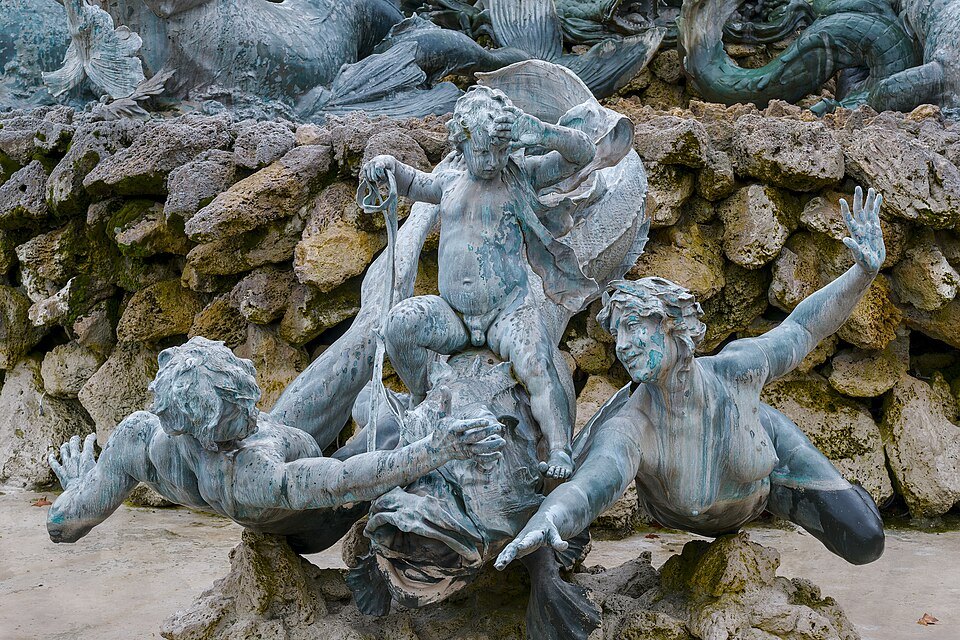
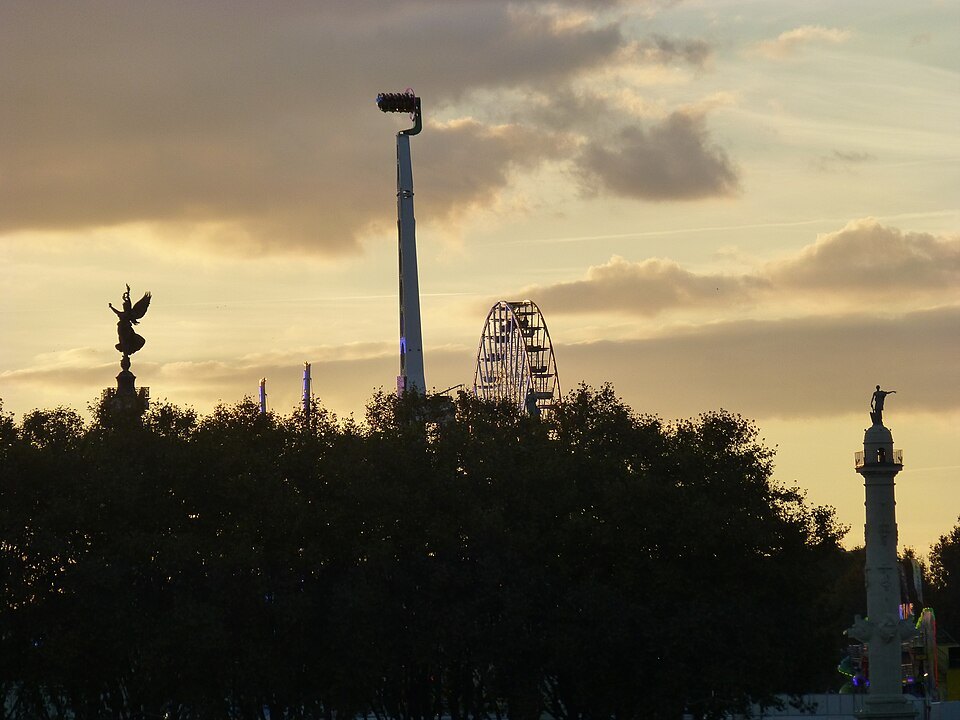
The column is forty-three meters tall, and at fifty-four meters stands the green bronze Spirit of Liberty breaking its chains. Around the base, the fountain facing the Grand Théâtre shows the Triumph of the Republic, a chariot of sea horses trampling Ignorance, Falsehood and Vice; the one facing the Chartrons shows the Triumph of Concord. Toward the river, the Gallic cockerel on a speaker's rostrum is flanked by History and Eloquence; toward the city, Bordeaux sits on the prow of a ship with a horn of plenty, between figures of the Dordogne and the Garonne.
Look for what is missing. Groups of statues of eight Girondin deputies were planned and never made, and their places on the base are still empty. The bronzes were removed by the occupying army in August 1943 to be melted down; the foundry in Angers kept them instead and returned them in 1945, and after years in port warehouses they were put back in 1983. A plaque with the names of eight Girondin deputies was added in 1989.
The rest of the square
On the river side, the two rostral columns, twenty-one meters high, frame the view of the Garonne. Along the promenades stand white marble statues of Montaigne and Montesquieu, the two great writers of Bordeaux and its region, by Dominique Maggesi, set up in 1858. The trees were later replanted in straight lines; the plan is to return to the quincunx as they are renewed.
The esplanade itself is bare, unplanted ground, and it changes character through the year. The Foire aux Plaisirs, a traveling funfair held here since 1854, sets up twice a year in spring and autumn, antiques fairs come in the same seasons, and a circus pitches its big top here each January. On those weeks the view of the column is framed by rides and stalls.
How to visit
There is nothing to book. Walk from the monument down to the rostral columns and the quay, which takes about ten minutes, and allow twenty to look at the fountains properly; the sculpture repays a slow circuit. The best light on the column is in the morning and the late afternoon. Stand at the river end by the rostral columns and look back uphill for the whole composition at once, the monument centered at the top of the long slope.
The Quinconces tram stop, where several lines meet, is on the square, and regional coaches leave from here too; see getting around. The Grand Théâtre is two minutes south, the Jardin Public ten minutes north-west, and the quays lead north to the Chartrons.
Honest notes
Not everyone in Bordeaux has loved the monument; François Mauriac thought its proportions disastrous. The largest-square title depends on how a square is counted, and it is best taken as the city's own boast. The square is at its most striking empty, with the column standing alone at the end of the long slope, which means early morning outside fair season.