Home · Sights · The Grosse Cloche and Rue Saint-James
The Grosse Cloche and Rue Saint-James
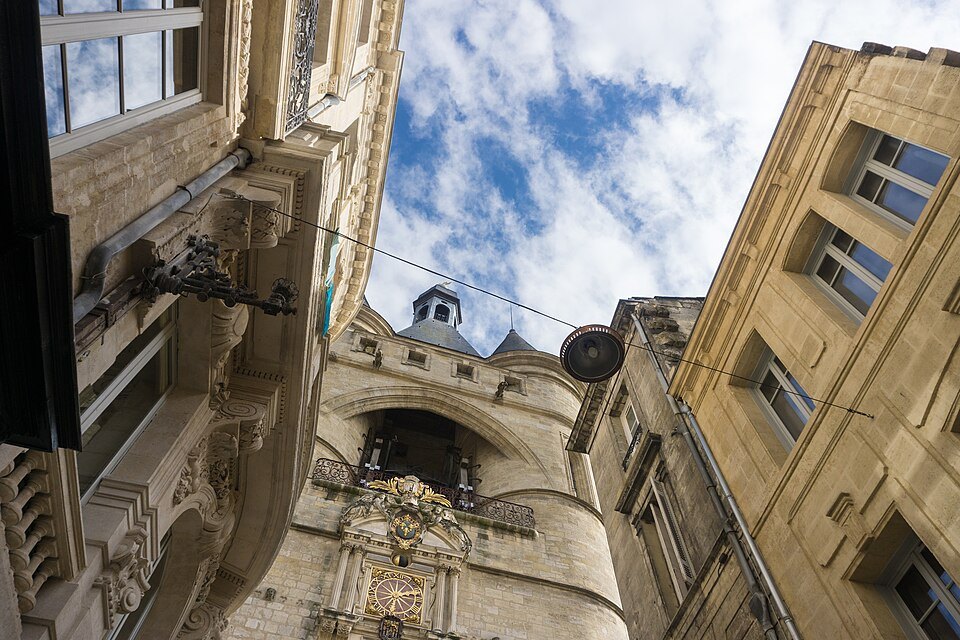
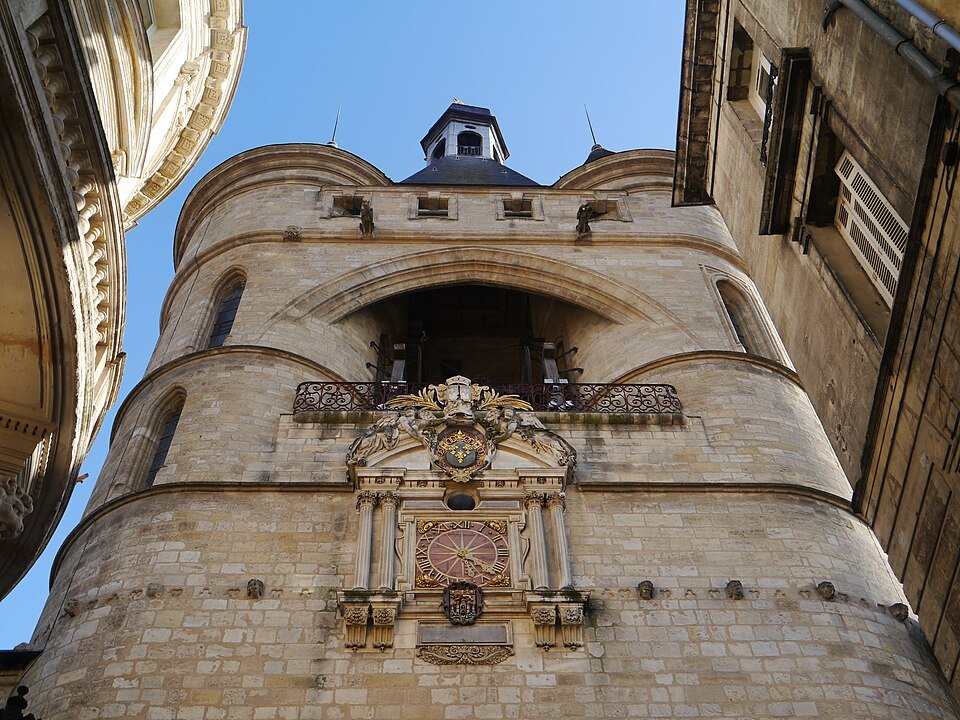
- 01The two round towersForty meters high, joined by a central block, with pepper-pot roofs added after a fire in 1755
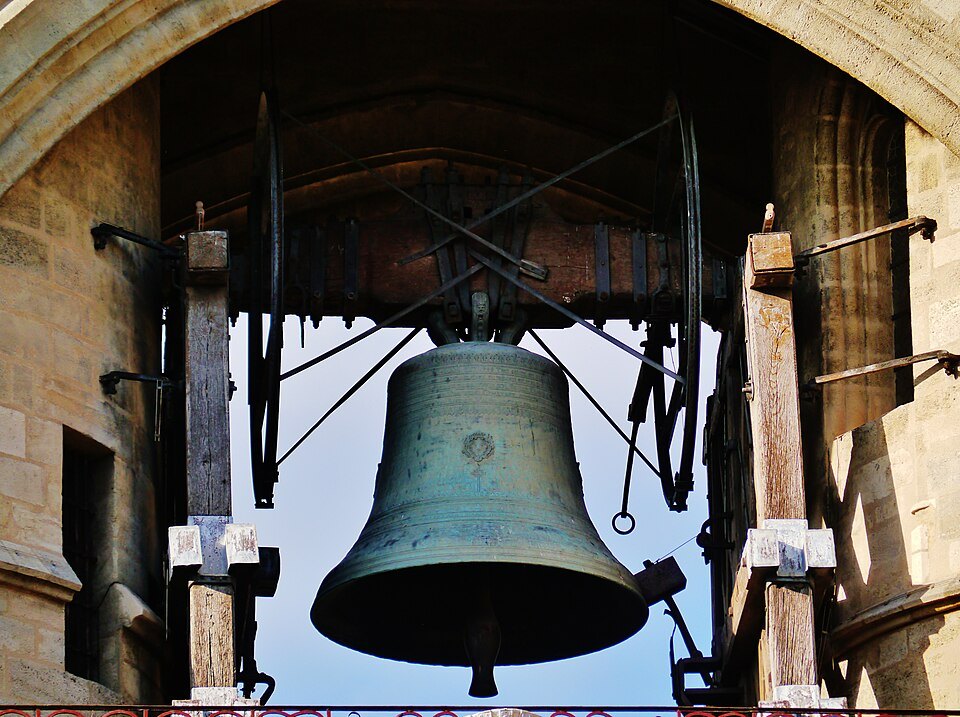
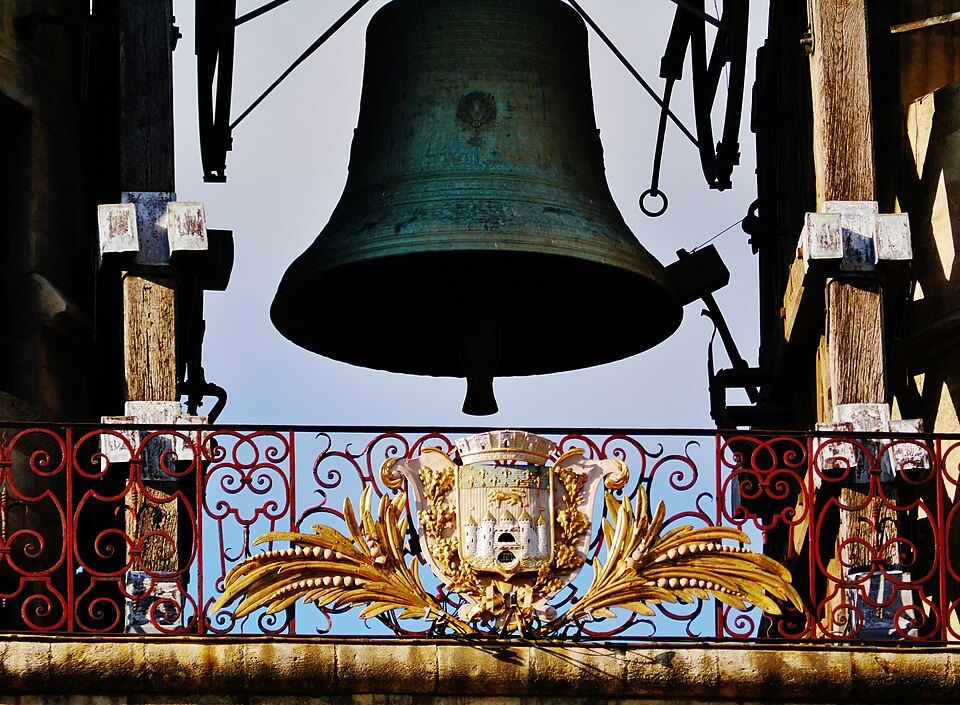
- 02The bellCast by Turmeau in June 1775, two meters high and two meters across, weighing 7,800 kilograms
- 03The clockBuilt in 1759 to plans by the astronomer Paul Larroque, with a sundial face above it
- 04The golden leopardThe weathervane, the leopard of English Guyenne, whose capital Bordeaux was
- 05The wrought-iron grilleAn eighteenth-century grille across the bell's bay, with the city's arms at its center
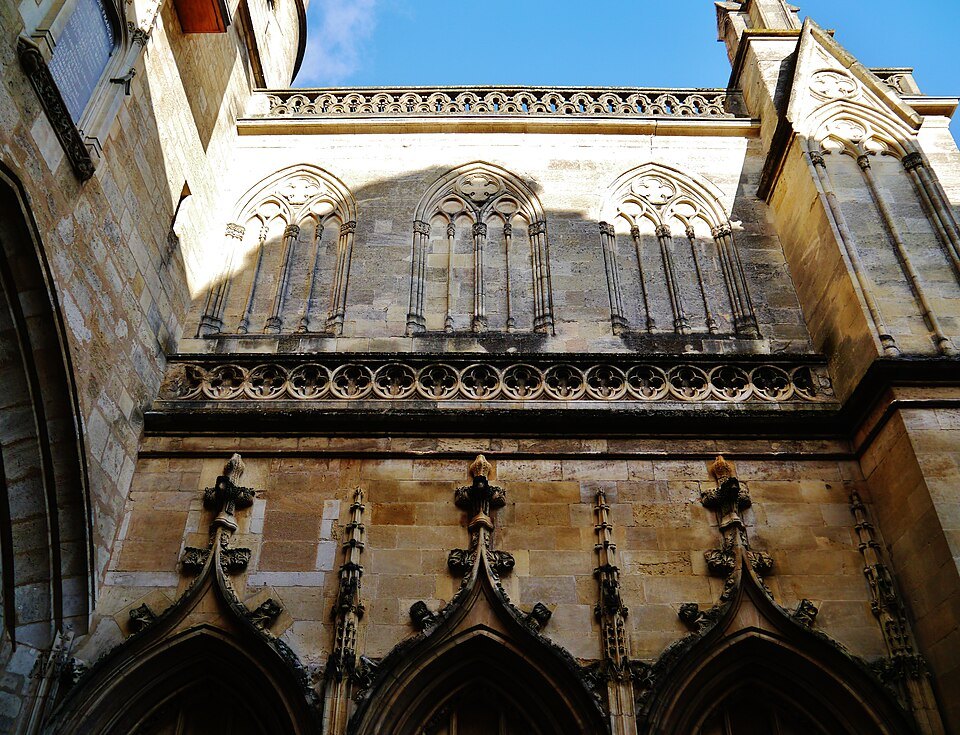
- 06The gargoylesFifteenth-century grimacing heads on the north face, over marble inscriptions dated 1592
The story, and how to see it
Why it matters
Bordeaux kept very few civic buildings from the Middle Ages, and this is one of two gates that survive, with the Porte Cailhau. It is also the symbol of the city in a way no church is. The Grosse Cloche, the big bell, gave the building its nickname, and the gate with its bell still appears on the arms of Bordeaux.
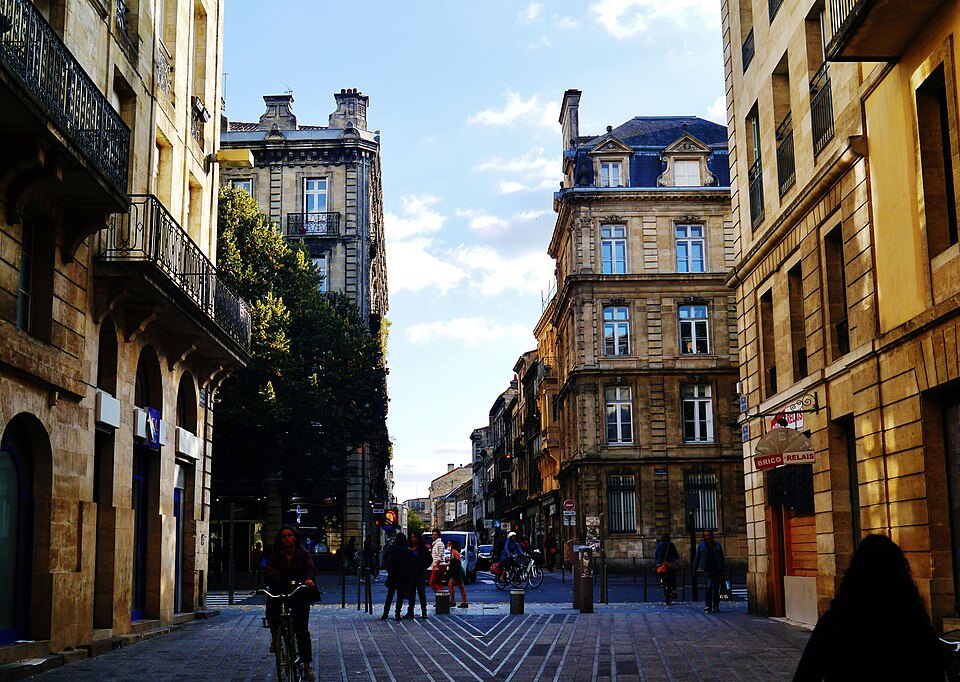
It goes by other names too. It is the Porte Saint-Éloi, after the church built against it, and the Porte Saint-James, because it stood on the road to Santiago de Compostela: pilgrims walked under its arch on their way south, and the street that runs through it, the rue Saint-James, takes its name from the Gascon form of Saint James.
The story
The first gate here was part of the thirteenth-century wall, built against the twelfth-century church of Saint-Éloi. The present building went up in the fifteenth century on the remains of that gate, and between the fifteenth and seventeenth centuries it was altered so often that it changed from a gate into a belfry. The town's bell was added in the fifteenth century, and the gate became the bell tower of the old town hall, which stood beside it.
The magistrates rang the bell to announce the start of the grape harvest and to raise the alarm when a fire broke out, and the people of Bordeaux grew attached to it. Kings knew it. When the city rose in the revolt of 1548, remembered as the jacquerie des Pitauds, Henry II had the bell taken down and broken as a punishment for the insubordination. It came back in 1561, to the city's great relief.
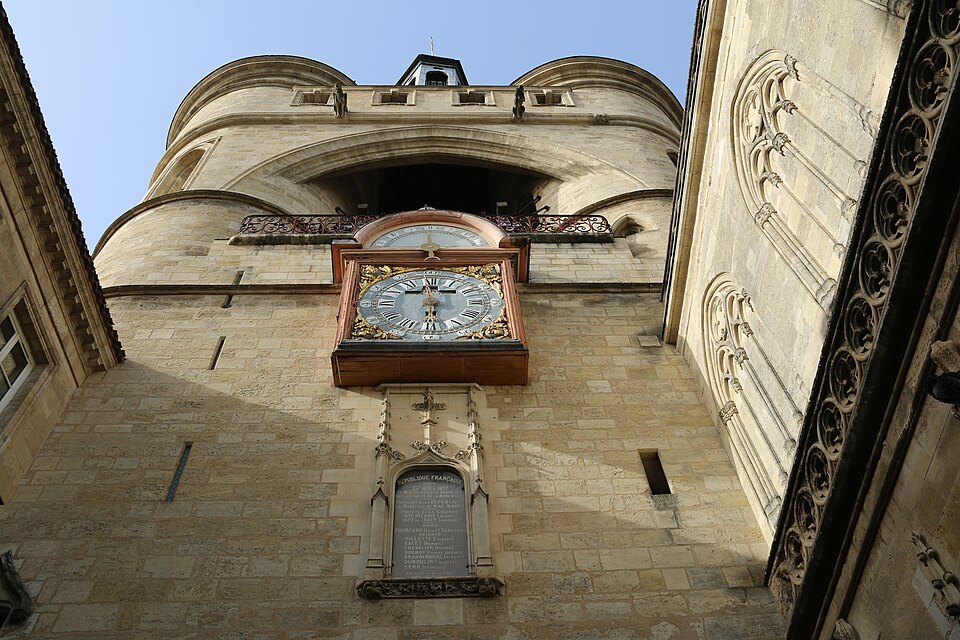
Originally there were four round, crenellated towers of a single storey, and two more were added; those two stood where the middle of the cours Victor-Hugo now runs, which was then the ditch along the wall. After a fire in 1755 the towers were crowned with battlements, a bell turret and the pointed roofs that give the gate its fairy-tale outline.
What you actually see
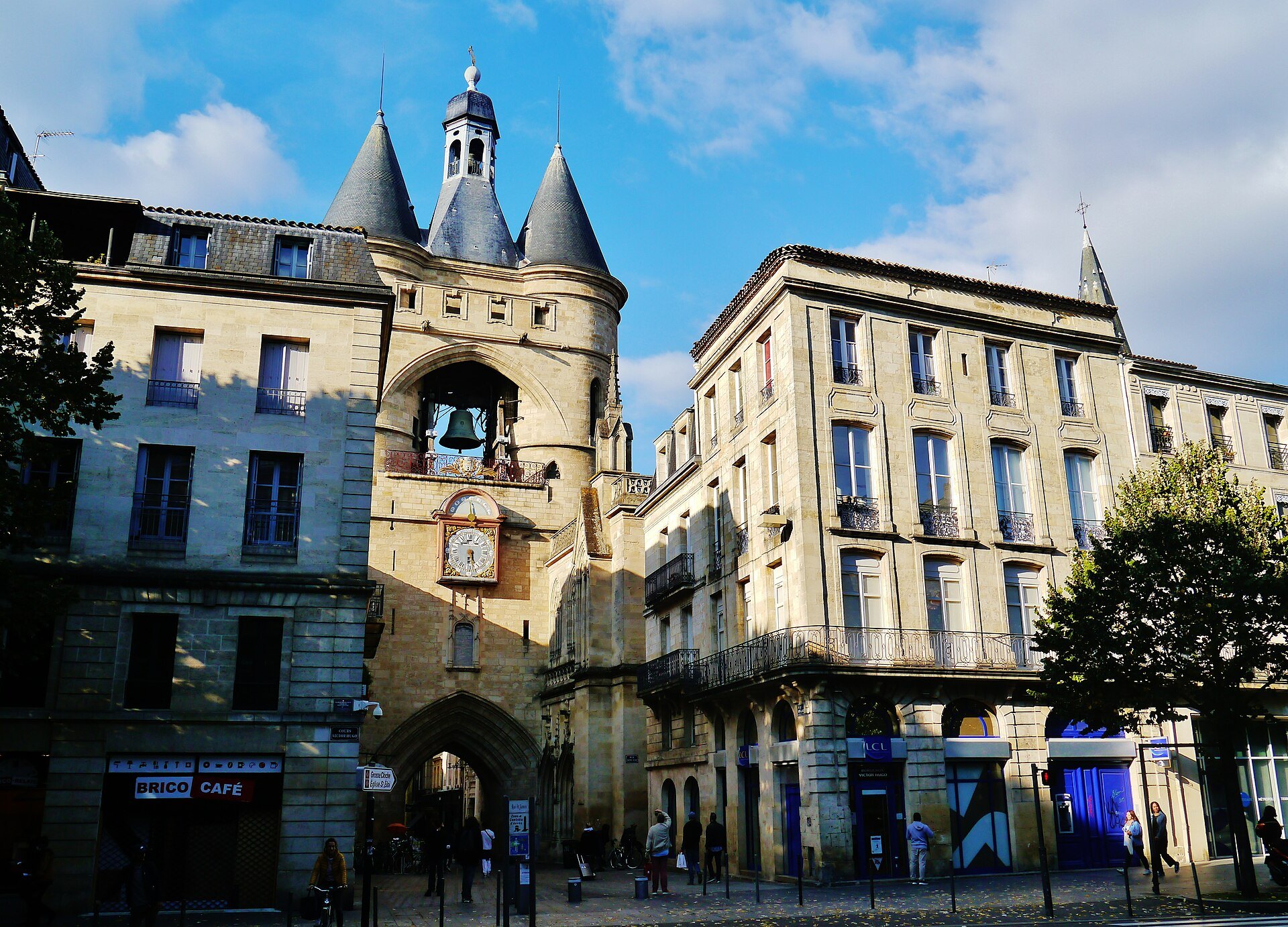
Approach from the rue Saint-James and the gate fills the end of the street: two round towers forty meters high, joined by a central block, with the bell hanging in an open bay between them behind an eighteenth-century grille of wrought iron. The city's arms sit at the center of the grille. Above the bell is the clock, built in 1759 to the design of the mathematician and astronomer Paul Larroque, replacing one of 1567; above the clock is a sundial.
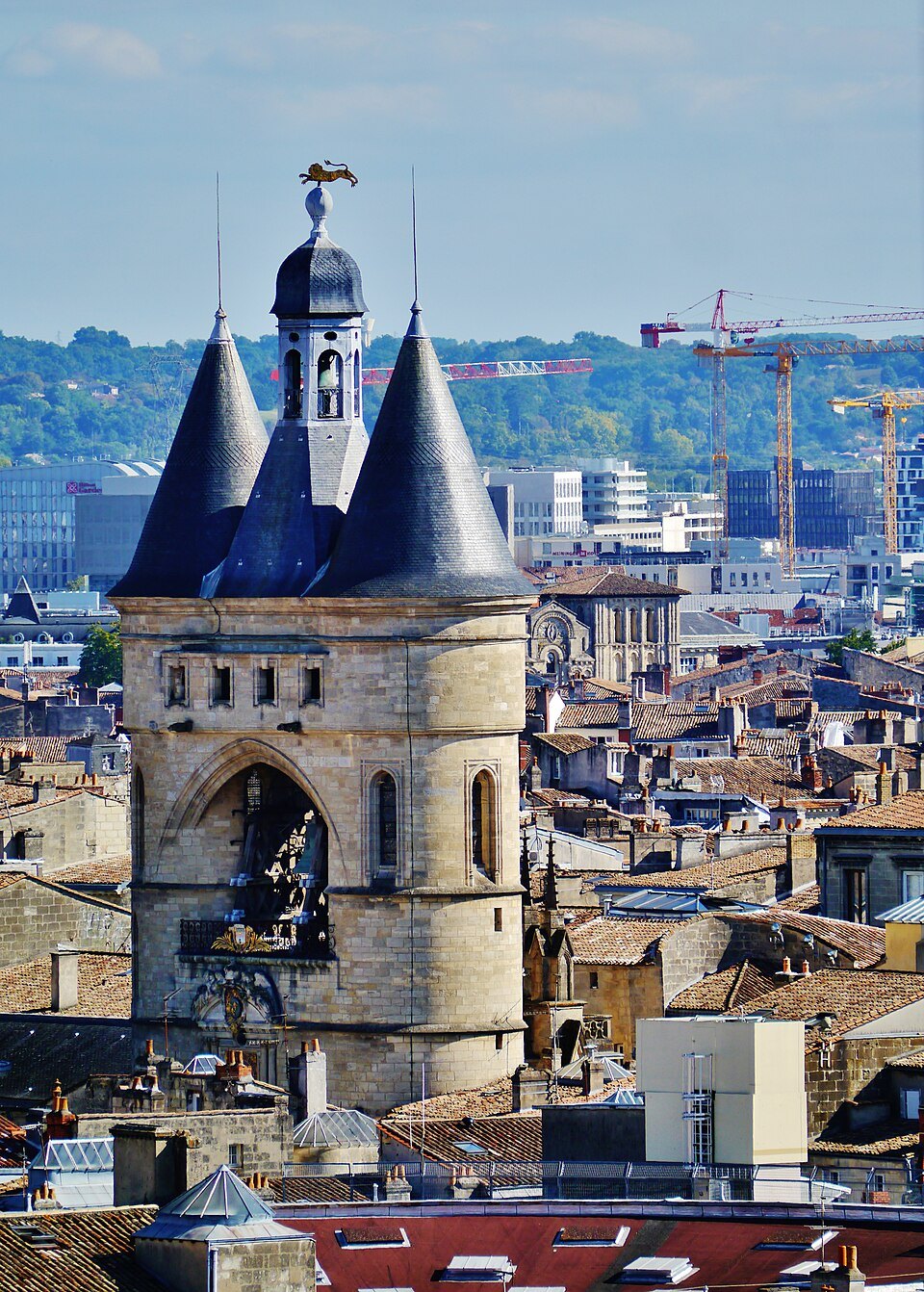
On top of it all, the weathervane is a golden leopard, the beast of the arms of English Guyenne, a reminder that Bordeaux was the capital of the English duchy for three centuries. Walk through to the north side and look up for the fifteenth-century gargoyles, with marble inscriptions beneath them dated 1592.
The bell itself was cast in June 1775 by the founder Turmeau; a plaque under the tower records it. It weighs 7,800 kilograms and measures two meters in height and in diameter. It is inscribed with its own job description, six lines in French: I call to arms, I announce the days, I give the hours, I chase away the storm, I ring for festivals, I cry out at fire.
When it rings
Because of its weight and the risk that its vibration could crack it, the bell has been rung sparingly. It rang for the victory of 8 May 1945 and for General de Gaulle's visit on 10 April 1961. For years it rang on five days a year, the national and memorial holidays and the anniversary of the liberation of Bordeaux on 28 August 1944, and since 2016 it has also rung on the first Sunday of each month. If you are in town on one of those days, the crowd in the street is part of the occasion.
The tower can be visited in summer; the city sets the dates and times, and they are best checked locally before you plan around them.
How to visit
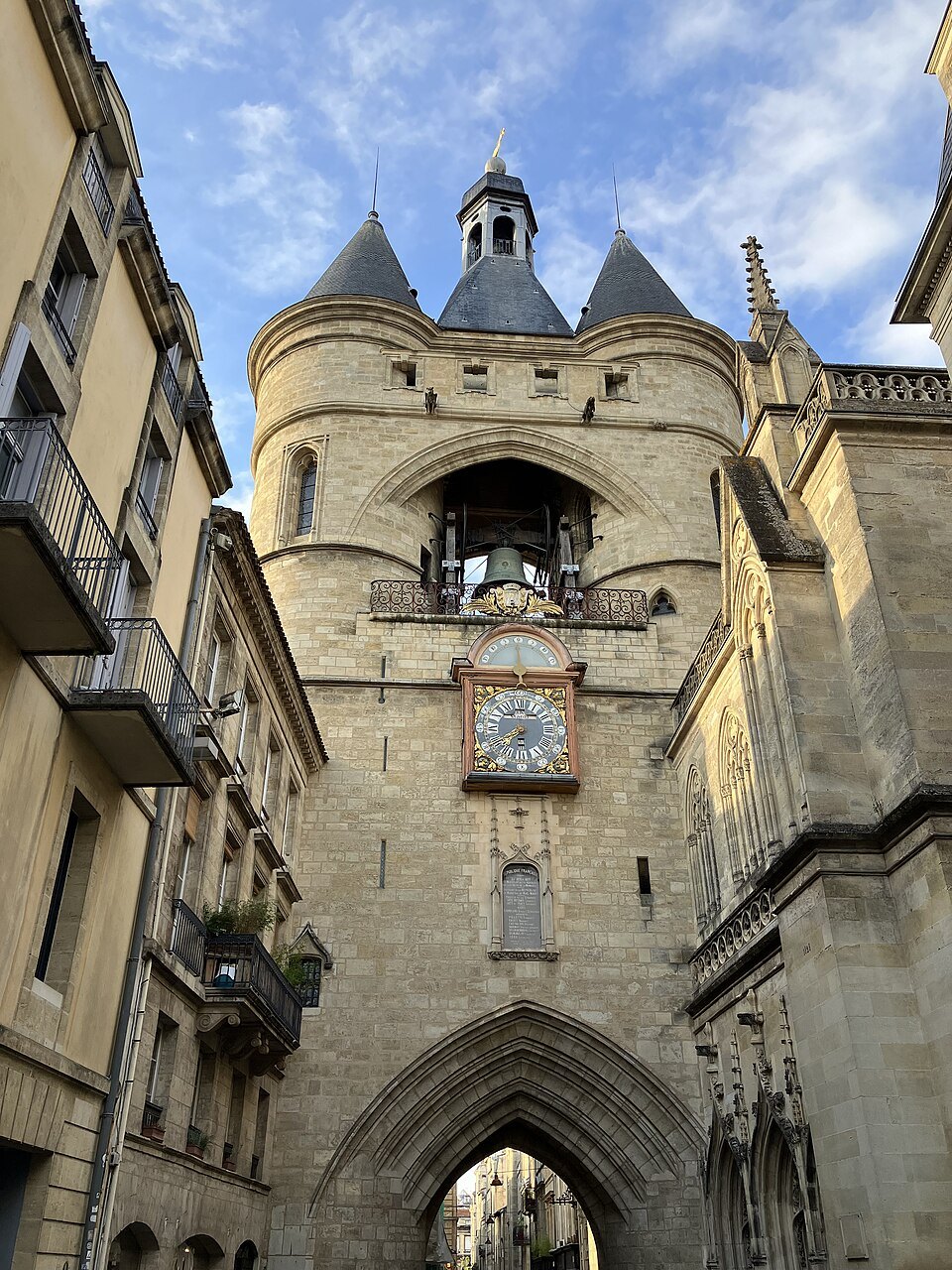
The gate stands across the rue Saint-James where it meets the cours Victor-Hugo, in the Saint-Pierre and Saint-Michel side of the old town. Seeing it from the street needs nothing more than ten minutes and a walk through the arch in both directions. The rue Saint-James itself is worth walking slowly: it is the pilgrims' street, running from the gate toward the heart of the old town, and the arch frames the view along it in both directions. Stand back on the cours Victor-Hugo side for the full outline of the towers against the sky.
It sits neatly on a walk between the cathedral and the basilica of Saint-Michel, and the Musée d'Aquitaine is a few minutes away along the cours Pasteur. The homepage walk ends here before climbing to the cathedral; the itineraries fit it into a first day.
Honest notes
The name misleads: the Grosse Cloche is the building, not only the bell, and locals use it for both. The fairy-tale roofline is not medieval but dates from after the fire of 1755, and the whole building was last restored in 2016.
The leopard on the weathervane is sometimes taken for a lion. In heraldry it is the English leopard, the same beast as on the arms of the English kings, which is exactly why it is there.
Nearby
- A short walk awayThe Porte Cailhau and Place du ParlementA fortified gate of 1493 to 1496.Read the page
- A short walk awayThe Basilica of Saint-Michel and Its SpireA flamboyant Gothic church of the merchants and craftsmen.Read the page
- A short walk awayThe Musée d'AquitaineMore than 70,000 objects from the Venus of Laussel to the port of the twentieth century.Read the page