Home · Eating & Drinking
What belongs to Bordeaux
On the Bordeaux slate
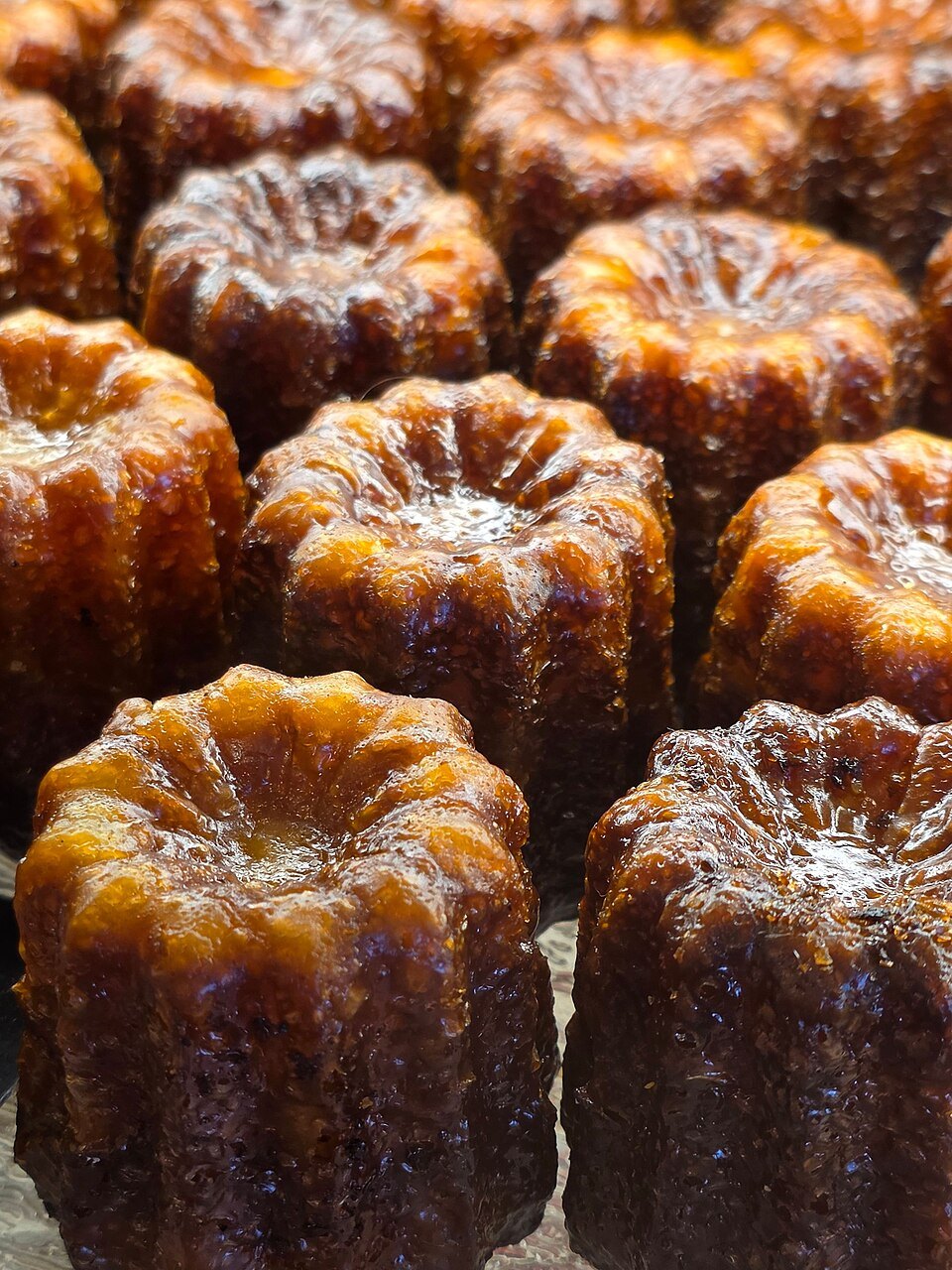
- CaneléA small fluted cake of the city, flavored with rum and vanilla, dark and caramelized outside and soft within
- Lamproie à la bordelaiseLamprey from the rivers, stewed with leeks in red wine thickened with its own blood
- Entrecôte à la bordelaiseRib steak grilled over vine cuttings or barrel staves, topped with shallots, parsley and bone marrow
- Cèpes à la bordelaiseThe region's prized mushrooms, pan-fried with garlic and parsley and not overcooked
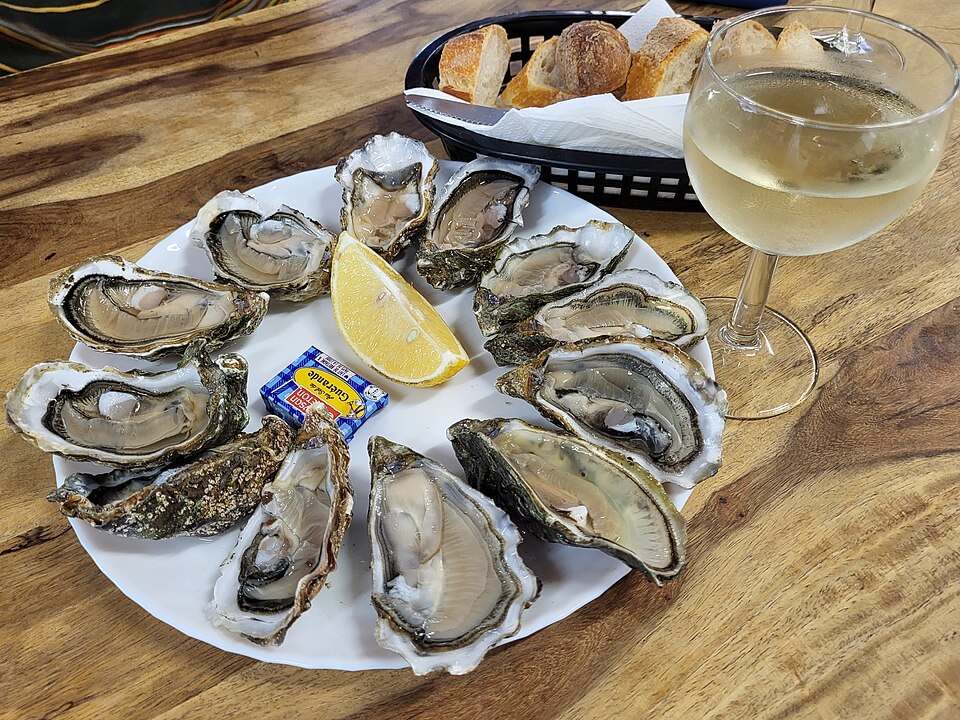
- OystersFrom the Arcachon basin on the nearby coast, eaten raw with a glass of white wine
- Sauce bordelaiseA red wine sauce with shallots, the city's name on menus across France
- CacolacA chocolate milk drink born in the Bastide quarter of Bordeaux, a local childhood staple
Eating & Drinking
What the city eats
Bordeaux cooking sits where the Atlantic, the rivers and the south-west meet. It borrows from Gascony, the Béarn, the Landes and the Agenais, and it gives a large place to fish from the ocean and the Garonne, and above all to wine, which goes into the sauces as well as the glasses. Much of its identity took shape in the eighteenth and early nineteenth centuries, when the port and its merchants were at their richest.
In the city, that means a handful of dishes worth looking for on the menu, a pastry you will see in every bakery window, and markets where the region's produce arrives. See the wine city for what to drink with it.
The canelé
The canelé is the city's own pastry: a small fluted cylinder, no more than five centimeters tall, flavored with rum and vanilla, with a thick, dark, caramelized crust around a soft, custardy center. It is traditionally baked in fluted copper molds brushed with beeswax, which give the crust its shine and crunch.
Its history is older than its name. Bakers called canauliers were making something called canaules in Bordeaux in the seventeenth century and formed a guild in 1663; by 1785 there were at least thirty-nine canaulier shops in the city, ten of them in the Saint-Seurin quarter. The modern recipe with rum and vanilla reappeared in the early twentieth century, and the name canelé, with one n, was fixed only in 1985 by a brotherhood of Bordeaux bakers, who registered it as a collective brand. You will find canelés in every size and flavor now; the classic one, small and dark, is the one to try.
Dishes from the river and the vineyard
Lamproie à la bordelaise is the most Bordeaux dish of all and the most demanding. The lamprey, an eel-like fish caught between February and March as it swims up the Dordogne near its meeting with the Garonne, is bled, and its blood mixed with red wine to make the sauce; the pieces are cooked with leeks in the same wine and simmered for two hours with a bouquet garni, then served with garlic croutons. It is traditionally drunk with a young red Bordeaux Supérieur. It is an acquired taste, and a local one; if you see it on a menu, it is worth trying once.
The entrecôte à la bordelaise is simpler and more widely loved: a rib steak grilled over a bed of embers from vine cuttings or old barrel staves, turned, and spread with a mixture of chopped shallots, parsley and beef marrow, and served without disturbing the topping. Sauce bordelaise, a red wine sauce with shallots, carries the city's name onto menus all over France. In autumn, look for cèpes à la bordelaise, the region's famous mushrooms pan-fried with garlic and parsley.
Meat from the region's farms also turns up on city menus. Lamb from Pauillac, raised near the estuary, carries a protected geographical indication, and the beef of Bazas, south of the city, is honored every February at a fair of fattened oxen. Both are dishes to order when you see them named, since the name is a promise of where the animal came from.
From the ocean
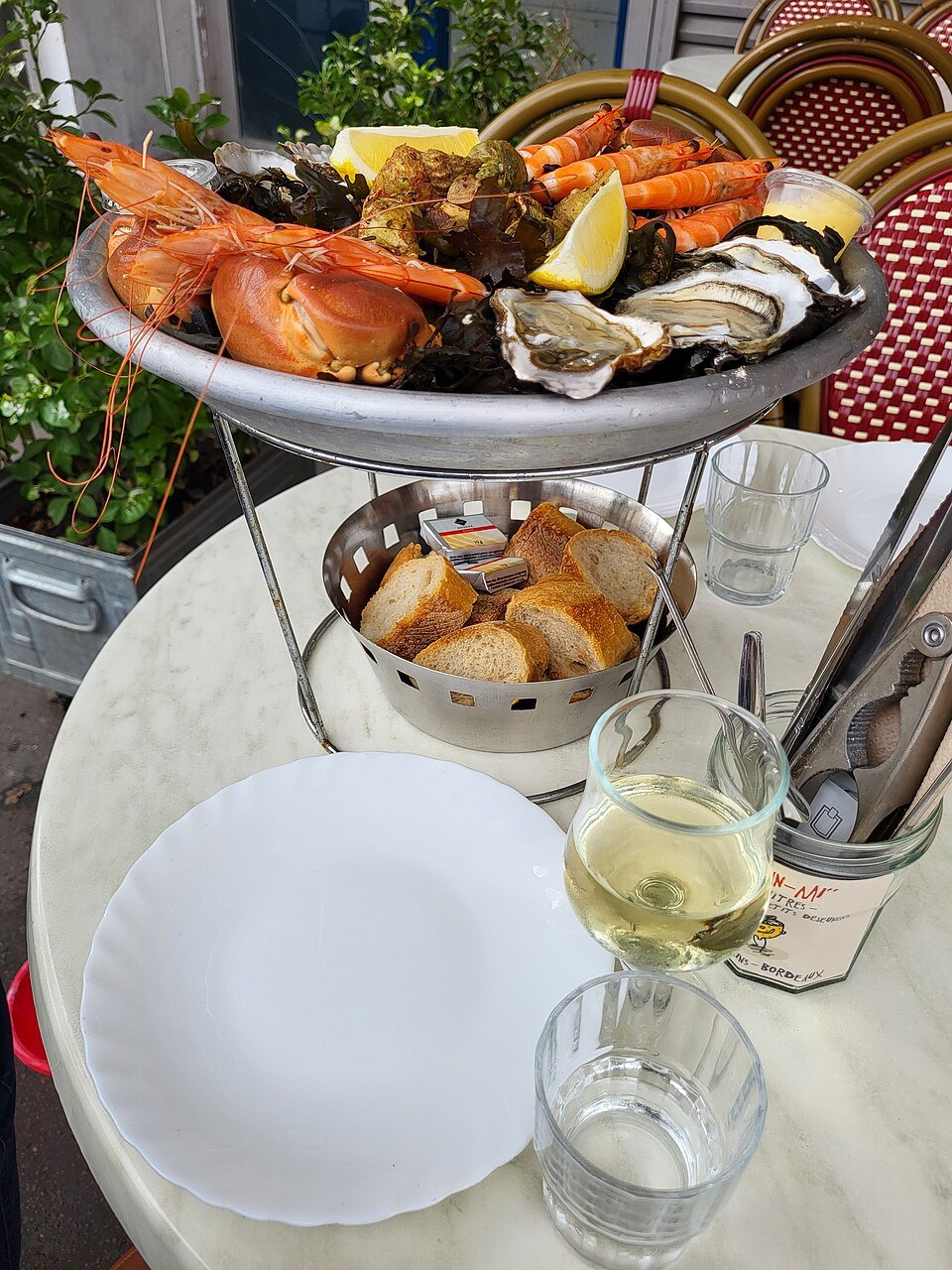
The Arcachon basin, on the coast south-west of the city, is one of France's great oyster-farming areas, and its oysters are a fixture on Bordeaux tables, eaten raw with lemon and a glass of dry white. They appear at the tasting stands of the June wine festival alongside other regional produce; the day trips page covers the basin itself.
The Gironde estuary also produces caviar: sturgeon, once fished wild in the estuary, is now farmed, and Gironde caviar is sold in the city's fine food shops. Tiny shrimp from the estuary, cooked in a court-bouillon with bay leaf and anise, are another local snack.
Markets
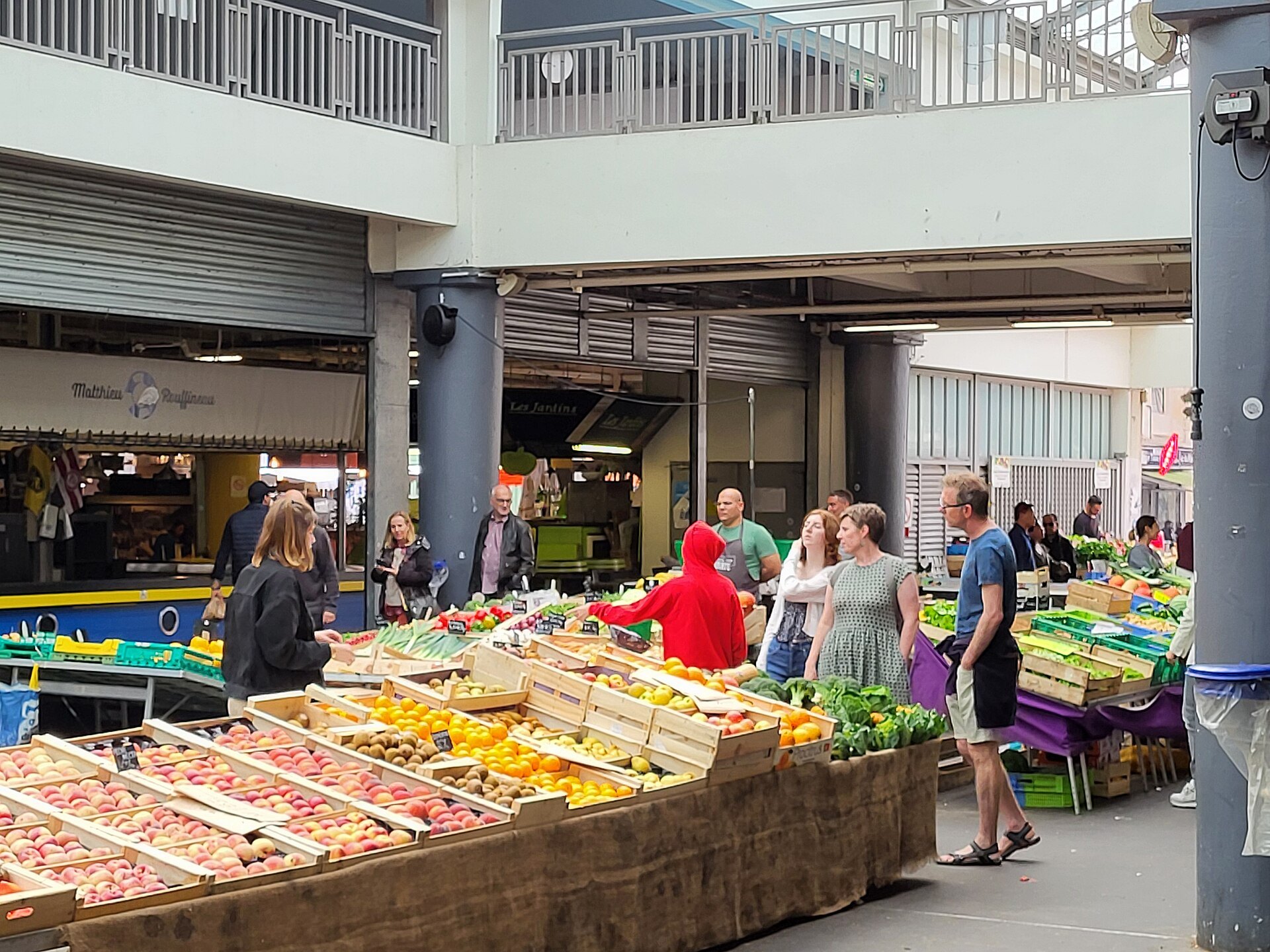
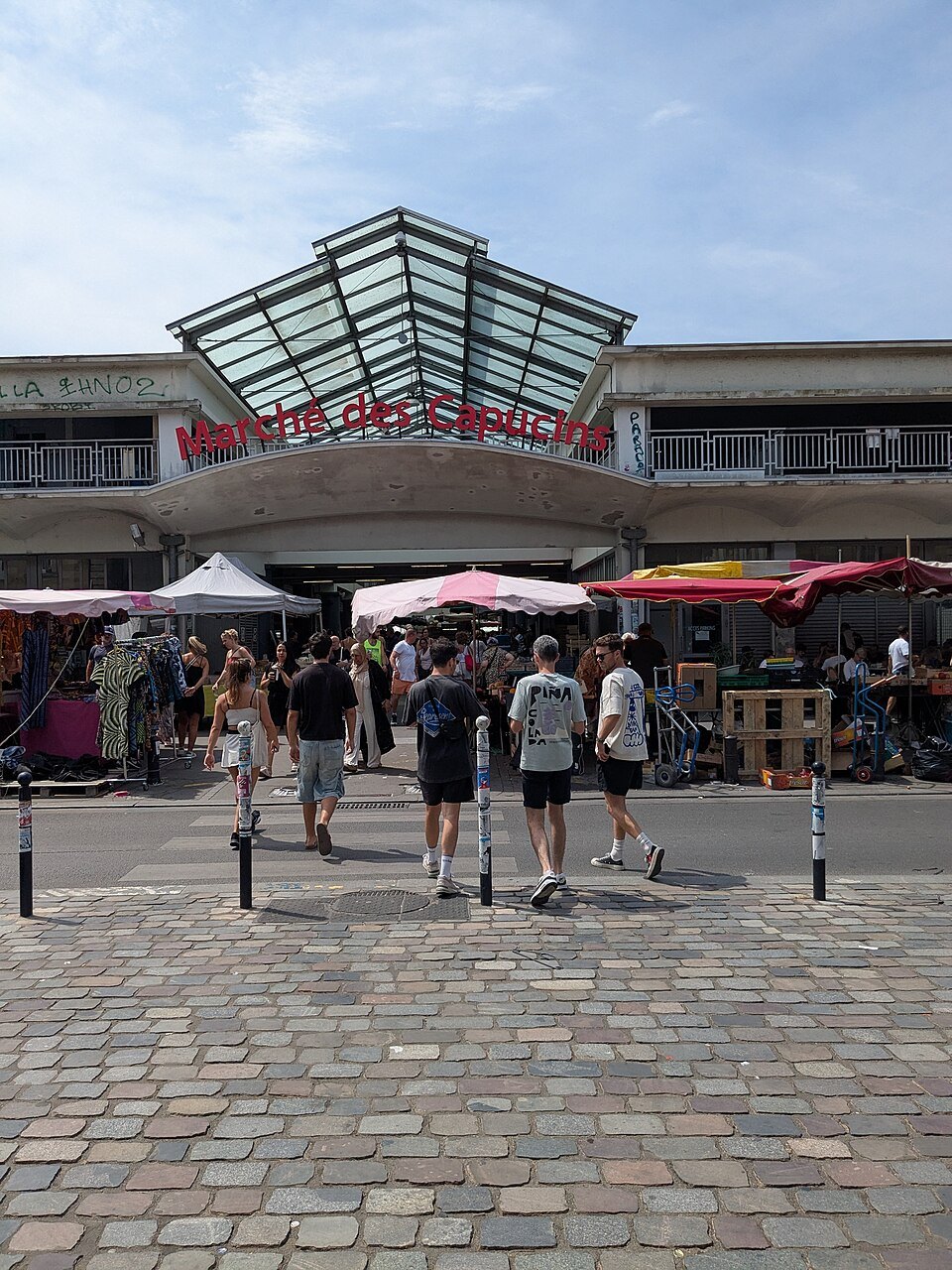
The Marché des Capucins in the Saint-Michel quarter, for a long time the city's wholesale food market, is now a lively neighborhood market hall, and the best single place to see what the region eats: fish and shellfish, cheese, charcuterie, fruit and vegetables, and counters where you can eat oysters or a plate of seafood with a glass of white wine at the bar. The quarter around it, with the flea market on the squares near Saint-Michel, is at its busiest at the weekend.
In the Chartrons, the covered market hall at the heart of the quarter is where the neighborhood gathers, and a market sets up on the quay on Sunday mornings. Both are good places for picnic supplies before a walk along the river.
Bakeries across the city sell canelés by the piece or by the box, the obvious thing to take home, and the Cité du Vin's ground-floor wine library and the city's many wine shops are the places to choose a bottle for the journey.
Sweets and a drink or two
Beyond the canelé, look for the bouchon bordelais, a confection created in 1965 in the shape of a cork, made of almond paste with raisins soaked in Bordeaux brandy and wrapped in a lace crêpe; the créoles, cherries steeped in rum and coated in spiced chocolate; and the macarons of Saint-Émilion, almond biscuits first made in 1620 by Ursuline nuns. Fine Bordeaux is the region's grape brandy, distilled from white wines.
And for something without alcohol, Cacolac, a chocolate milk that began in a dairy in the Bastide quarter across the river and is now made just outside the city, has been a local favorite for generations and turns up in most cafés. For something lighter than red on a summer evening, ask for a clairet, the region's deep pink wine.