Why was the Porte Cailhau built, and what can you see from it?
How Bordeaux's old river gate came to be built, who it honors, and what its carvings and views reveal today.
Read on
A door built for a king
Before the eighteenth century gave Bordeaux its long classical quays, the city met the Garonne with a wall, and the Porte Cailhau was its main door from the port. It stood between the mouths of two small rivers that once ran through the town, the Peugue and the Devèze, and it led straight to the Palais de l'Ombrière, the residence of the dukes of Guyenne and, from fourteen sixty-two, the seat of the Parlement of Bordeaux.
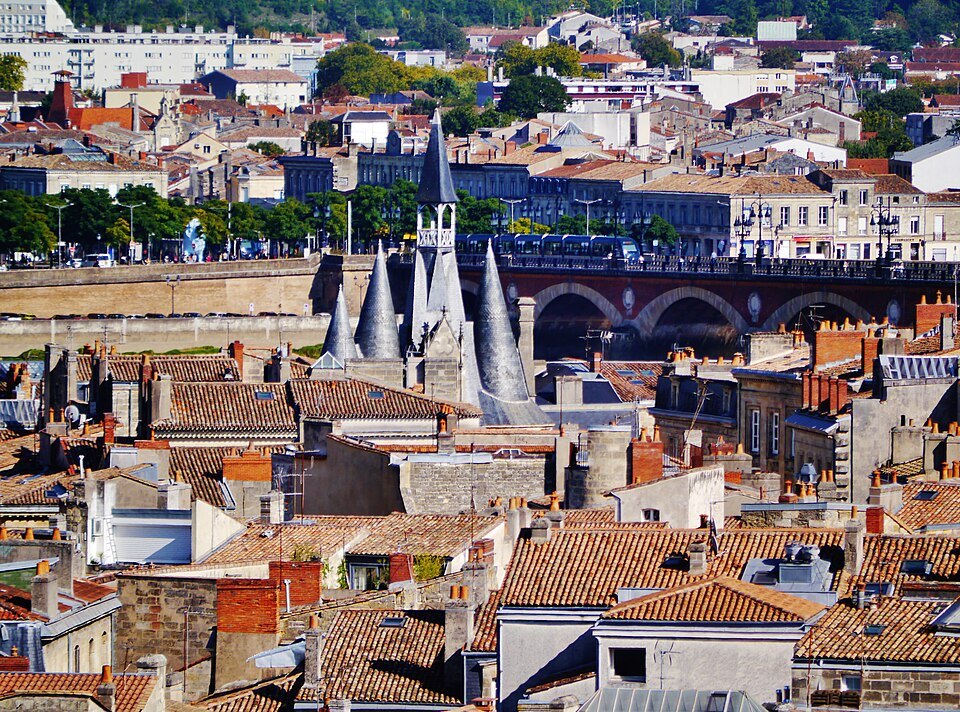
A first gate had stood here as part of the fourteenth-century town wall. The gate now on the site was built closer to the river between fourteen ninety-three and fourteen ninety-six, probably to plans by Raymond Macip. As the work was finishing, Charles the Eighth won the Battle of Fornovo in Italy in fourteen ninety-five, and the archbishop of Bordeaux, André d'Espinay, had led a contingent from the city in that battle. The town magistrates dedicated the new gate to the king, as a royal entrance facing the ducal palace, and set up his statue in white marble.
It is one of only two civic buildings the city kept from the Middle Ages, alongside the Grosse Cloche, and it has been a listed historic monument since eighteen eighty-three.
The name behind the gate
Cailhau means pebble in Gascon. The quay in front of the gate sloped gently down to the water between the two streams and was the first in the city to be paved with river pebbles, which gave the gate its name. The same name belonged to a powerful medieval merchant family, the Cailhau, who lived near the ducal palace and supplied the city with several mayors in the thirteenth and fourteenth centuries.
Revolutionaries smashed the king's marble statue in seventeen ninety-three, and the figure now standing on the river front is a stone copy made in eighteen eighty. The gate itself was remodeled more than once: its opening was widened in the seventeen fifties, and the architect Charles Durand restored it and cleared away buildings leaning against it between eighteen eighty and eighteen ninety. From nineteen-oh-six it housed the city's archaeological museum, and in nineteen seventy the society that ran it handed the keys to the city.
The river side
Stand on the quay first to see the gate as arriving sailors and merchants once did. On the river face are the statues: Charles the Eighth holding globe and scepter, flanked by Saint John the Baptist and the archbishop who had stood beside him at Fornovo. Above them the gate shows two faces at once.
Machicolations run the whole way round the top, and there is a portcullis, dormers and arrow slits, all drawn from the medieval arsenal of defense. But the ogee arches over the mullioned windows, the steep roof with its slender turrets, and the flamboyant canopies over the statue niches already belong to the Renaissance. The arrow slits face the town as well as the river, a small detail that says something about how far a medieval city trusted its own streets.
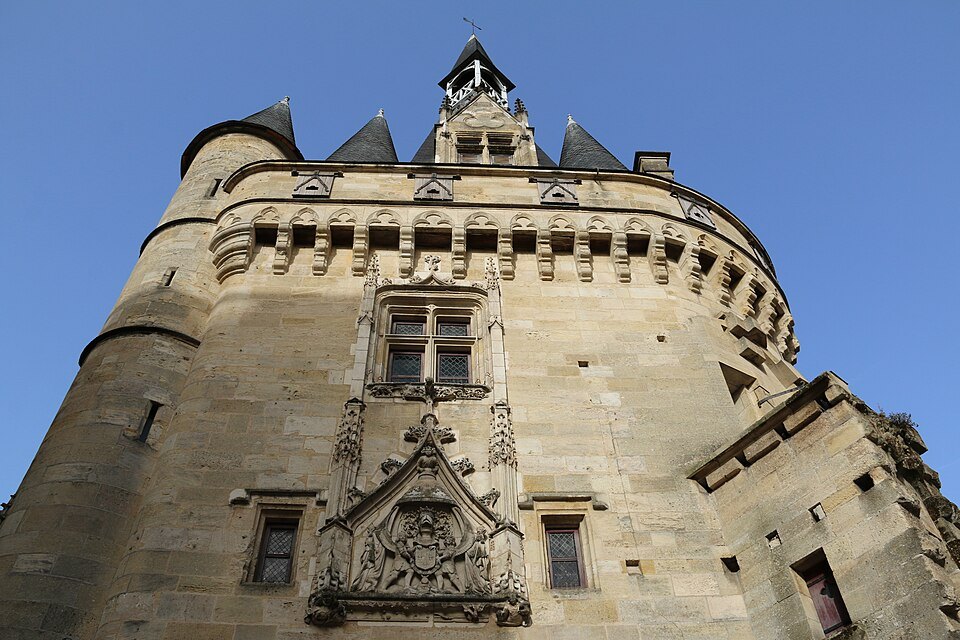
All round the building, at window sills and door corners, look for small carved figures, animals and chimeras in the stone, the kind of detail easy to miss without pausing. With its roofs the gate reaches about thirty-five meters, built of a limestone full of tiny fossil starfish.
The city side
Walk through the arch to the inland face and the gate turns theatrical. Carved there is a small stone stage set: two angels holding a shield with three fleurs-de-lis under a helm and a royal crown, framed by curtains tied back with cords, with an odd long-haired figure peering down at the scene from above.
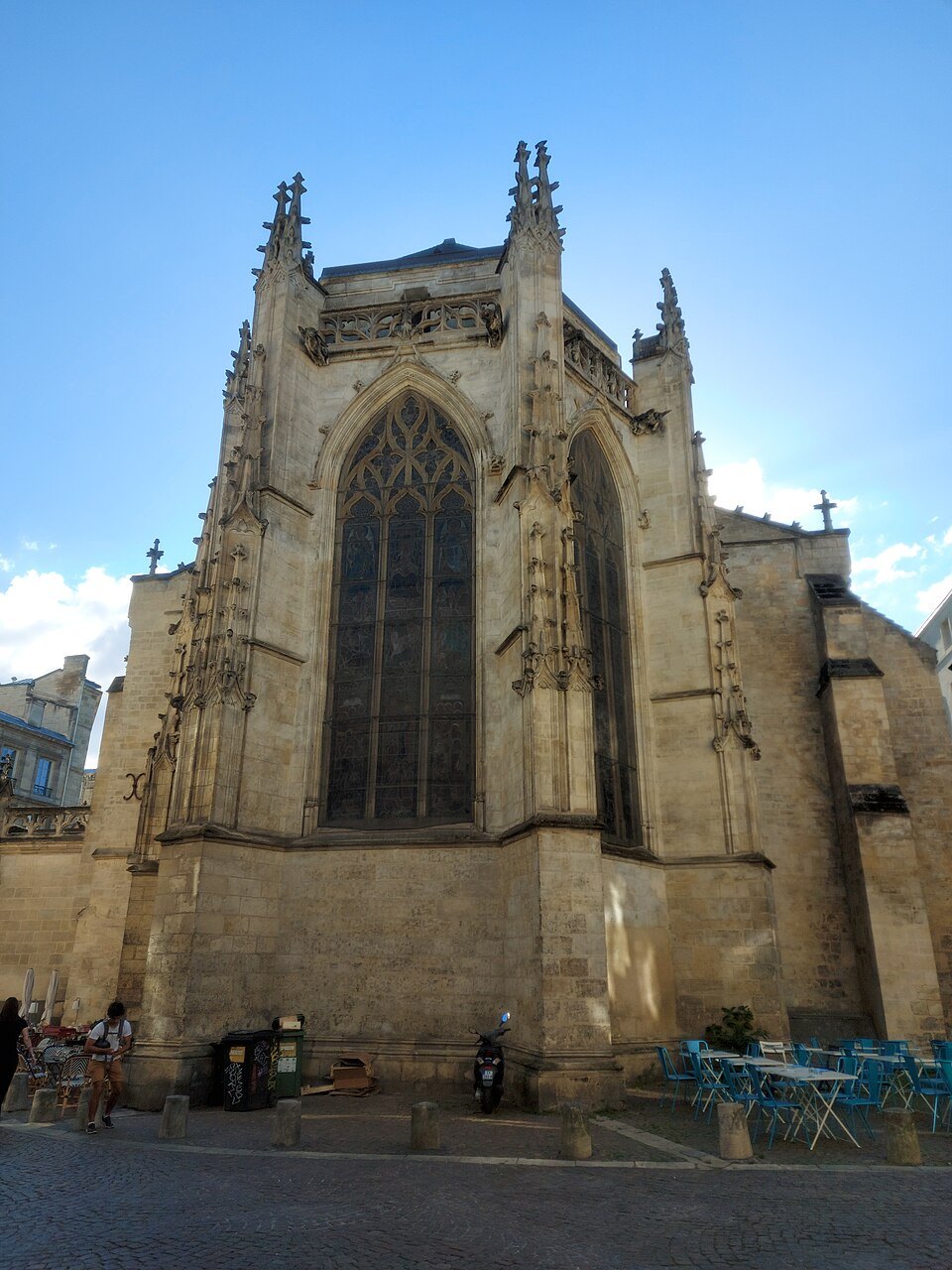
Beside this carving, traces remain of the old rampart, roughly two meters thick and eight to ten meters high, and a door that once opened onto the wall walk and now opens onto nothing. It is a useful reminder that the gate was once part of a continuous fortified line around the medieval town, almost all of which has disappeared.
The honest note to keep in mind on both faces: the king on the river front is a nineteenth-century copy, not the marble original destroyed in the Revolution, and much of what looks like untouched late-medieval stonework is in fact careful nineteenth-century restoration.
The squares behind it
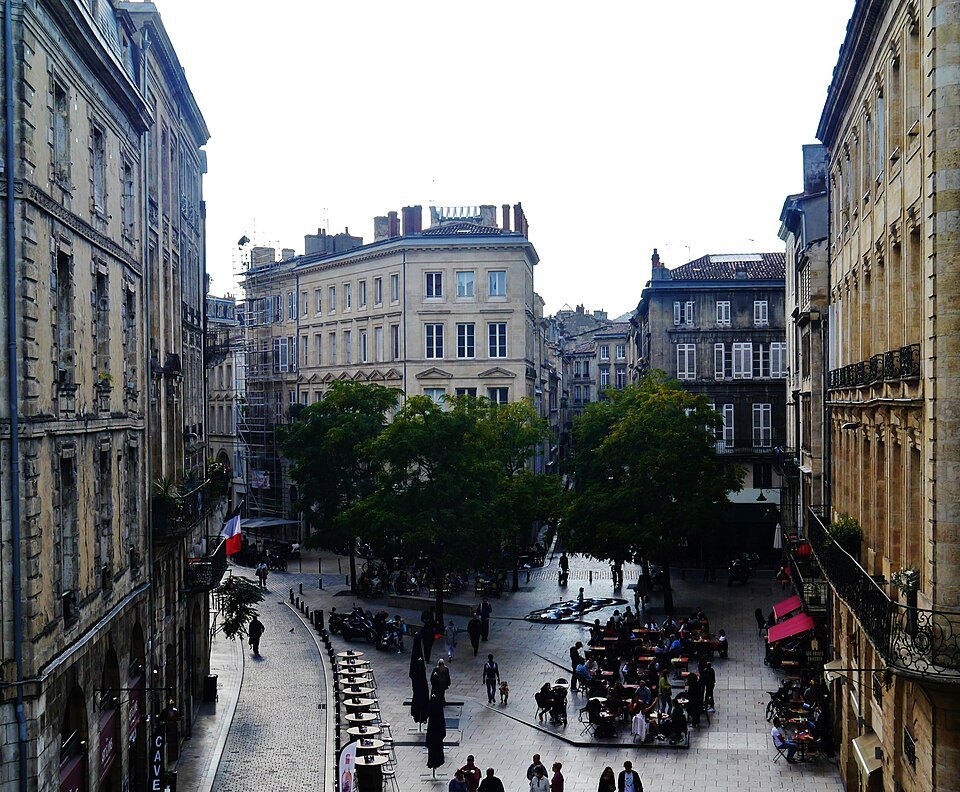
The gate stands on the Place du Palais, named for the vanished ducal palace it once faced. A few steps inland, the Place du Parlement is the most elaborate of the old town's eighteenth-century squares. It was laid out in seventeen sixty as the Place du Marché-Royal, became the Place de la Liberté during the Revolution, and today keeps the memory of the Parlement of Bordeaux, which sat from fourteen fifty-one to seventeen ninety.
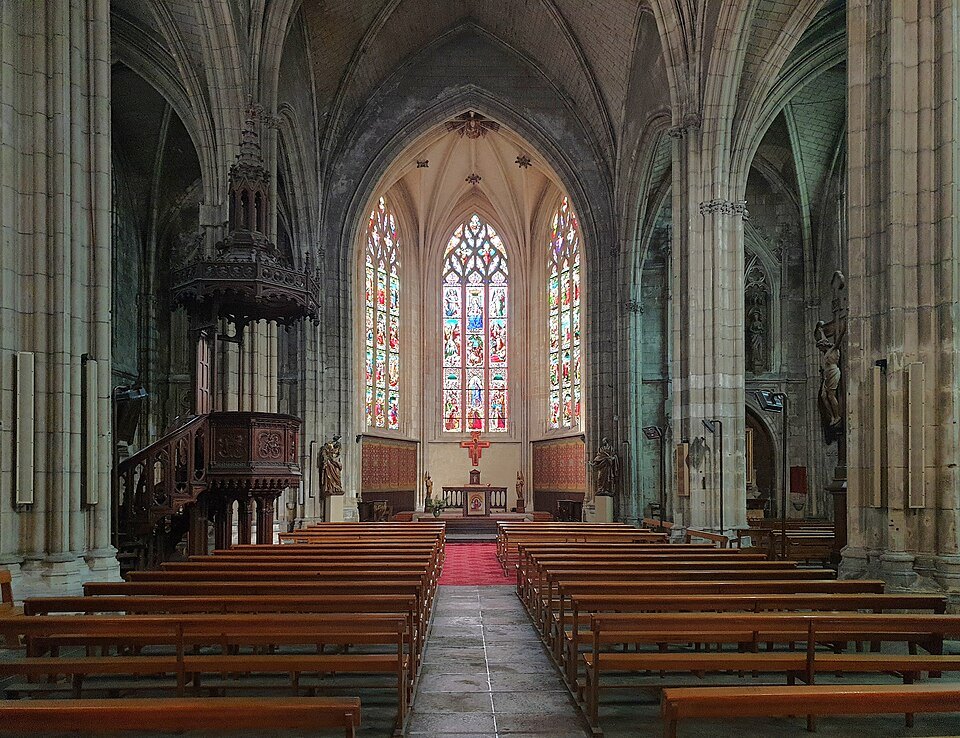
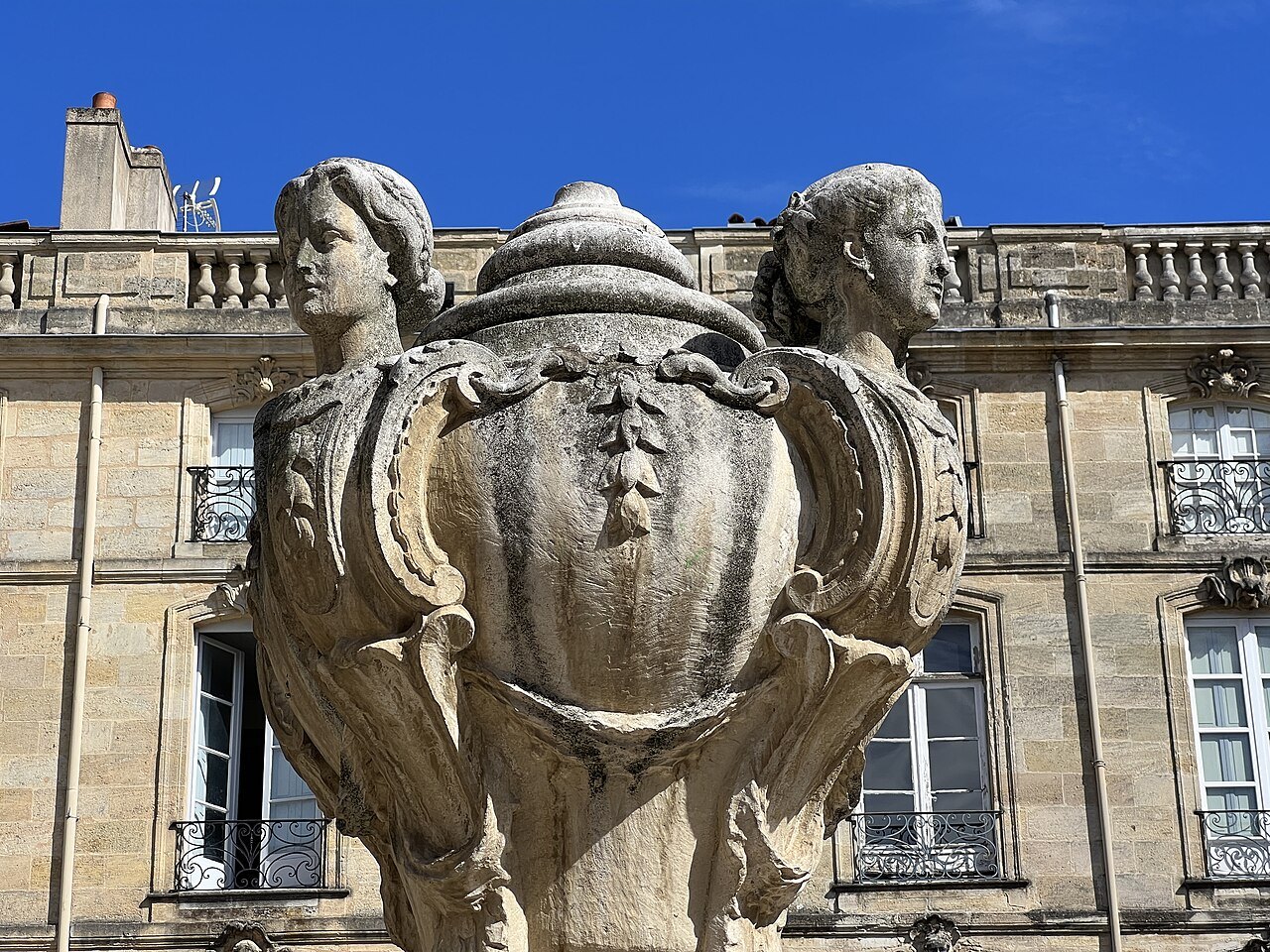
Its houses, built in the first half of the eighteenth century, are richly carved with mascarons, iron balconies and balustrades, and its fountain was designed by Louis-Michel Garros and set up in eighteen sixty-five. The golden limestone paving dates from nineteen eighty.
Just beyond is the Place Saint-Pierre and its church, rebuilt from the fourteenth to the fifteenth century on the site of the city's early port church. Together the three squares make a short loop that shows the old town at its best, and fits naturally into a longer walk through the neighborhoods of the old town.
How to visit
From outside, the gate itself needs about twenty minutes: the quay side, the arch, the carved city side and the Place du Palais. The interior, which holds the old museum rooms, is opened by the city for visits on dates and times set locally, so check current access with the city's tourism office before counting on going inside. Add another half hour or so to walk the Place du Parlement and the Place Saint-Pierre as well.
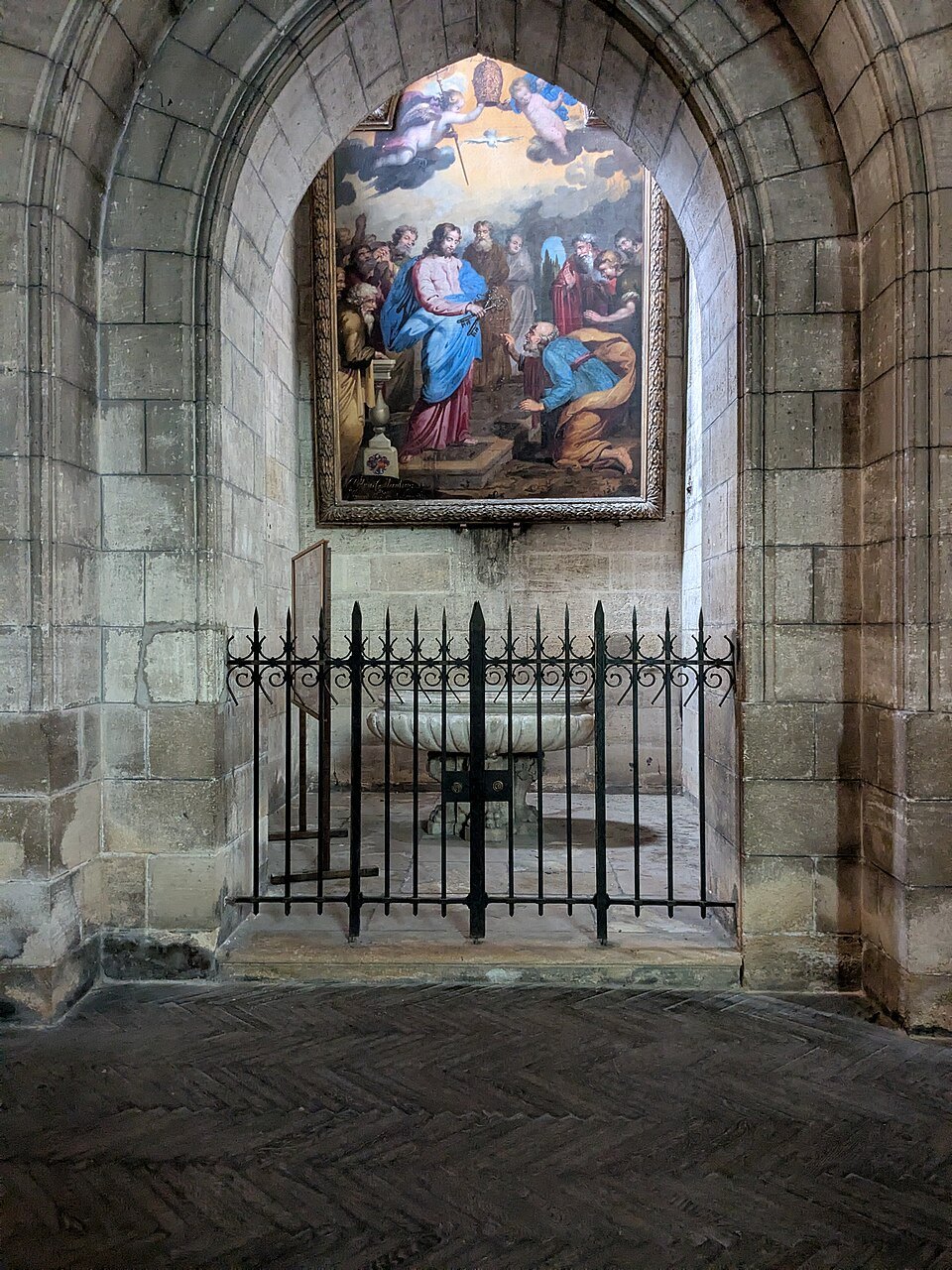
The gate sits on the quays between the Place de la Bourse and the Pont de Pierre, on the main riverside walk through the old town, and the Porte de Bourgogne tram stop is a short walk upstream. For getting across the city to reach it, see getting around. The Saint-Pierre quarter around the gate is one of the better bases for a stay in the old town.
More from the journal
- The Grosse Cloche and Rue Saint-JamesWhat is the story of the Grosse Cloche, the bell gate of Bordeaux?The story of the Grosse Cloche, Bordeaux's bell gate: a medieval wall tower turned civic belfry, and how to see it today.Read the piece
- Where to StayWhich area of Bordeaux is best for a first visit?A guide to Bordeaux's districts, from the lively old town to quieter riverside and residential quarters, for first-time visitors.Read the piece
- Place de la BourseWhy does the Place de la Bourse face the river?How Bordeaux broke a wall to open its grandest square onto the Garonne, and what that opening started.Read the piece