What is inside the old submarine base in Bordeaux?
A wartime U-boat bunker on the Bassins à Flot, now a digital art center in its flooded pens and a neighborhood arts venue. What it was, what you see inside, and what grows on its roof.
Read on
The short answer
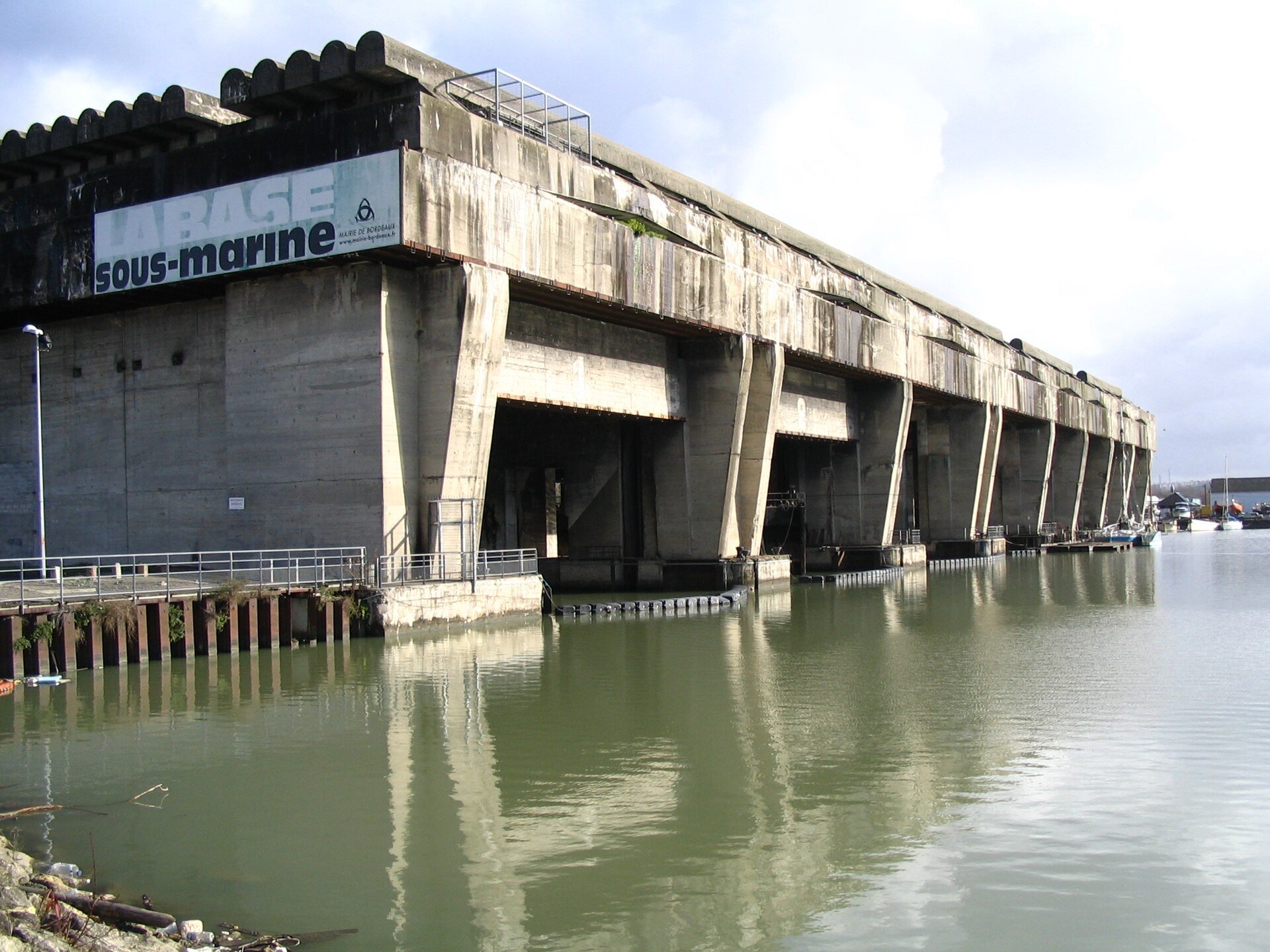
The submarine base is a colossal block of reinforced concrete on the edge of the Bassins à Flot, the old wet docks at the northern end of Bordeaux's quays. It was built by the occupying German forces between 1941 and 1943 to shelter submarines, and it is one of five such bases built on the French Atlantic coast during the Second World War. The city of Bordeaux owns it today.
Inside, the first four of its eleven pens hold the Bassins des Lumières, a digital art center that projects immersive exhibitions onto the concrete walls and the water, opened in June 2020. Another part of the building, the annex that long served for contemporary art exhibitions, became a neighborhood cultural venue called Boîte noire in April 2025.
Why there is a submarine base here
Bordeaux served as an Atlantic submarine base from the first months of the Occupation. In 1940 the Italian navy set up a base in the port under the code name Betasom, beta for the initial of Bordeaux and som for sommergibili, submarines; its officers and crews were lodged in the old maritime station of the Compagnie Transatlantique facing the site across the basin. Thirty-two Italian submarines served there in all, most of them reaching the Atlantic from the Mediterranean through the Strait of Gibraltar.
The German bunker was built next. It became the home port of the 12th U-boat Flotilla, formed in Bordeaux in October 1942, whose boats made the longest patrols of the war, into the Indian Ocean and on the supply runs to Japan. The first German submarine arrived on 9 January 1943; of the forty-three U-boats based at Bordeaux, thirty-six were lost.
The building also has a darker history of its own. Spanish Republicans, refugees used as forced labor, were among those who built it, and some seventy of them died on the site; according to several testimonies, some were buried in the concrete of the foundations. A memorial to them was inaugurated in front of the base on 14 April 2012.
The size of it
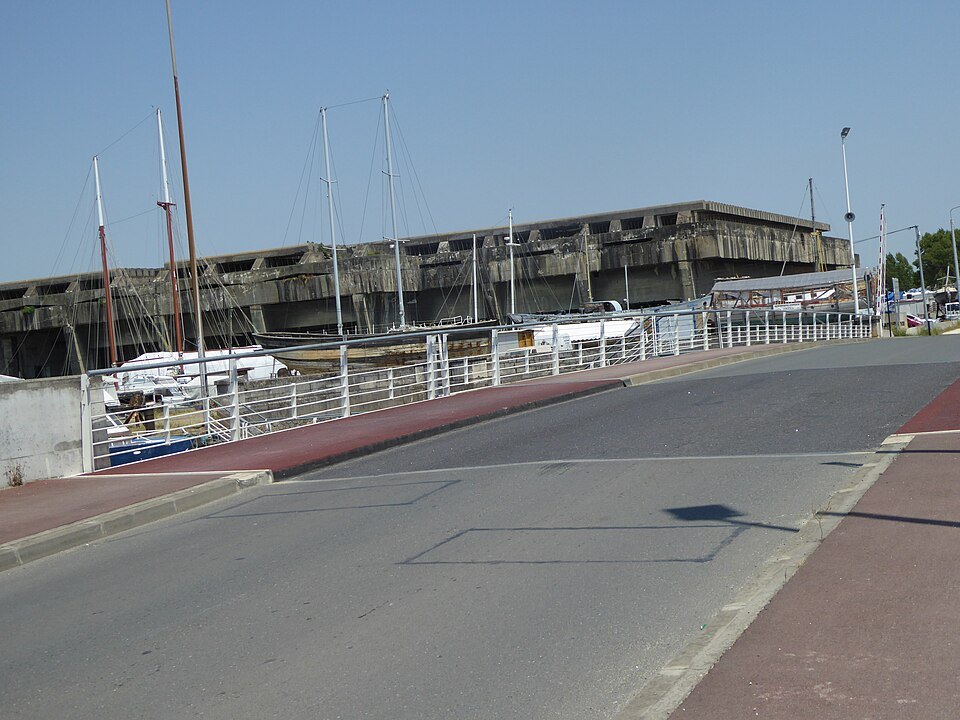
The scale is the first thing you notice. The main block is 245 meters long, 162 meters wide and 20 meters high, with a bunker tower of 48 by 73 meters beside it. Inside are eleven pens between 100 and 115 meters long: seven could take one submarine each and four could take two. The seven central pens could be pumped dry for repairs, and each pen is separated from the next by a wall five to six meters thick.
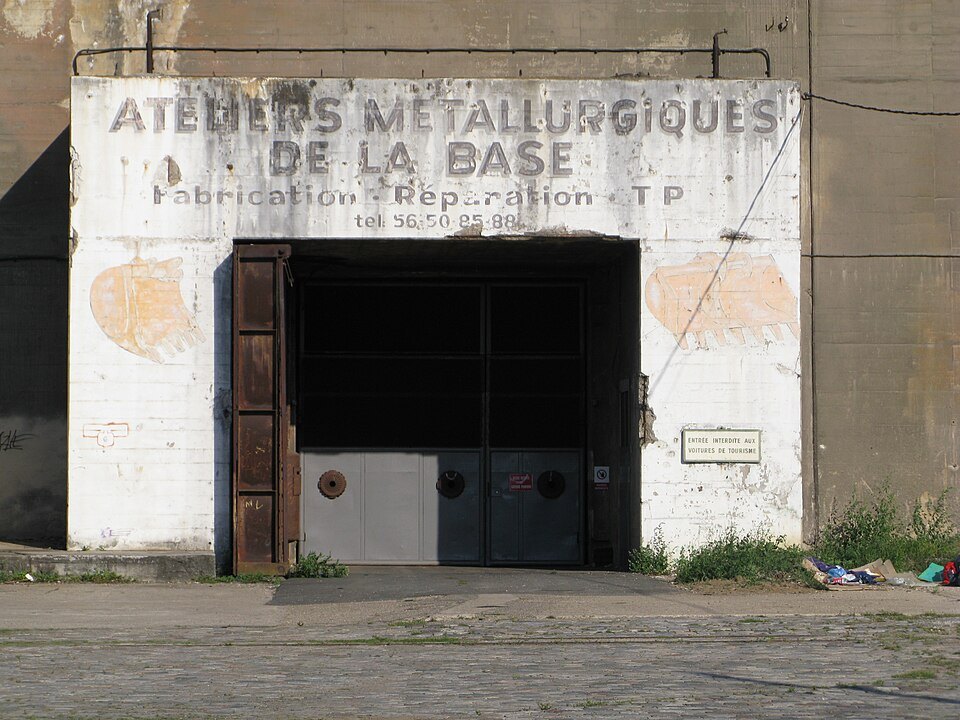
At the back of the pens a railway ran across the building, serving overhead cranes in every pen and the workshops beyond, and the bunker held dozens of windowless rooms on several floors: workshops, stores, offices, living quarters and an infirmary. After the war the base stood largely abandoned, with only small metalworking and ship-repair firms in its workshops.
From yachts to contemporary art
The first attempt to give the base a new life came in 1990, when it housed an international conservatory of pleasure boats, then described as the largest of its kind in the world, with up to 120 boats in the pens. It closed in 1997 for lack of visitors. From 2000 to 2021 the base hosted temporary exhibitions and monumental works of contemporary art; between 2010 and 2015 some fifty artists were shown there, among them photographers such as Henri Cartier-Bresson, Robert Capa and Robert Doisneau, and in 2017 the artist JR installed his Inside Out photo booth there.
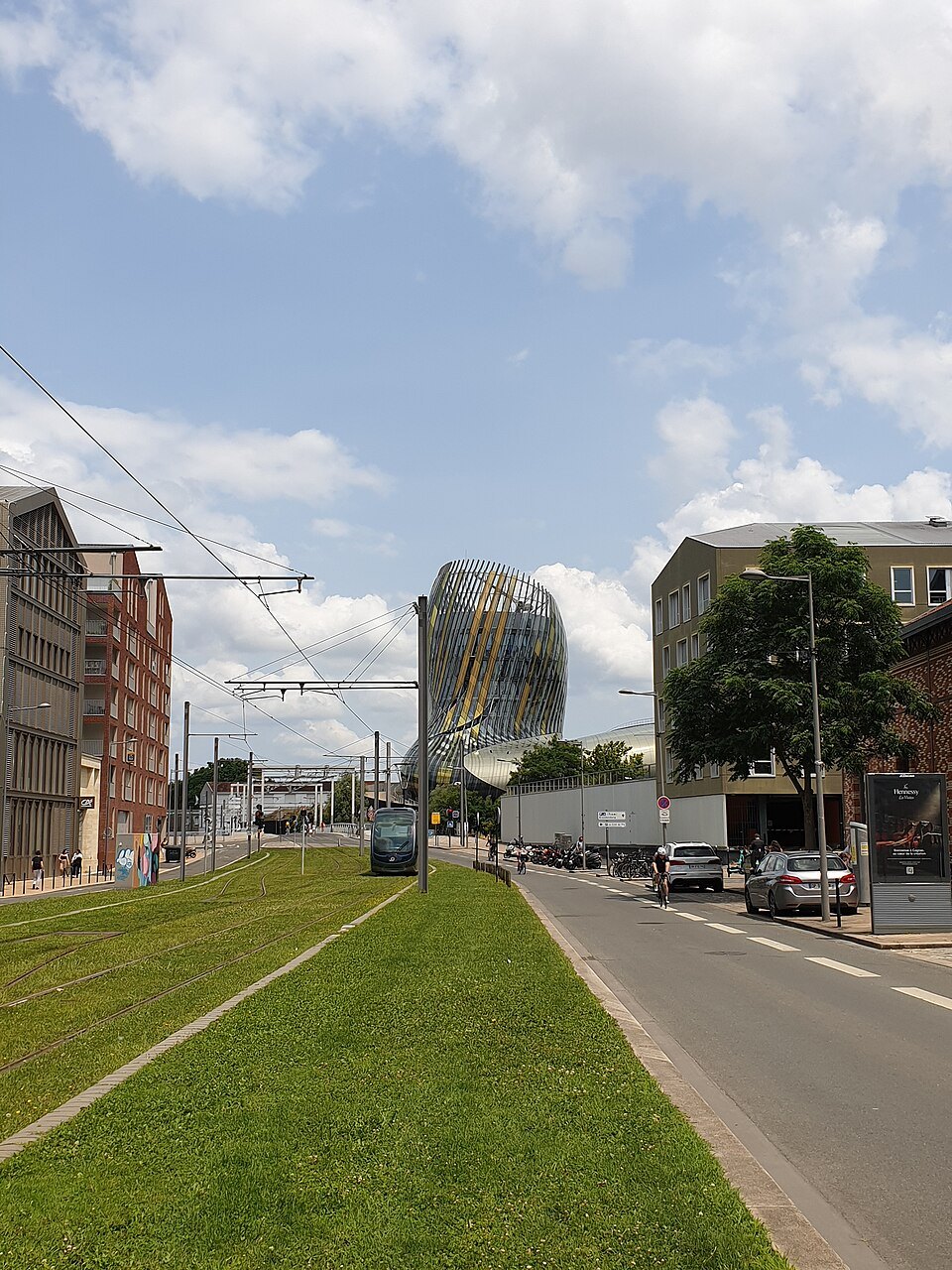
When the Bassins des Lumières took over the first four pens in 2020, the contemporary art space was moved into the base's former power plant, the annex that has since become Boîte noire.
The Bassins des Lumières
The Bassins des Lumières are run by the company Culturespaces, which won a call for tenders launched in 2017 and signed a fifteen-year contract. The four pens it uses are flooded basins, each about 110 meters long, 22 meters wide and 12 meters high, and the images are projected across some 12,000 square meters of wall and water by about ninety projectors, with some eighty speakers for the sound. Several exhibitions run at once: a long program, usually devoted to painters, a shorter one, and contemporary digital works in a separate space called the Cube.
The programs change from year to year. The first, in 2020, was built around Gustav Klimt; later years have turned to the painters of the Mediterranean from Monet to Chagall, to Venice and its mosaics, and to other artists. Culturespaces presents the site as the largest digital art center in the world, three times the size of its Carrières des Lumières in Provence; that is the operator's own description rather than an independent measure. By the company's count it welcomed about 650,000 visitors in 2022.
The roof garden no one planted
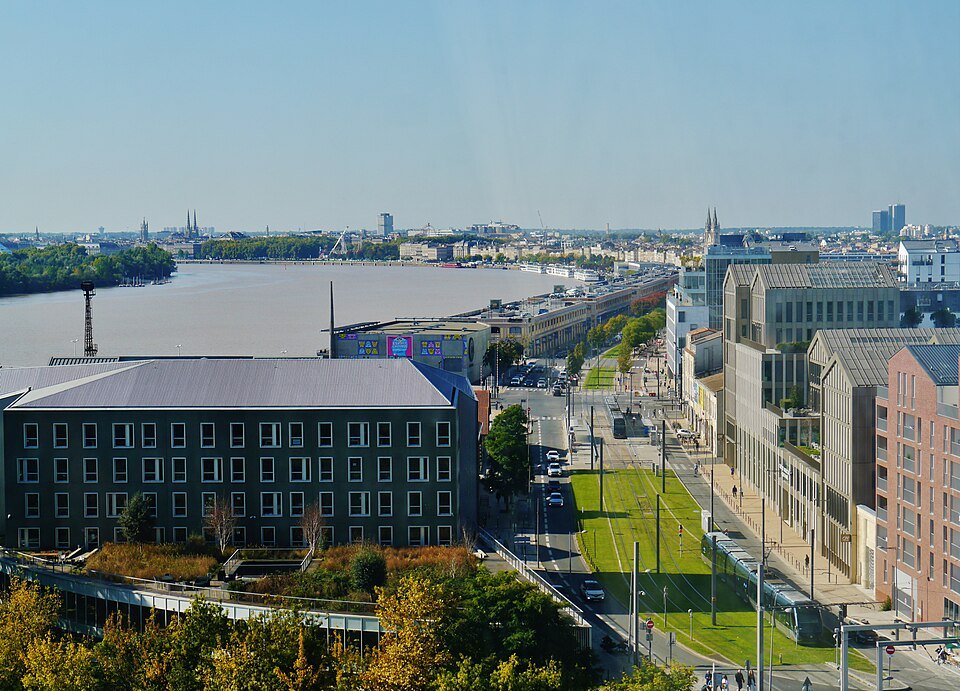
The roof is its own small wonder. Bombs left gaping holes in the concrete, and over the decades plants took hold on the thin layer of soil that gathered there: a botanist counted at least fifty-seven species, oaks, ashes, willows, ferns and wild orchids among them, growing on about two centimeters of earth. The roof covers some 41,000 square meters, and the city has long debated what to do with it; in February 2026 the city council approved the installation of solar panels over part of it.
Visiting
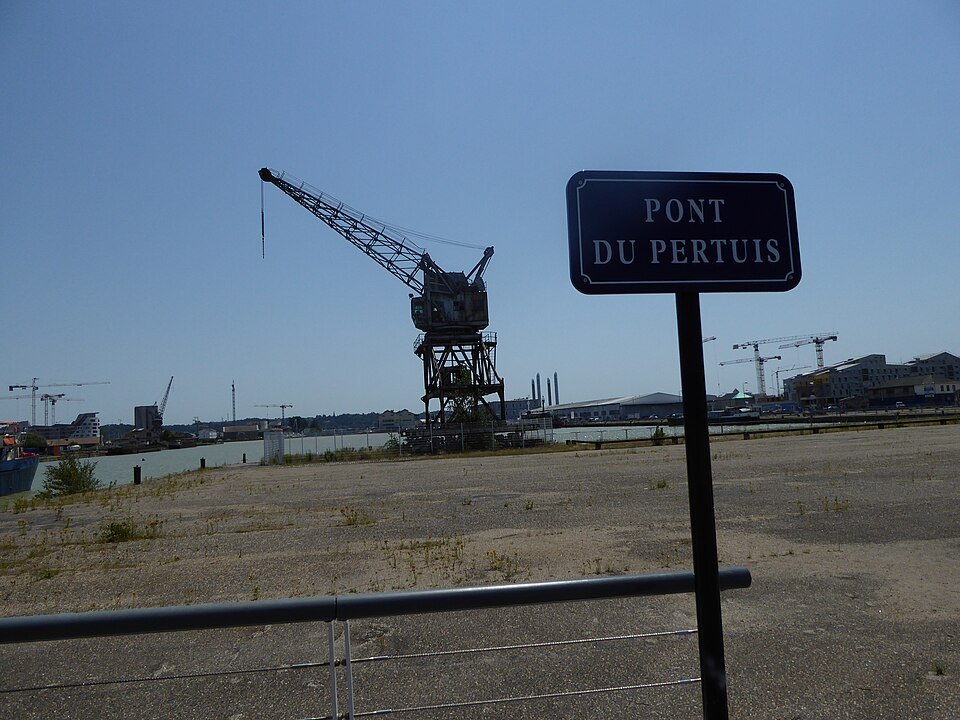
The base stands at the northern end of the quays, across the basin from the new quarter, a short walk from the Cité du Vin and the lift bridge. From the center, the tram along the quays takes you most of the way; see getting around. The exhibitions of the Bassins des Lumières have their own tickets and times; the outside of the base, and the memorial in front of it, can be seen at any time.
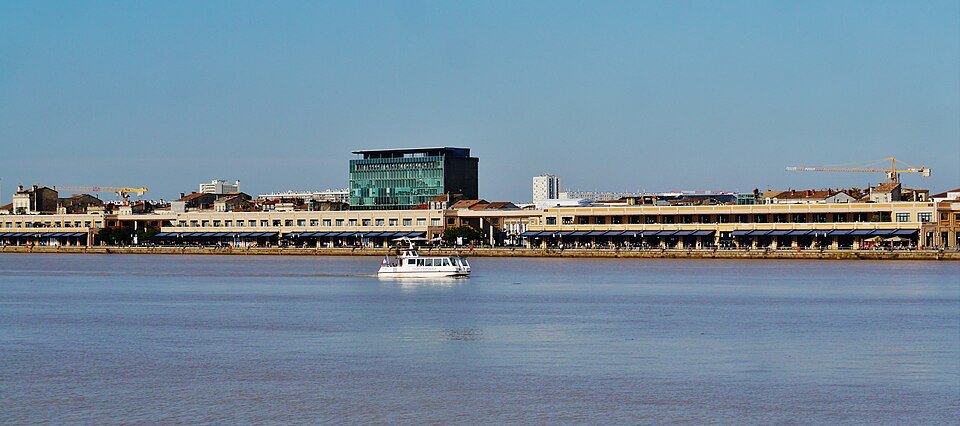
The Bassins des Lumières are popular, especially at weekends and in the holidays, so book ahead if you have a fixed day; see booking ahead. Combine the visit with a walk around the basins and through the Chartrons on the way back into town.
More from the journal
- The Port of the MoonWhy is Bordeaux called the Port of the Moon?The name comes from the crescent-shaped bend of the Garonne, and it runs from the medieval arms of the city to its modern logo and its UNESCO listing. Here is where to see the curve, and why the river is the color of caramel.Read the piece
- The Pey-Berland TowerWhich tower should you climb in Bordeaux, Pey-Berland or Saint-Michel?Bordeaux has two great free-standing bell towers: the cathedral's Pey-Berland Tower in the middle of the old town and the spire of Saint-Michel by the river. How they differ, what you see from each, and what to check first.Read the piece
- Getting HereHow do you get from Bordeaux airport to the city center?Bordeaux-Mérignac airport lies twelve kilometers west of the city. The tram, now line F, runs from the terminals through the center to Saint-Jean station; there is also a shuttle, a city bus and the option of a booked transfer.Read the piece