Is it better to reach Bordeaux from Paris by train or by plane?
Weighing the TGV against Bordeaux-Mérignac for the Paris to Bordeaux journey, station by station and terminal by terminal.
Read on
The short answer for most travelers
For anyone starting in central Paris, the train is usually the simpler choice. Since the high-speed line from Tours opened in 2017, the TGV from Gare Montparnasse reaches Bordeaux Saint-Jean in about two hours, almost an hour faster than the older route. Once the walk to the station, check-in buffers and the ride out to an airport on either end are added up, the total door-to-door time for flying rarely beats the train for a trip that starts inside Paris itself.
The train also delivers the visitor into a station on the tram network, a short ride from the old town. Flying still has its place, particularly for travelers who are not starting in central Paris, who are arriving from elsewhere in Europe, or who simply find a fare and schedule that suits an itinerary better than the rail options on offer. The sections below set out what each choice actually involves, so the decision can be made against a specific plan rather than a general rule.
Some links on this page are affiliate links. If you book through one we may earn a commission, at no extra cost to you. It does not affect what is recommended here, and no sight page on this site carries one.
A transfer booked ahead, somewhere to leave bags, and mobile data from landing.
Bordeaux Saint-Jean: the train experience
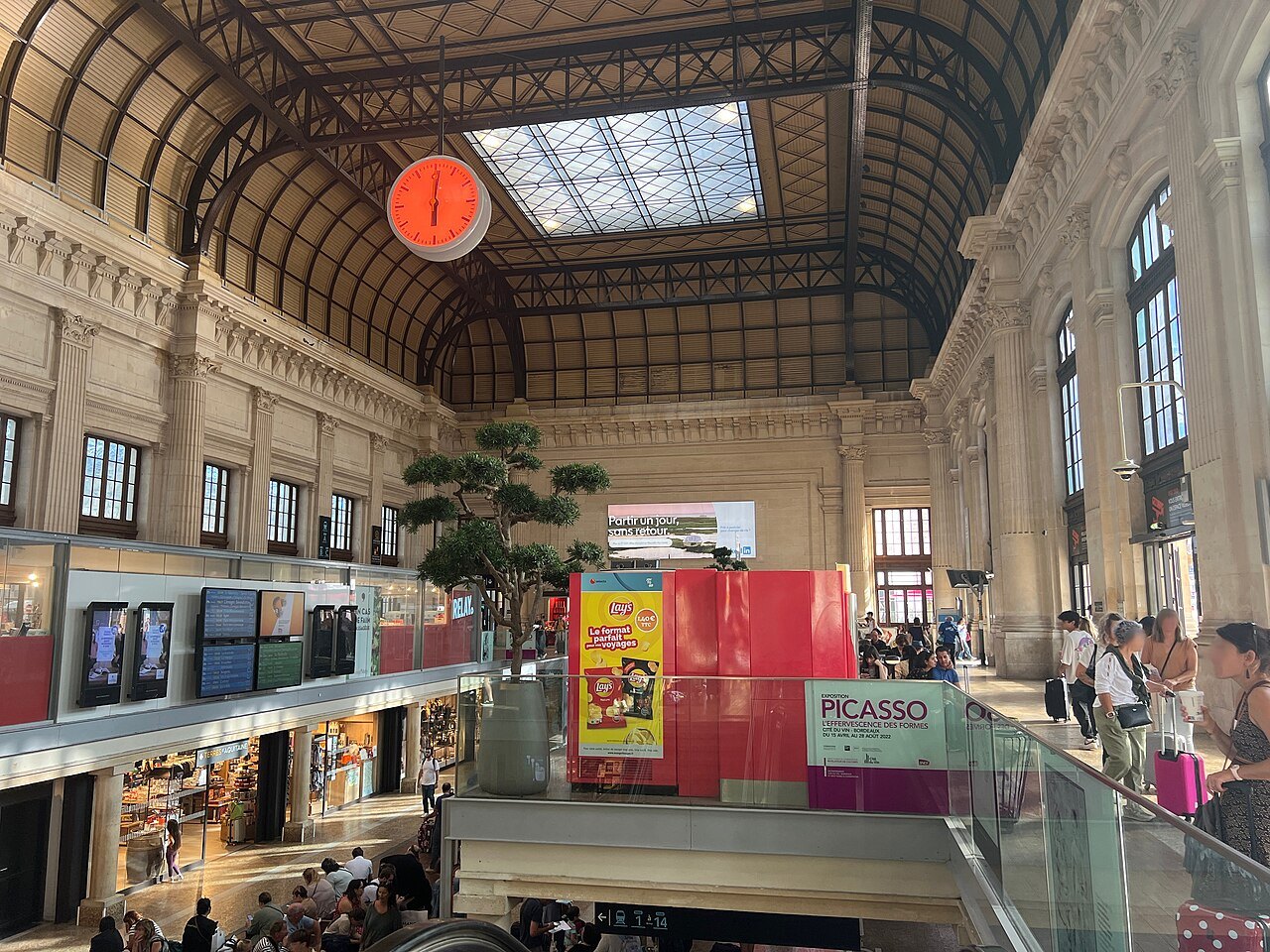
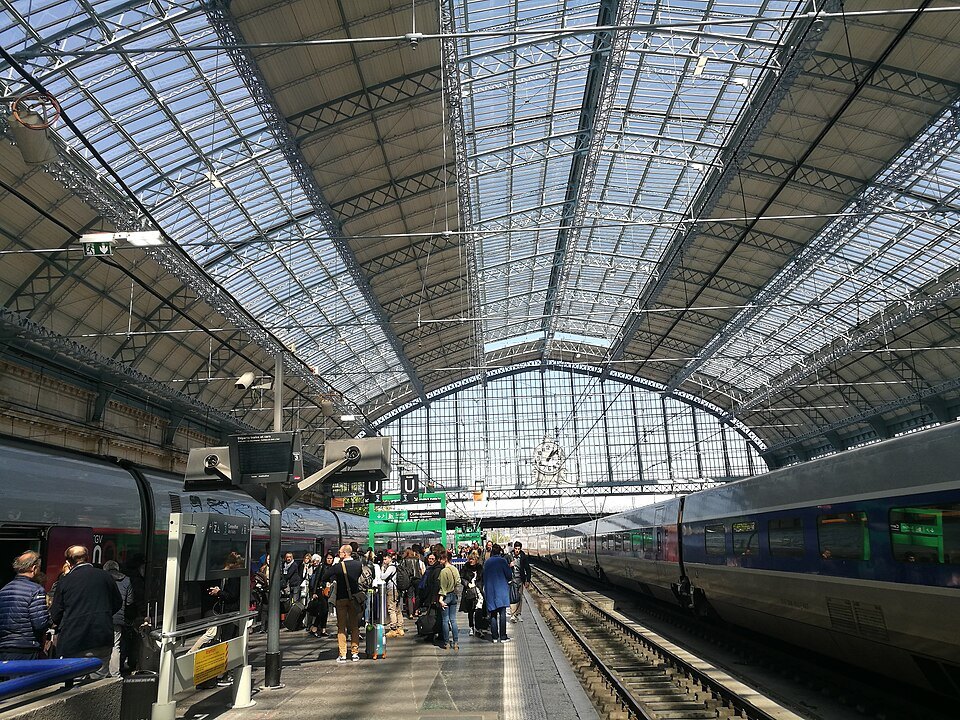
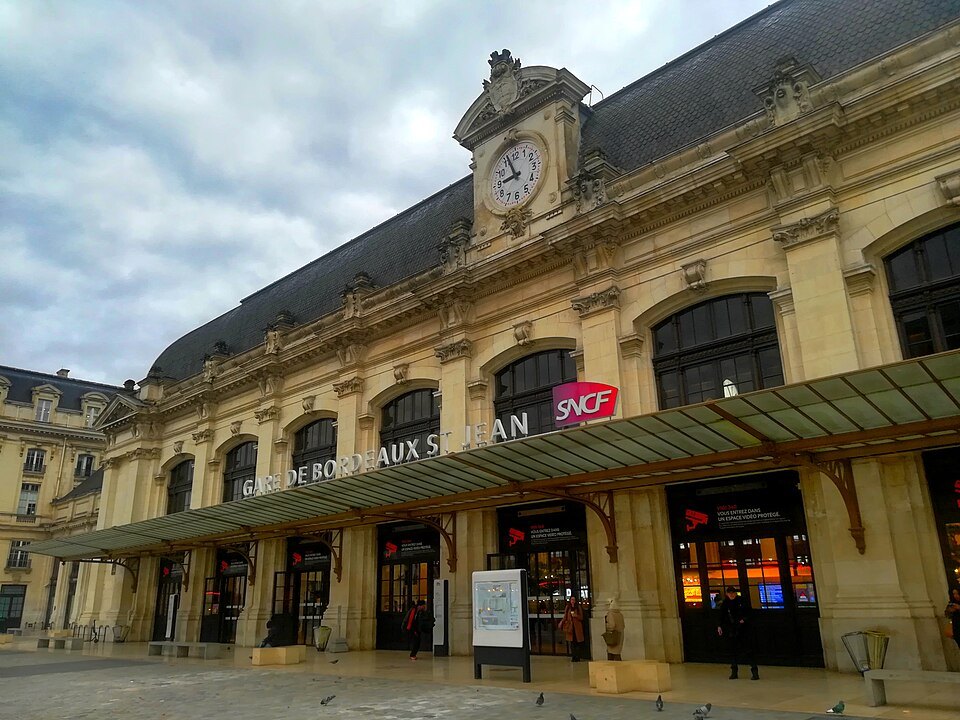
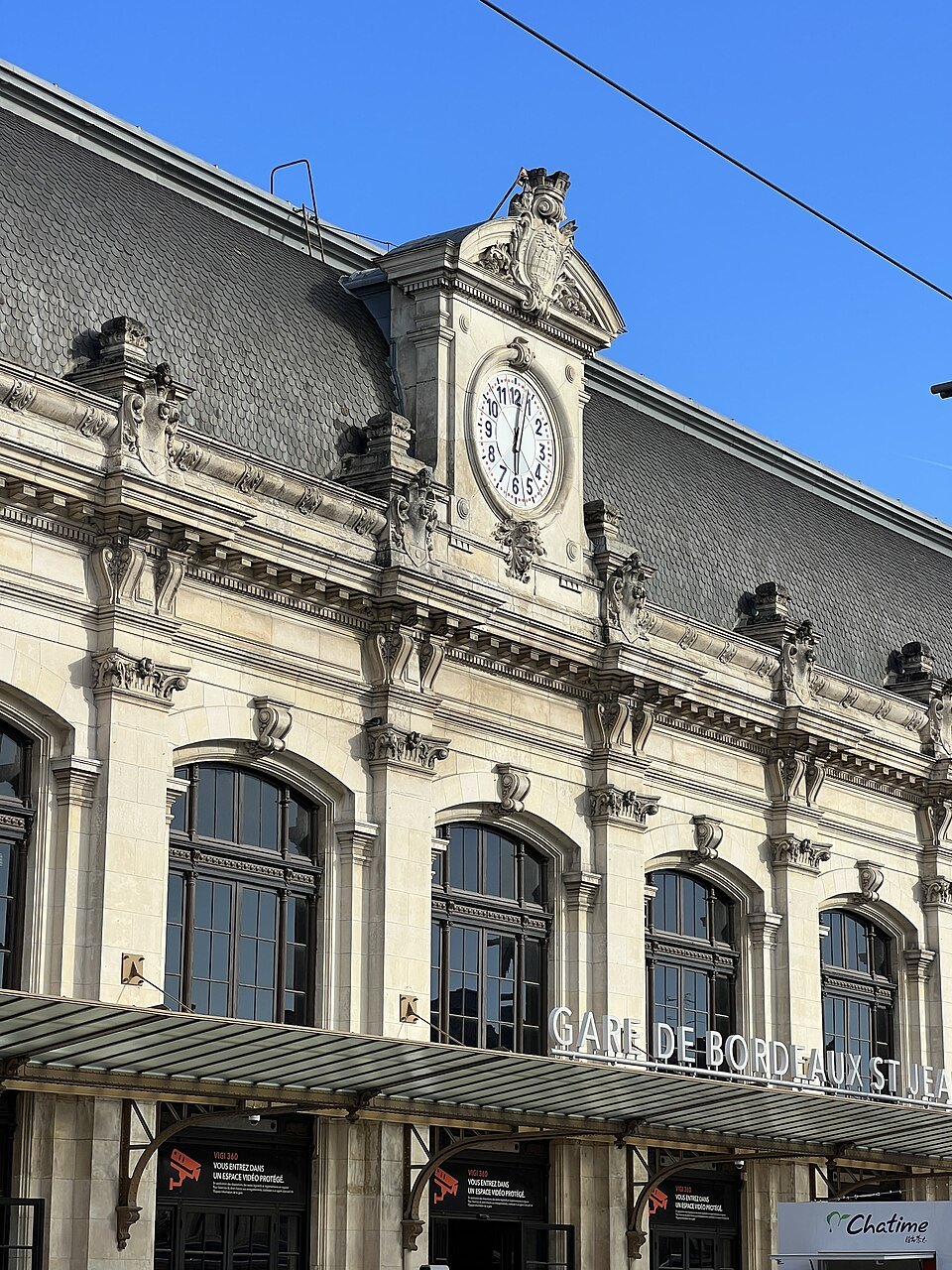
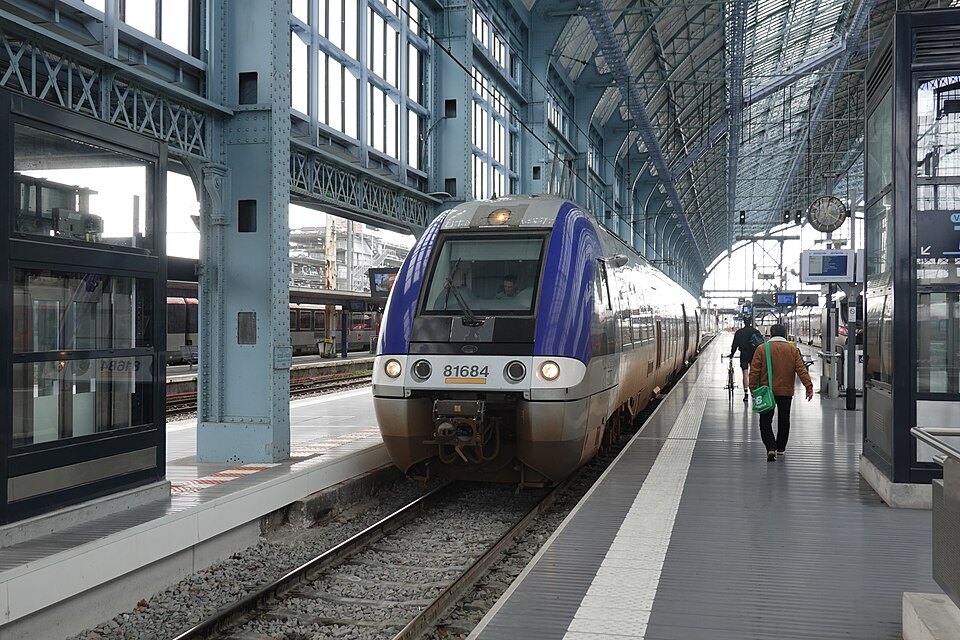
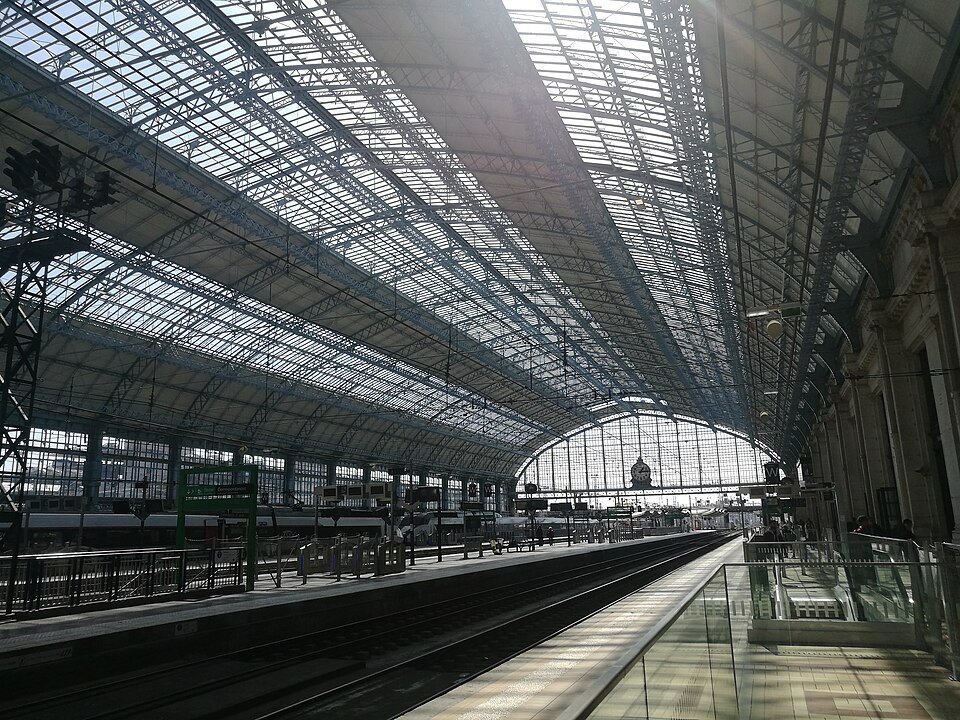
Bordeaux Saint-Jean is the city's main station and the hub for trains across the south-west. It stands at the end of the old Grande-Rue Saint-Jean, now the cours de la Marne, on the south-east edge of the historic center. The present building was put up between 1889 and 1898 for the Compagnie du Midi; the arrivals hall came first, in 1893, and the great train shed of iron and glass is one of the sights of arrival, worth a slow look before heading for the tram.
From Paris, trains run from Gare Montparnasse on the high-speed line, with the fastest taking about two hours. The same station also has direct trains to Toulouse, Montpellier, Nîmes and Marseille on the line toward the Mediterranean, and to Lille, Strasbourg and Nantes, along with regional TER services covering much of Nouvelle-Aquitaine, from Arcachon and Angoulême to Agen, Bergerac, La Rochelle, Libourne, Limoges, Pau, Périgueux and Poitiers. Journey times vary by service, so check the operator for the specific train before booking.
From the platforms, the tram runs along the quays into the old town: a short ride to the Porte de Bourgogne, a little longer to the Place de la Bourse; from there the waterfront described on the Port of the Moon page is on your doorstep.
Bordeaux-Mérignac: when flying makes sense
Bordeaux-Mérignac airport lies in the commune of Mérignac, about twelve kilometers west of the city. It handles flights from across Europe and some destinations beyond, served among others by easyJet and Volotea, and had its busiest year in 2019, with nearly eight million passengers. There are two main halls, A and B, the latter built in 1996 originally for flights to Paris, plus a separate terminal for low-cost airlines, Billi, opened in 2010.
Flying from central Paris rarely beats the train on point-to-point time, since the flight itself is short and the surrounding airport processes add time on both ends of the journey. It becomes worth considering mainly when arriving from outside France with a connection through a Paris airport, when a direct regional flight elsewhere in Europe lands at Mérignac, or when a particular fare or timetable simply suits the visitor's plans better than the trains available. Check both the airline and the rail operator for the actual dates in question before deciding, since neither mode is reliably cheaper or faster on every route and every day.
Getting from each into the center
Whichever way a visitor arrives, the tram is the way into town. The network was built from 2003 to run through the historic center without overhead wires, drawing power from the ground instead, and it links the station, the airport and the Place des Quinconces interchange to the old town, as the getting around page explains in full, including how tickets work.
From the airport, a five-kilometer tramway extension has connected Mérignac to the city center since 2023, with the ride taking about thirty-five minutes. Since December 2025 this branch has run as line F. Anyone landing late in the day should check the time of the last tram rather than assume one will be running, and consider booking a transfer in advance as a backup.
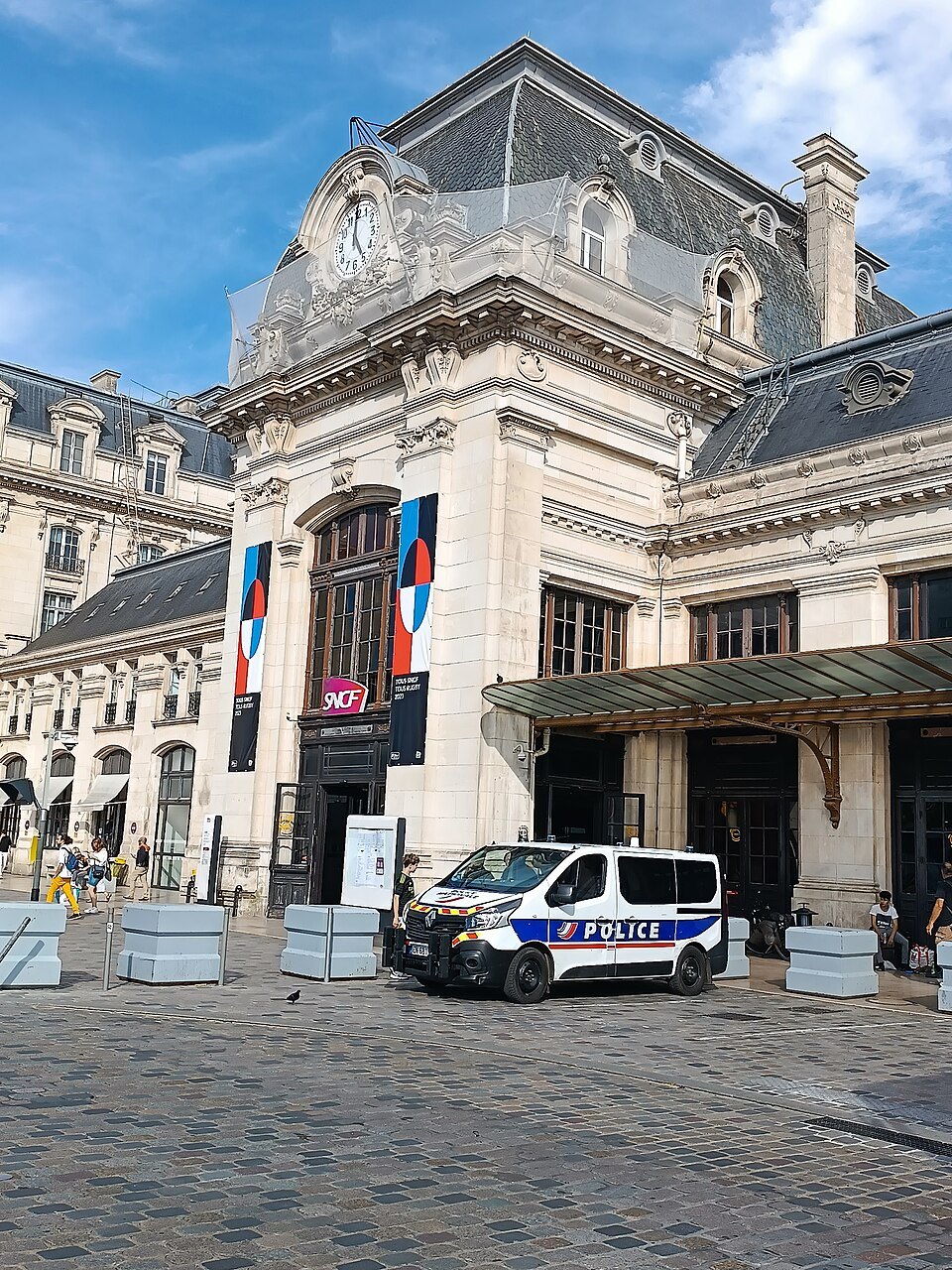
From Saint-Jean, the tram into the old town is a short ride. Travelers arriving by either mode end up on the same network for the rest of the stay, which makes the choice of arrival mode less consequential than it might first seem.
Rail links beyond Paris
The high-speed line into Bordeaux was built partly to tie the south-west into Europe's TGV network, and through Paris the city already connects with trains to London, Brussels and Amsterdam. Extensions of the high-speed line toward Toulouse and the Spanish border are planned, and the first preparatory works for the Toulouse line have begun, though visitors should treat any specific opening as a question for the rail operator rather than a fixed fact. Until those extensions are complete, trains to Spain continue down the classic line through the Landes to Irun, on the border.
Rail history also explains why the station sits where it does. Trains from Paris once ended on the right bank of the Garonne, at the Bastide station. In 1860 an iron railway bridge, built under the direction of Gustave Eiffel as the contractor rather than its designer, carried the line across the river to join Saint-Jean, and it stayed in use until 2008. It is a footnote worth knowing when looking along the river from the Pont de Pierre.
What to weigh before deciding
Beyond raw travel time, it is worth thinking about where the visit is based once in Bordeaux. Anyone planning day trips into the vineyards or along the coast should note that most of these start from Saint-Jean or from the Quinconces, so choosing accommodation near one of the two, as compared on the neighborhoods page, saves time regardless of how the visitor arrived in the first place.
Travelers continuing onward from Bordeaux have a case for either option: rail connections run south toward Spain and, through Paris, onward to London, Brussels and Amsterdam, while the airport offers its own network of European routes that may suit a different next stop. For a full itinerary that starts or ends in Bordeaux, the day trips page and the booking ahead page cover what else is worth arranging before travel, from tickets to timing.
Whichever you choose, build some slack into the day you arrive. Last-minute changes to trains or flights are easier to absorb with a buffer built into the schedule from the start, rather than planned around a tight connection at either end.
More from the journal
- Getting HereHow do you get from Bordeaux airport to the city center?Bordeaux-Mérignac airport lies twelve kilometers west of the city. The tram, now line F, runs from the terminals through the center to Saint-Jean station; there is also a shuttle, a city bus and the option of a booked transfer.Read the piece
- The Port of the MoonWhy is Bordeaux called the Port of the Moon?The name comes from the crescent-shaped bend of the Garonne, and it runs from the medieval arms of the city to its modern logo and its UNESCO listing. Here is where to see the curve, and why the river is the color of caramel.Read the piece
- The Pey-Berland TowerWhich tower should you climb in Bordeaux, Pey-Berland or Saint-Michel?Bordeaux has two great free-standing bell towers: the cathedral's Pey-Berland Tower in the middle of the old town and the spire of Saint-Michel by the river. How they differ, what you see from each, and what to check first.Read the piece