Read on
The short answer
Yes, and Saint-Émilion is one of only two classic day trips from Bordeaux that work comfortably without a car, the other being Arcachon and the Dune du Pilat. The village sits east of the city in the Libournais, on the wine hills between the Dordogne and the Isle rivers, and regional trains run from Saint-Jean station toward Libourne, the nearest town of any size. The Médoc and Blaye, by contrast, are described in this guide as much easier with a car or an organized tour, since their châteaux are spread out and public transport between them is thin.
A rail-based day trip to Saint-Émilion is entirely realistic, but it rewards planning more than a drive would. The village itself is compact and walkable, which suits a visitor arriving on foot from the station, but the vineyards around it are not, so anyone without a car should decide in advance how much of the day will be spent inside the walls and how much, if any, outside them.
Some links on this page are affiliate links. If you book through one we may earn a commission, at no extra cost to you. It does not affect what is recommended here, and no sight page on this site carries one.
Somewhere to leave bags on a travel day, and mobile data for trains and route maps.
Getting there by train
Trains serving the Libournais leave from Saint-Jean, the city's main station, which the tram connects to central Bordeaux; see getting around for how to reach the station from wherever a visitor is staying. Because timetables and stopping patterns shift with the season, it is worth checking with the regional rail operator, rather than assuming, whether a given service calls directly at Saint-Émilion or whether the practical route is to continue to Libourne and arrange onward transport from there into the village.
Either way, it makes sense to check or book tickets a day or two ahead. The planning advice in this guide notes that rural and Sunday services thin out across the region, and a missed connection on the way back can turn an easy afternoon into a late and stressful one. Confirm the return options before leaving Bordeaux in the morning, not after arriving in the village, since the choice of trains home may be narrower than the choice of trains out.
What a day in the village looks like
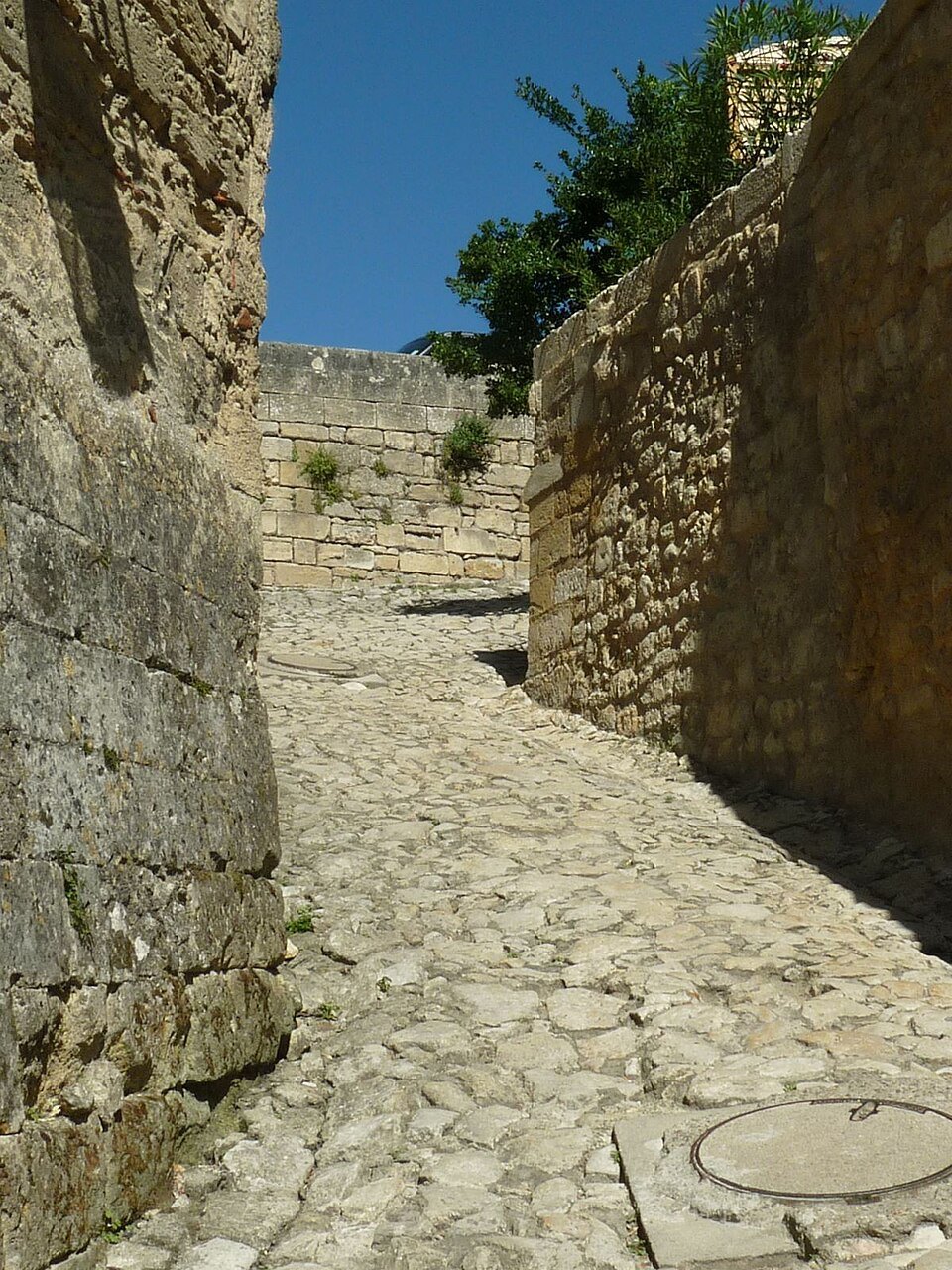
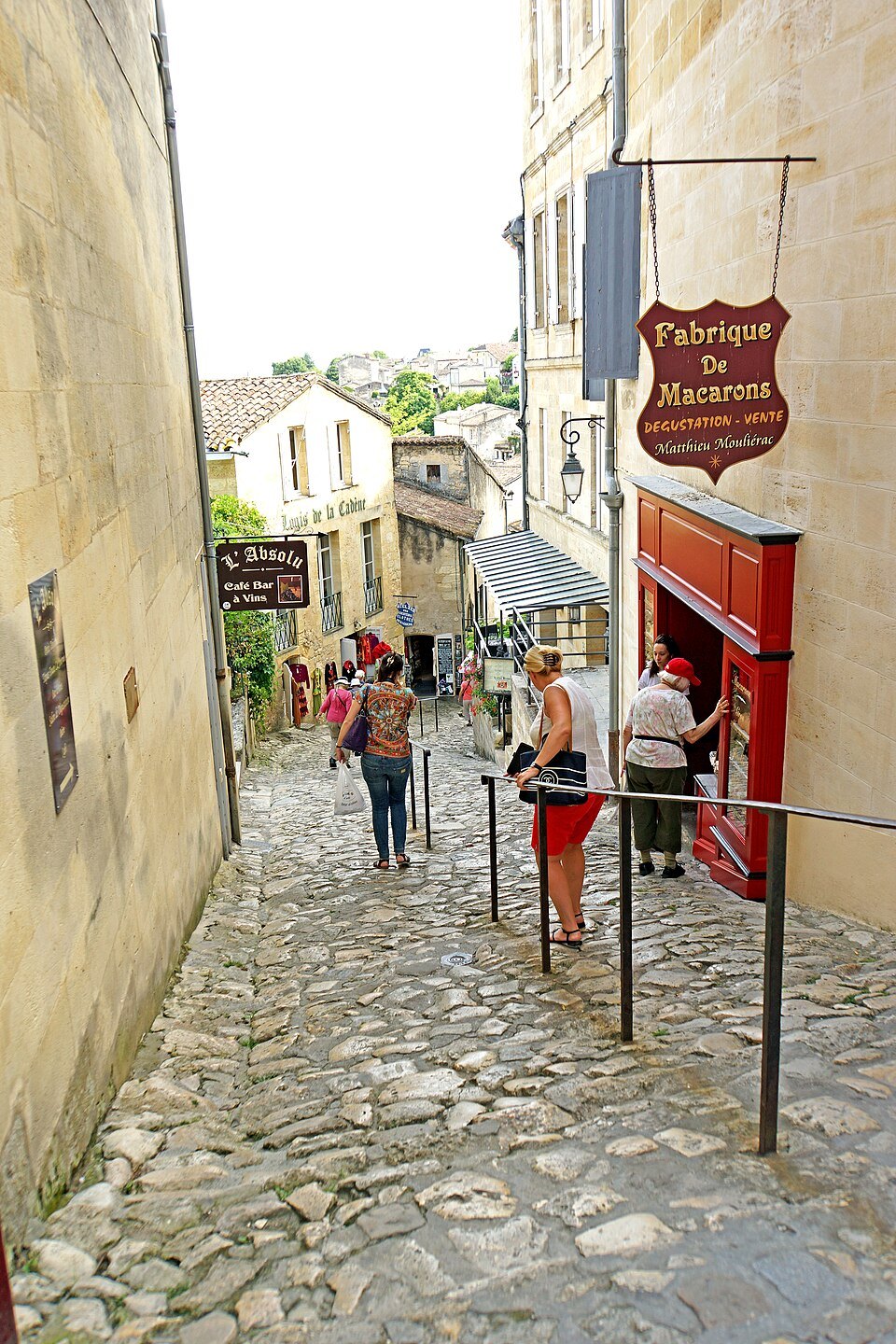
Saint-Émilion is built on steep, narrow lanes called tertres that climb between the hermitage of Émilion, the Breton monk who is said to have lived here as a hermit until his death in the year seven hundred sixty-seven, the monolithic church carved directly out of the rock, the collegiate church, the archbishops' palace and the remains of the old town walls. Vineyards press right up against the houses on every side, and the whole landscape was inscribed on the UNESCO World Heritage list in nineteen ninety-nine as an outstanding example of a historic wine landscape, one of relatively few such sites anywhere.
Some eight hundred wine estates share the Saint-Émilion appellations, and the village is known too for almond macaroons, made continuously since sixteen twenty to a recipe handed down by Ursuline nuns. None of this requires a car to enjoy on foot, and a visitor with a full day can comfortably see the main monuments, walk the ramparts and climb at least one of the tertres for the view over the vineyards. The village draws around a million visitors a year, though, so arriving as early as the first trains allow makes a real difference to how the lanes feel underfoot.
Visiting an individual wine estate is a separate matter from walking the village itself. Many châteaux receive visitors only by appointment, and without a car the range of estates reachable on foot from the village is limited, so anyone hoping to combine a walk through Saint-Émilion with a tasting should arrange that part of the day well in advance; see booking ahead for how reservations at estates generally work.
Timing the day
Because the return journey depends on a train timetable rather than a car's flexibility, it helps to treat Saint-Émilion as the single destination for the day rather than trying to add a second stop. The planning advice elsewhere in this guide is to pick one destination a day: Saint-Émilion lies on the opposite side of the city and its rivers from the Médoc, and the coast around Arcachon is a trip of its own, so stitching two of them together in one day is not realistic by train.
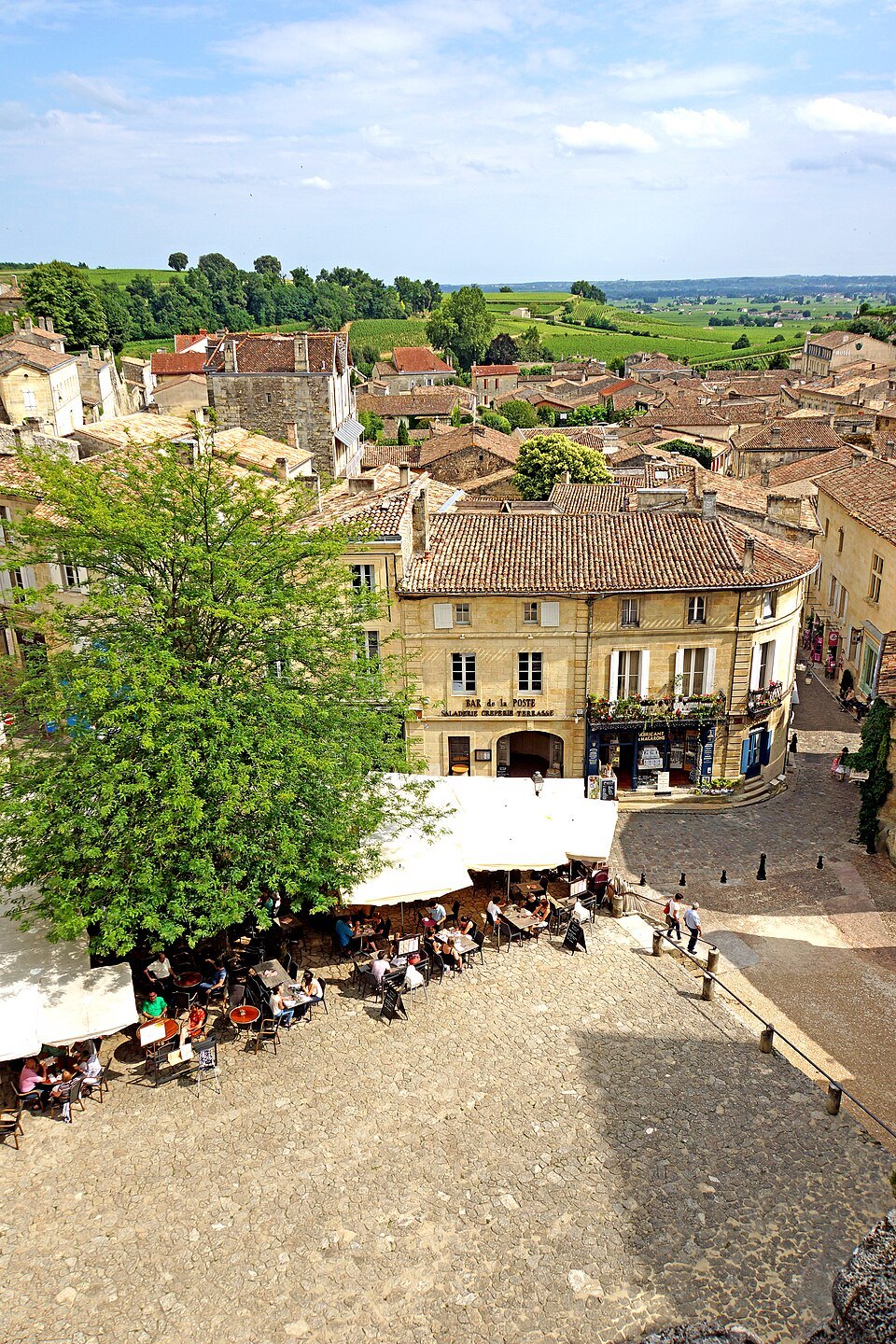
If the visit falls during the grape harvest, in September and October, the village is especially lively, but the estates themselves are at their busiest and least flexible, so any tasting needs to be booked well ahead rather than arranged on the spot. Good, flat-soled shoes matter at any time of year, since the tertres are steep, uneven and often cobbled, and a day spent mostly on foot is more tiring than it looks on a map.
Weighing it against the other trips
Saint-Émilion's appeal for a car-free visitor is partly that the destination and the sights overlap: the village is the attraction, and the surrounding vineyards can be admired from its ramparts without needing to drive between châteaux. Arcachon and the Dune du Pilat work for a similar reason, since both are reachable by train and the dune itself is a short onward hop by local bus. The Médoc and Blaye do not offer that overlap, since their interest lies in widely scattered estates or a single fortified site reached mainly by road.
A visitor deciding between the two rail-friendly options should weigh a historic village and its wine against a seaside resort and Europe's tallest dune; both are described in this guide's wider day-trip overview, which is worth reading before settling on either one for a short stay.
If the train doesn't fit
Visitors who find the train timetable too restrictive, or who want to combine the village with an estate visit without walking long distances between appointments, can also join one of the organized tours that run from Bordeaux to Saint-Émilion. These generally handle the transport and the timing of any estate visits together, which removes much of the guesswork around rural connections and return times.
A car remains the most flexible way to combine the village with a chosen estate on a schedule of one's own, but that is a different kind of day from the one described here. Whichever way the trip is arranged, remember that an estate visit usually means tasting, so it is worth deciding who, if anyone, is driving before the day begins rather than after.
Planning the rest of the day
A day trip to Saint-Émilion sits best as one day inside a longer stay in Bordeaux rather than as a trip on its own; see itineraries for how a day spent out of the city fits alongside time spent on the sights in Bordeaux itself. Whatever the season, carry water for the walk up and down the tertres, and confirm the last practical return train or tour departure before setting out in the morning, since getting back is the part of the day that depends least on how the visit itself unfolds.
More from the journal
- Where to StayWhich area of Bordeaux is best for a first visit?A guide to Bordeaux's districts, from the lively old town to quieter riverside and residential quarters, for first-time visitors.Read the piece
- Getting AroundHow does the Bordeaux tram work for a visitor?A visitor's guide to Bordeaux's tram network: how it works, where to board, and how to pay for a ride.Read the piece
- Getting HereIs it better to reach Bordeaux from Paris by train or by plane?Weighing the TGV against Bordeaux-Mérignac for the Paris to Bordeaux journey, station by station and terminal by terminal.Read the piece