Home · Itineraries
Day by day
One day
- Morning
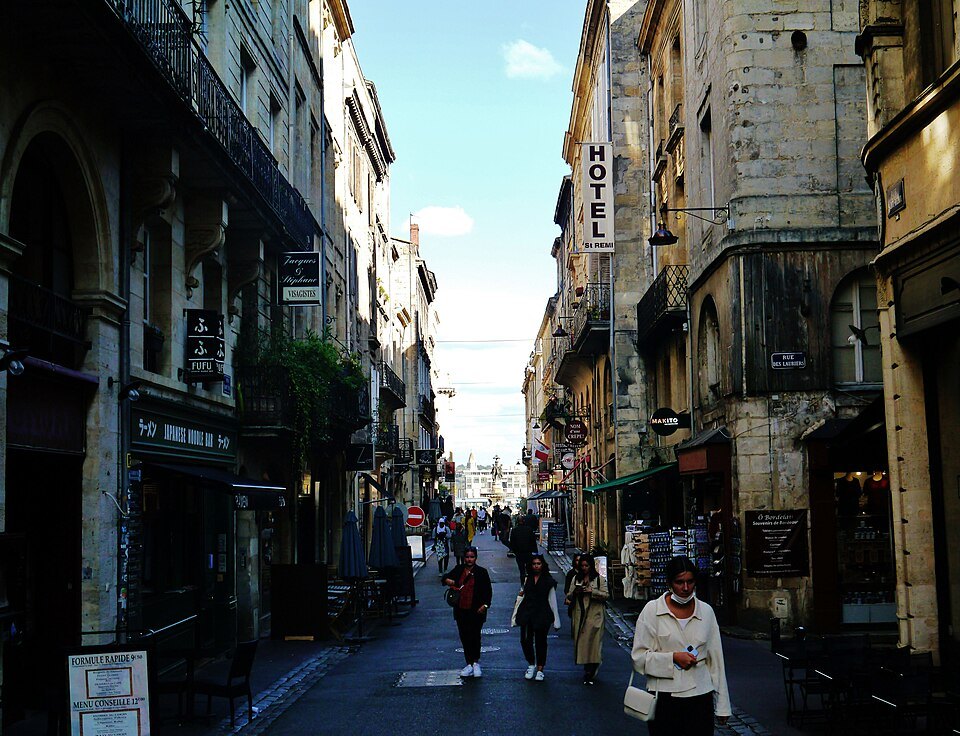
- Start at the Place de la Bourse and the Miroir d'Eau on the quay, then walk into the old town through the Porte Cailhau to the Place du Parlement and on to the Grosse Cloche on Rue Saint-James.
- Afternoon
- West to Saint-André Cathedral and the Pey-Berland Tower, with the climb if the day is clear, then past the Palais Rohan and along the Cours de l'Intendance to the Grand Théâtre.
- Evening
- Out to the Esplanade des Quinconces and the Monument aux Girondins, then back along the quays to see the Bourse reflected in the Miroir d'Eau as the light goes.
Two days
- Day one
- The one-day plan: the Bourse and the Miroir d'Eau, the Porte Cailhau, the Grosse Cloche, the cathedral and its tower, the Grand Théâtre and the Quinconces.
- Day two morning
- North up the quays or by tram B to the Chartrons, the old wine merchants' quarter, for its antique shops and the Rue Notre-Dame, and on to La Cité du Vin by the river.
- Day two afternoon
- The Bassins à Flot and the concrete submarine base, then the Pont Jacques Chaban-Delmas, and back into town for the Jardin Public on the way.
Three days
- Days one and two
- As above: the crescent and the medieval city on the first day, the Chartrons, the Cité du Vin and the docks on the second.
- Day three morning
- The Basilica of Saint-Michel and its detached spire, and the Saint-Michel quarter around its square, then the Musée d'Aquitaine for the city's history from prehistory onward.
- Day three afternoon
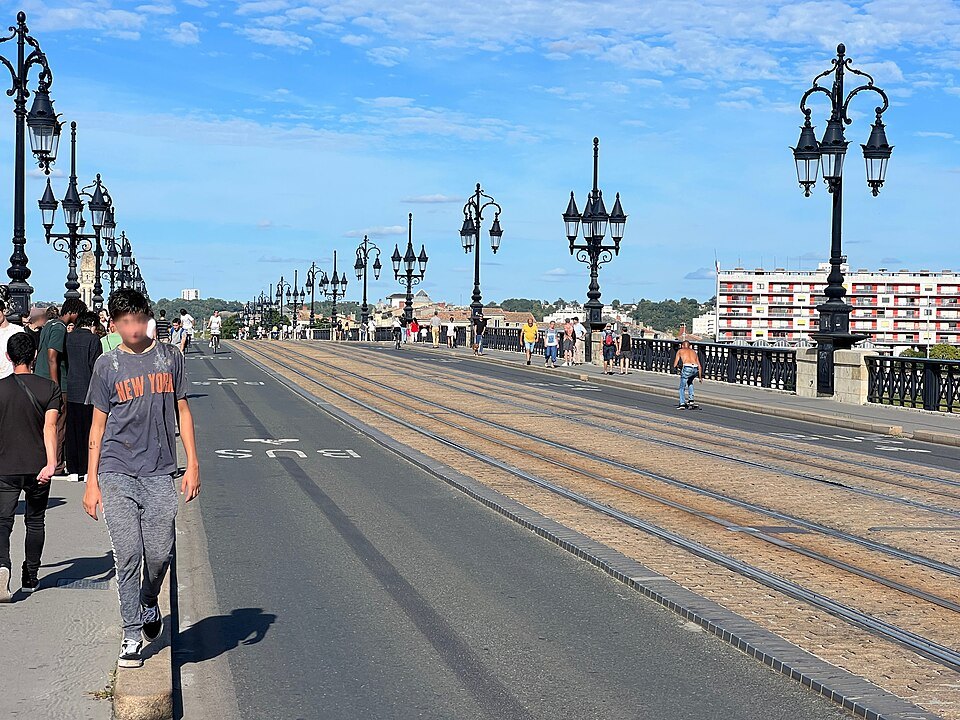
- Across the Pont de Pierre to the right bank for the view back over the whole crescent of façades, then the Palais Gallien, the ruins of the Roman amphitheater among the houses.
Five days
- Days one to three
- The three-day plan, with time for the Musée des Beaux-Arts beside the Palais Rohan and a slower look at the quays.
- Day four
- Saint-Émilion by train toward Libourne, for the medieval village, the monolithic church and the vineyards of its UNESCO-listed landscape.
- Day five
- A quieter day in town: the neighborhoods of Saint-Pierre and the Chartrons, a market, the river shuttle across to La Bastide, and the evening on the quays.
Seven days
- Days one to five
- The five-day plan, city and Saint-Émilion.
- Day six
- The coast: the train from Saint-Jean to Arcachon on its bay, and on to the Dune du Pilat, the tallest sand dune in Europe.
- Day seven
- The Médoc and its great wine estates by car or with a tour, or Vauban's citadel at Blaye over the Gironde estuary.
Itineraries
How the city fits together
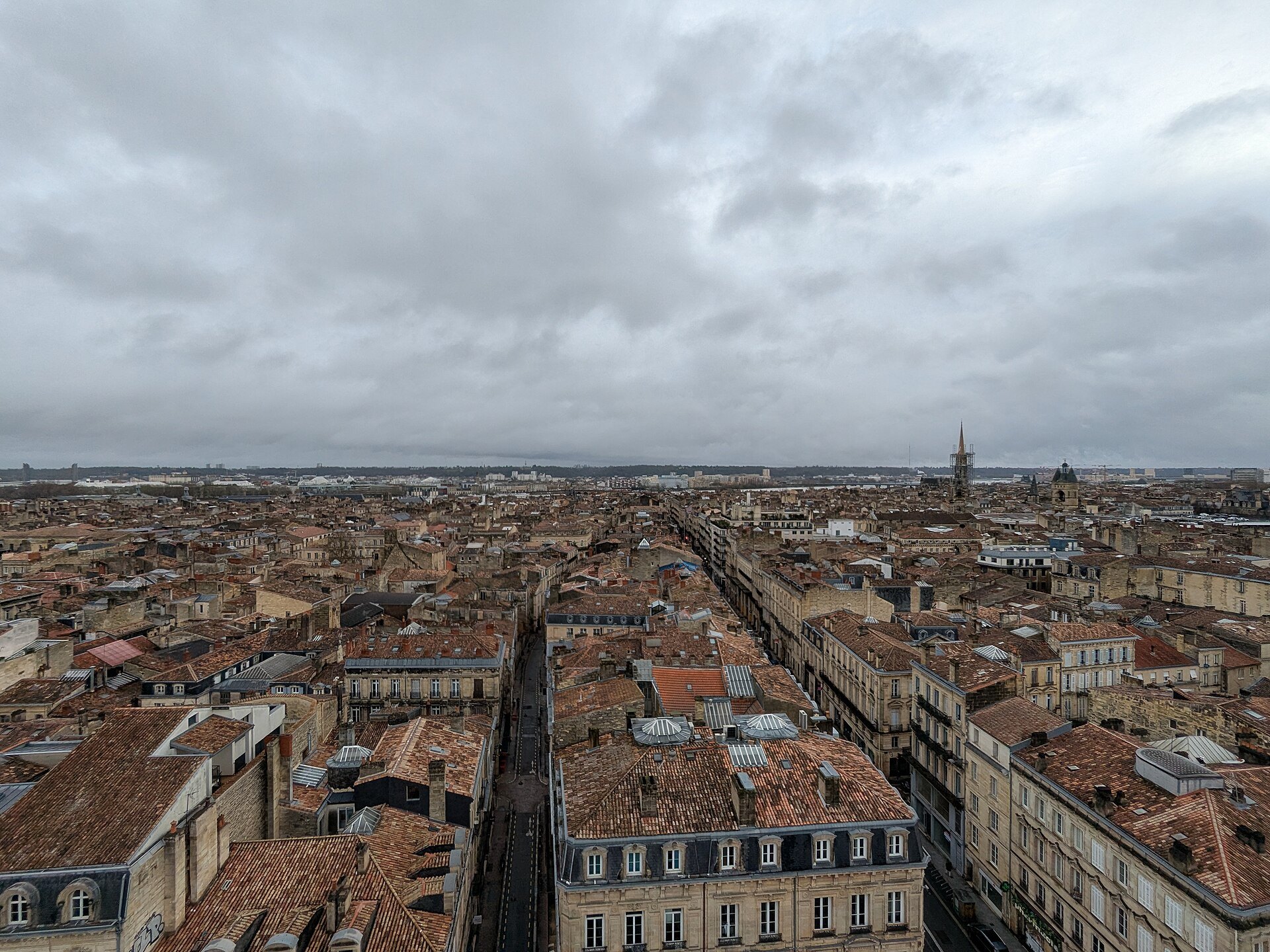
Bordeaux is a compact city for its size, and its sights fall into four groups that are easy to walk between. The crescent of quays runs along the left bank of the Garonne, with the Place de la Bourse and the Miroir d'Eau at its heart, the Esplanade des Quinconces to the north and the Pont de Pierre to the south. Behind the quays lies the medieval city, with its gates, bell towers and churches, the cathedral and the Pey-Berland Tower. To the north-west are the broad eighteenth-century streets around the Grand Théâtre and the Jardin Public. Downstream, the Chartrons, the Cité du Vin and the docks stretch north along the river.
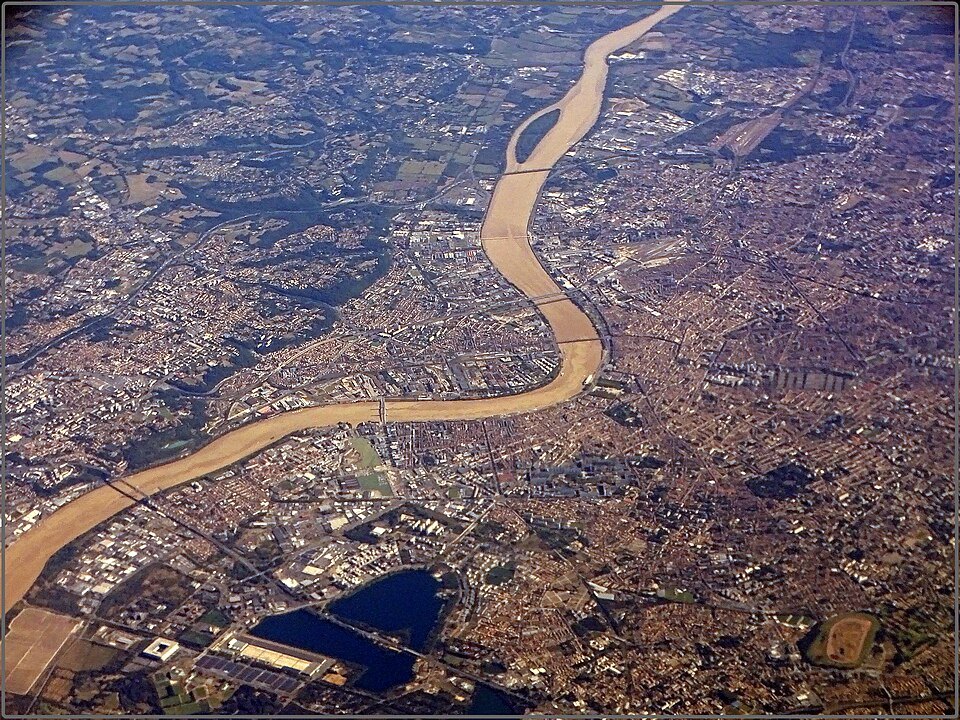
The plans below follow that shape. Almost everything in the first three days is on foot, with the tram for the longer run to the docks and the Cité du Vin. See getting around for the network and the sights for the full list.
If you only have a day
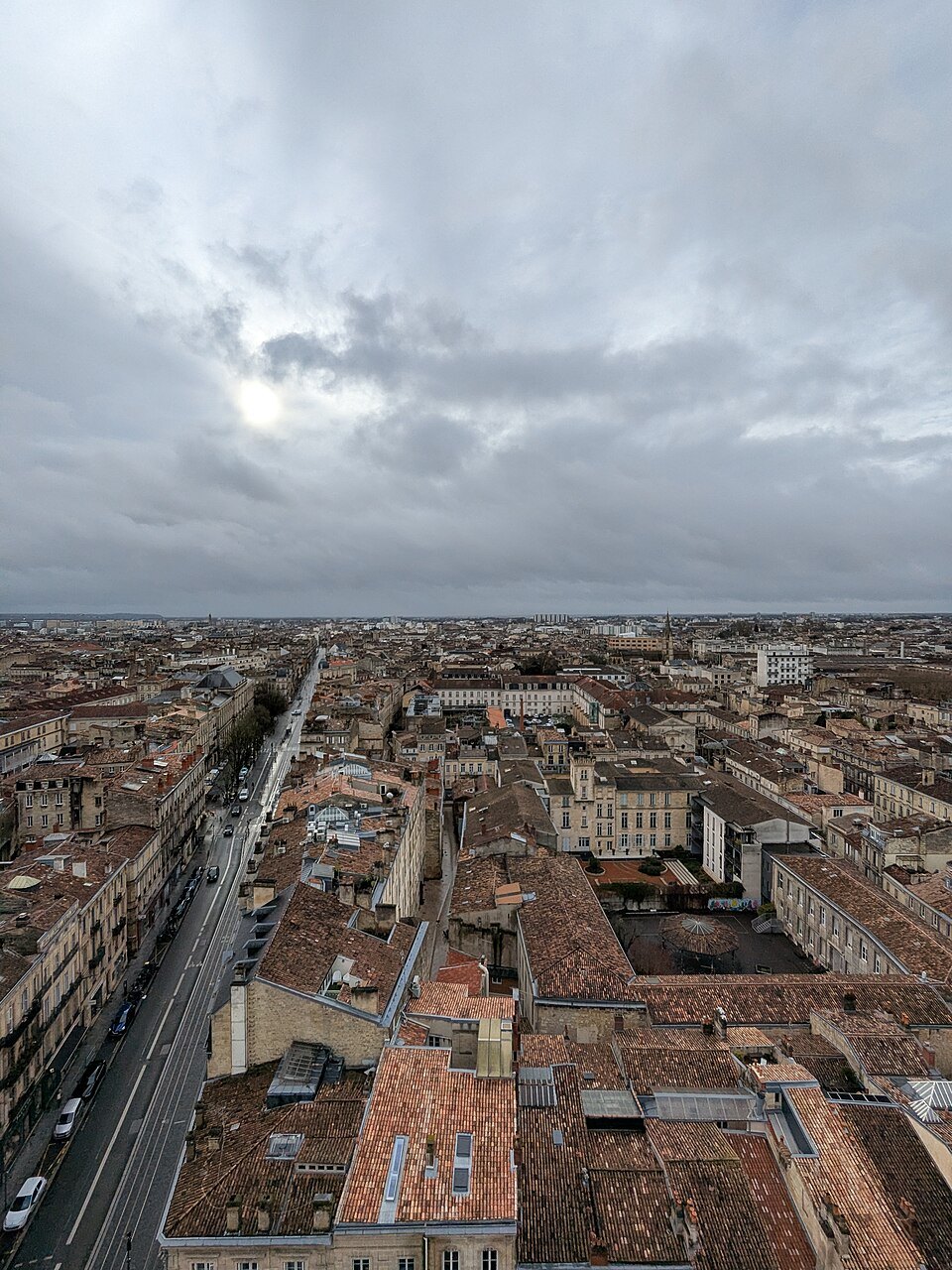
A single day in Bordeaux is enough to see the river front and the old city, which is where the character of the place lies. The UNESCO World Heritage listing of 2007 covers the historic center inside the curve of the river, the Port of the Moon, and a day spent walking inside it gives a clear sense of why: long runs of pale limestone façades, the classical squares of the eighteenth century and the medieval gates between them.
Keep the Miroir d'Eau for the end of the day if you can. The shallow pool alternates between a thin sheet of water and a mist, and when it is still it reflects the Place de la Bourse. The reflection is at its best in the low light of the evening, and the quays are lively on a fine night.
Two and three days
A second day lets you follow the city downstream, where the merchants lived and the ships came in. The Chartrons grew up outside the city walls as the wine trade's quarter, and its long streets of warehouses and townhouses now hold antique dealers, galleries and cafés. Further north, the Cité du Vin, opened in 2016, tells the story of wine around the world, and the Bassins à Flot, the old wet docks, are being rebuilt around the massive submarine base left from the Second World War, now a cultural venue.
A third day fills in the rest of the old town. The Basilica of Saint-Michel has a spire that stands apart from the church, the tallest in southern France, and the Musée d'Aquitaine takes the city's story from prehistory through the Roman town of Burdigala and the wine trade to the present. Crossing the Pont de Pierre, the first bridge over the Garonne at Bordeaux, gives the best view of the crescent from the far bank. The Palais Gallien, the remains of the Roman amphitheater, stands a short walk from the Jardin Public.
A day by the river
Whatever the length of your stay, give one part of it to the Garonne. The river curves through the city in the crescent that gave Bordeaux its name of the Port of the Moon, and the quays along it, once given over to port hangars and traffic, were redesigned by the landscape architect Michel Corajoud as a promenade of lawns, gardens and paths, finished in 2009. Four and a half kilometers of quays run between the Pont de Pierre and the Pont Jacques Chaban-Delmas, and you can walk the whole river front in a morning.
The river is tidal here, broad and brown with the silt it carries, and ocean-going ships still come up the estuary to moor in the center. The river shuttle crosses between the banks on the same tickets as the tram, which makes it an easy way to see the façades from the water. On the right bank, in La Bastide, the Quai des Queyries runs past the botanical garden and the Parc aux Angéliques, facing the whole stone front of the city. See the quays for the walk, stretch by stretch.
Five days and a week
With five days or more you can add the region. Saint-Émilion is the easiest wine trip by train, and its steep lanes and rock-cut church make a full day. A week leaves room for the coast, the Médoc and Blaye; see day trips for how to reach each one.
A longer stay is also the time to slow down in town: to spend a morning in a market, to eat through the dishes of the region, from oysters to the small caramelized cakes called canelés (see eating and drinking), to sit in the Jardin Public, and to explore the quieter neighborhoods away from the main sights.
Making the plans work
The plans assume walking at an easy pace with stops. On hot summer days, move the long walks to the morning and the evening and keep the museums for the middle of the day. Towers and some sights limit the number of visitors at a time, and the Cité du Vin and wine estates are easier with a ticket or a booking made in advance; see booking ahead. Opening days vary between museums, so check each one before you set the order of your days.
Wear shoes for stone paving; the old town's streets are uneven in places. The tram crosses the center and runs to Saint-Jean station, the Chartrons and across the river, so no plan here needs a car until the day trips. For the seasons and the events that fill the city, see when to come.
More photographs
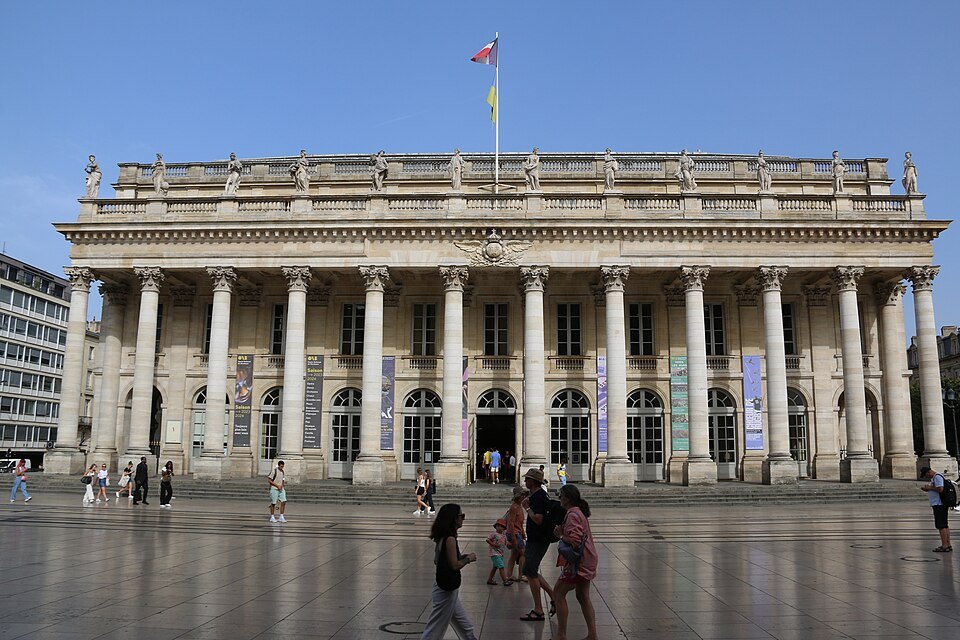
The Grand Théâtre's portico and its row of statuesFrDr, Wikimedia Commons, CC BY-SA 4.0