Home · Sights · The Miroir d'Eau
The Miroir d'Eau
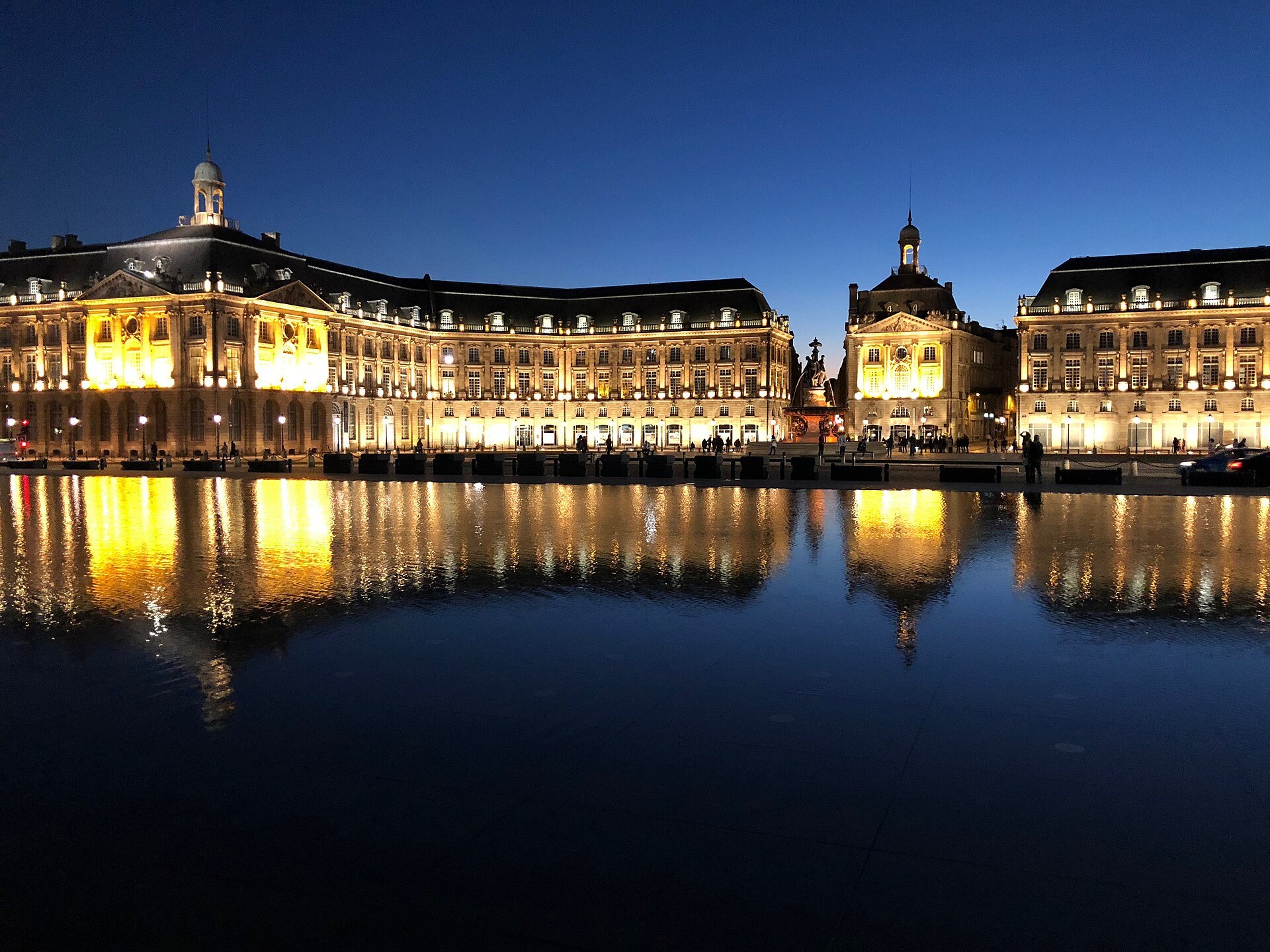
- 01The mirrorA film of water about two centimeters deep, spread over dark granite slabs until it lies perfectly still
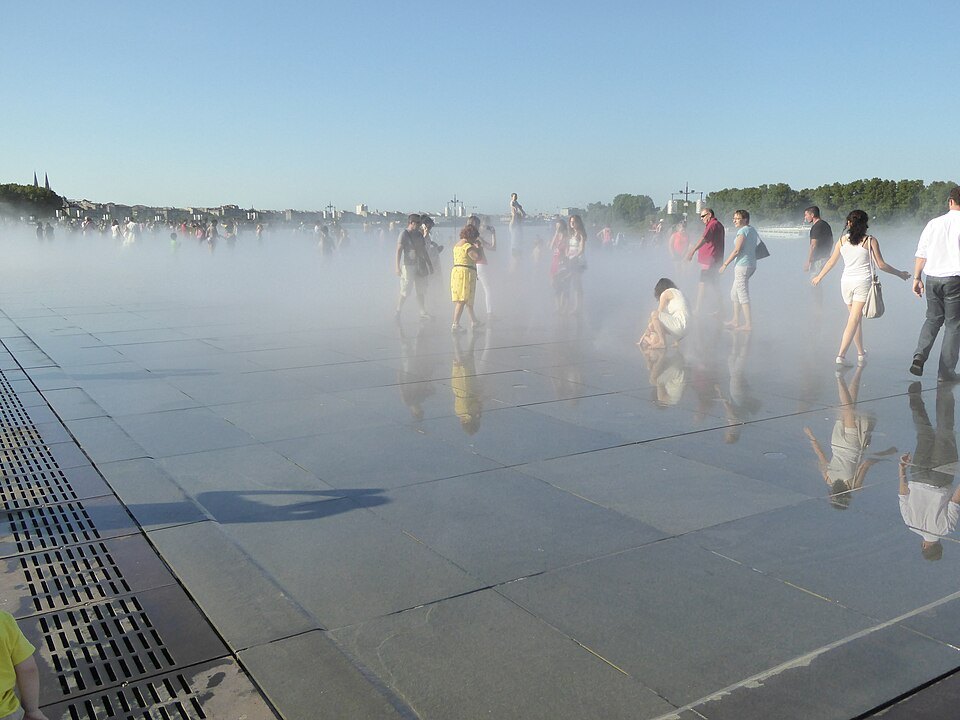
- 02The mistNine hundred jets set between the slabs raise a fog up to two meters high
- 03The cycleAbout a quarter of an hour of water, a short pause, then a few minutes of mist
- 04The reservoirEight hundred cubic meters of water held beneath the slab and pumped back up
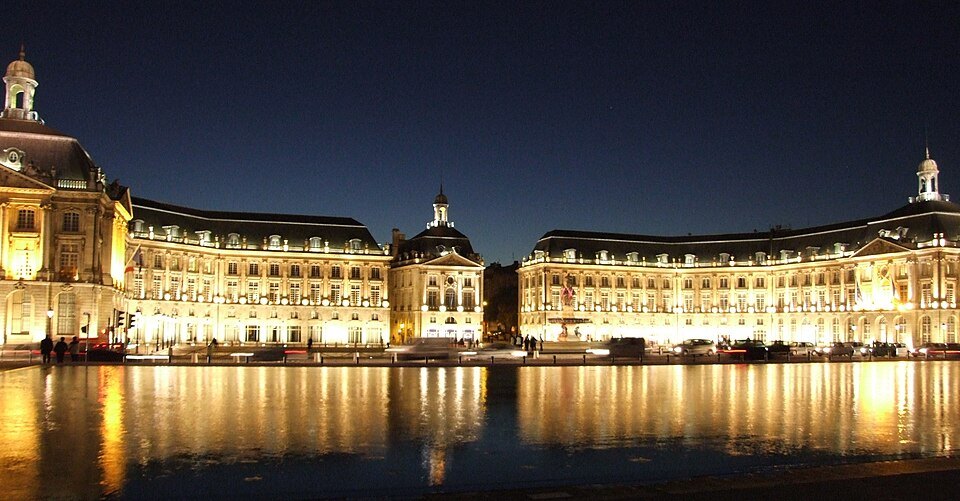
- 05The viewThe Place de la Bourse, the quay facades and the sky, upside down at your feet
The story, and how to see it
Why it matters
The Miroir d'Eau is the newest landmark on the quays and the one that changed how people use them. Opened in 2006, it sits across the tramlines from the Place de la Bourse, and on a calm day it lays the whole eighteenth-century square down a second time in the water, roofs, pediments and sky included. It has become the photograph most people take home from Bordeaux, and in warm weather it is one of the places the city goes to cool off.
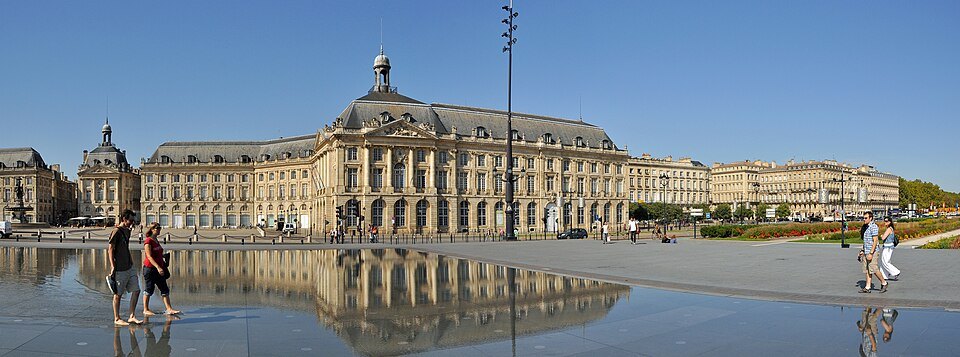
It is also the centerpiece of something larger. The landscape architect Michel Corajoud redesigned four and a half kilometers of the Garonne quays, turning a strip of warehouses, fences and parking into a continuous riverside promenade. The mirror is the point where that promenade meets the most formal set piece of the old city, and it is why the two now read as one.
How it was made
Three people designed it together: the fountain maker Jean-Max Llorca, the architect Pierre Gangnet and Corajoud himself. Corajoud has said the inspiration was Venetian, the Piazza San Marco when the high water covers it and the basilica stands in its own reflection. The works ran from May 2005 to July 2006.
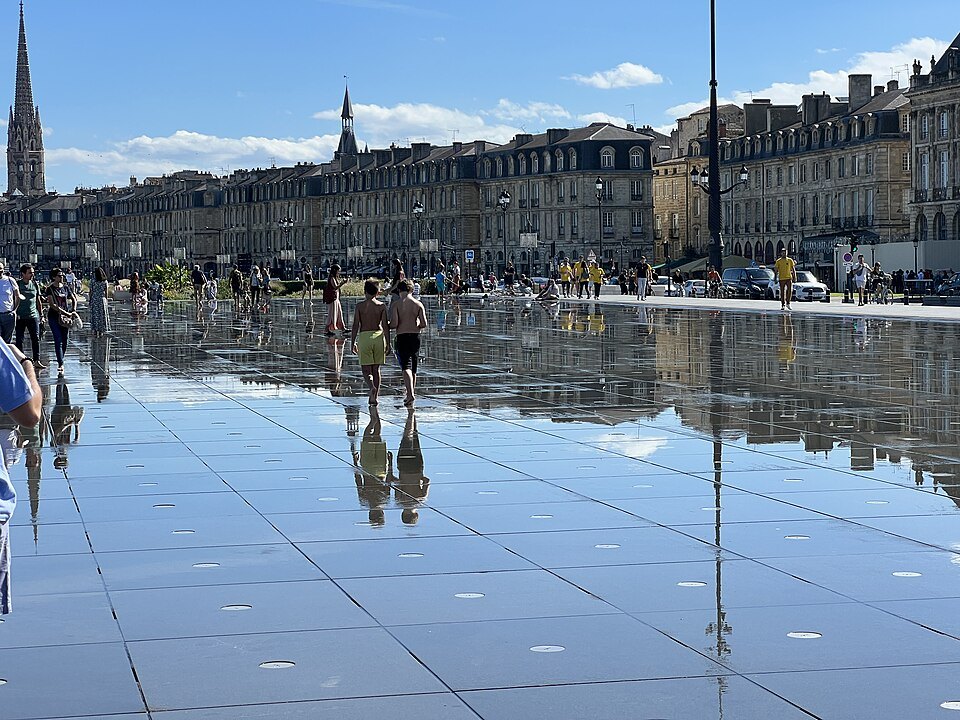
The whole esplanade covers about 5,850 square meters, of which some 3,450 are the mirror itself, laid in granite slabs. What you do not see is the machinery beneath it. A reservoir of 800 cubic meters sits under the slab. Pumps lift the water into about a hundred small channels running below the surface, and it seeps up through the joints between the slabs until the whole surface is covered. After a set time, valves let it drain back down to the reservoir, and the mist begins.
What you actually see
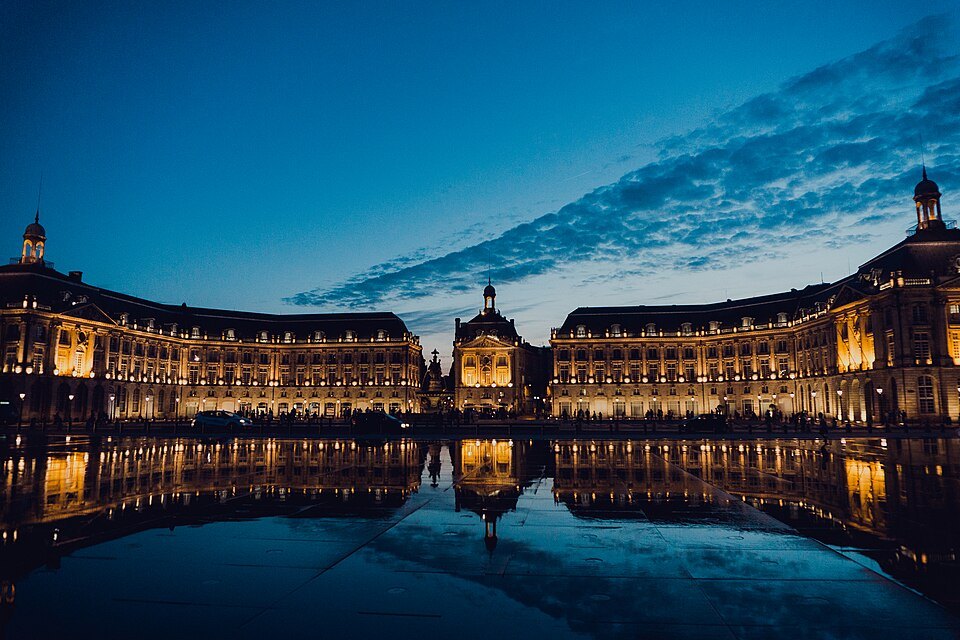
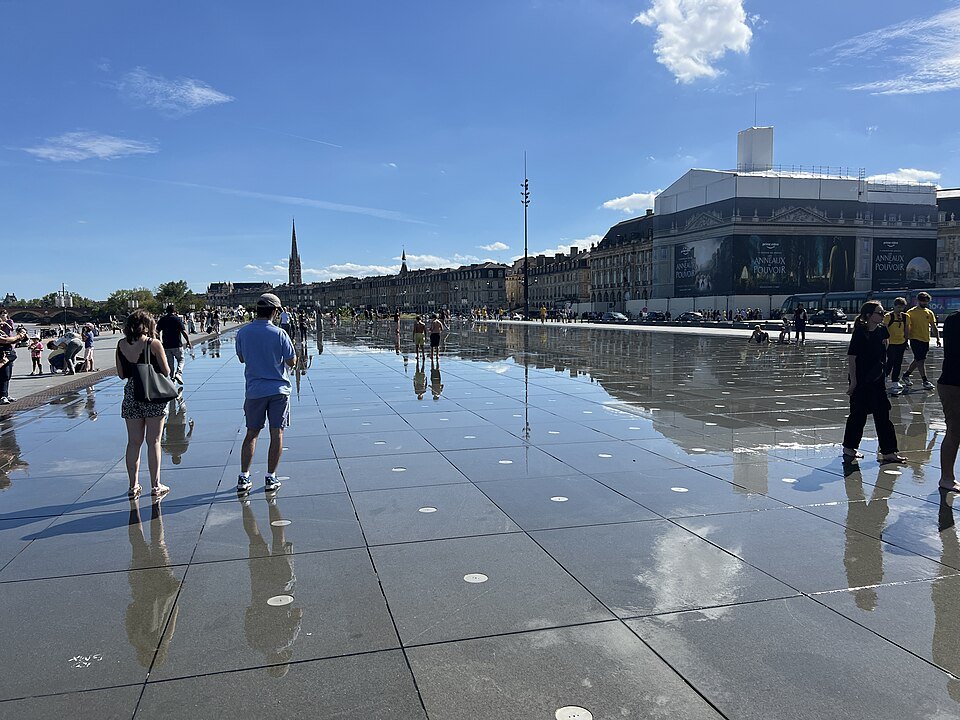
The mirror works in a cycle. First the water spreads until the slab is a single sheet a couple of centimeters deep; this is the phase for the reflection, and it lasts about a quarter of an hour. Then the water drains away, leaving the stone dark and wet for a few minutes. Then 900 injectors set among the slabs release a fine fog that can rise to about two meters, swallowing the people standing in it before it thins and the water returns.
Each phase has its own picture. The still water gives the famous reflection, best with the square lit by a low sun behind you and no wind. The mist turns the quay into a soft white room with the facades floating above it. And the few minutes of wet granite between the two often give the sharpest reflections of all, with the crowd gone to the edges.
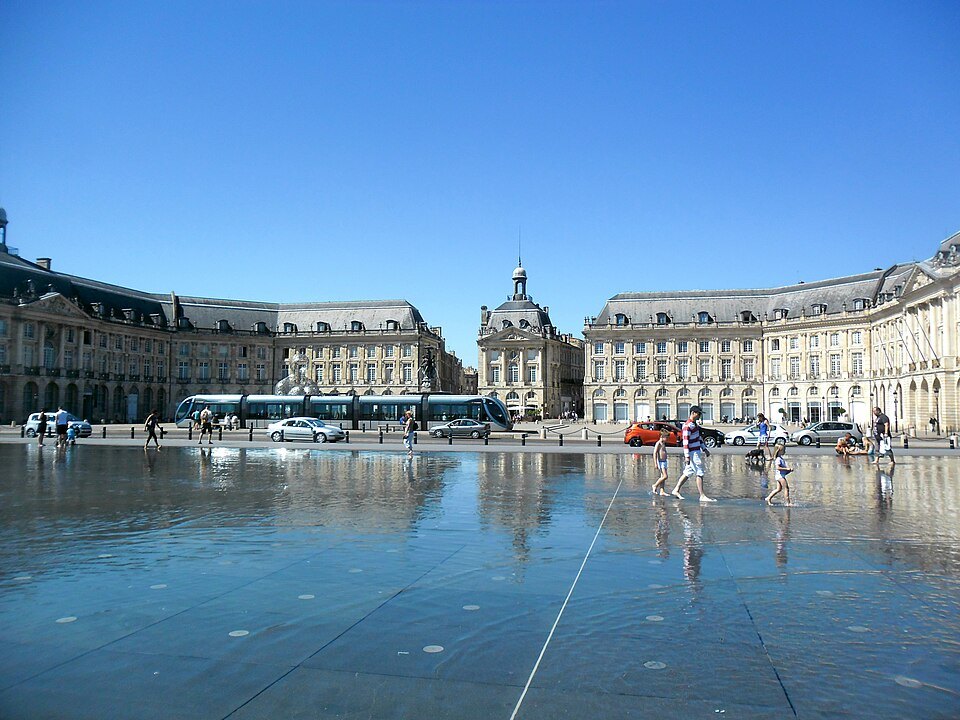
Walk in: that is what it is for. The water is only a couple of centimeters deep, and on summer evenings the mirror fills with people paddling, cycling slowly through the shallows and watching the fog come and go. The Landscape Architects Network placed it fourth in its ranking of the world's urban squares, which is a fair measure of how much it is used as well as admired.
The season
The mirror is switched off every winter. The pipes that feed it would be damaged by frost, so for the cold months the slab is dry, and you will see the granite but no reflection. Plan on the warm season if the mirror is a reason you are coming; the page on when to come sets out the months. The running times are set by the city and change with the season, so check them locally rather than relying on any fixed schedule.
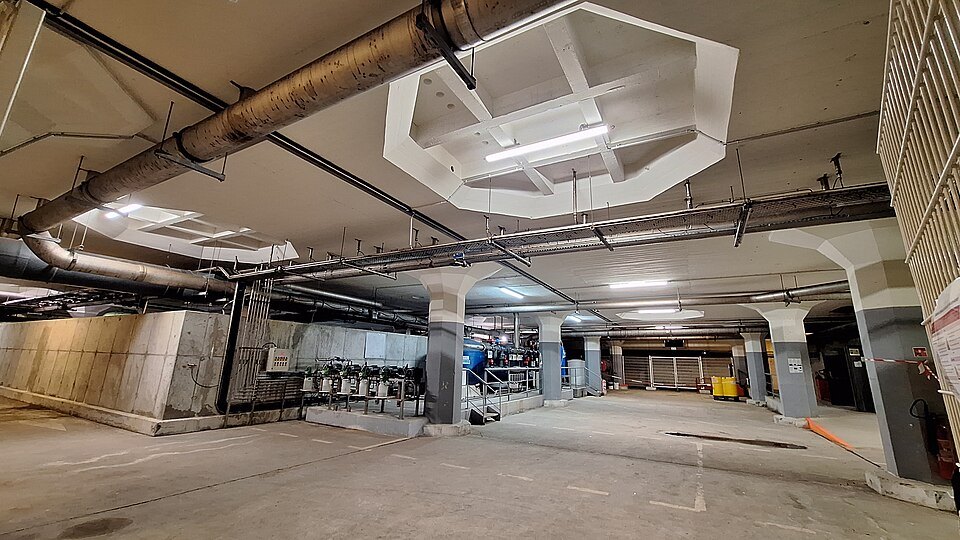
Even when it is dry, the esplanade is the best platform on the quay for looking back at the square and along the riverfront in both directions.
How to visit
There is nothing to pay and nothing to book. The mirror is part of the public quay, reached on foot from the square or by the tram, which stops in the Place de la Bourse a few steps away. Give yourself enough time to see at least one full cycle of water, pause and mist; allow about half an hour to enjoy it without hurrying.
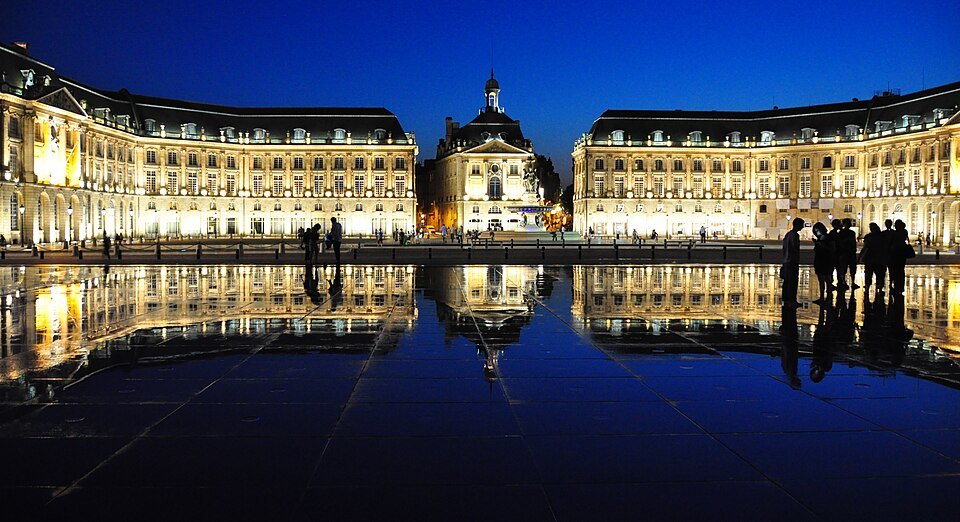
For the reflection, come when the air is still: early in the day, or in the evening as the light goes golden and then blue. Wind breaks the surface into ripples and the square disappears. If you want the facade reflected in full, stand at the river side of the slab and face the city. Bring something to wipe your feet with if you plan to walk in, and keep phones and cameras dry when the mist starts; it is fine but it is wet.
From here, the quays lead north to the Esplanade des Quinconces and the Chartrons, and south past the Porte Cailhau to the Pont de Pierre. The Port of the Moon page walks the whole crescent.
Honest notes
It is often called the largest reflecting pool in the world. The claim appears in French descriptions of it, and no one seems to have measured every other pool on earth to check, so treat it as the city's own boast rather than a record. It does not need the superlative; the effect on a still evening speaks for itself.
The mirror is not a pool for swimming, and it is not deep anywhere. It is a paved square that happens to be wet part of the time, which is exactly why so many people are happy to walk straight into it.
Nearby
- A short walk awayPlace de la BourseThe first square in France built open to a river.Read the page
- A short walk awayThe Porte Cailhau and Place du ParlementA fortified gate of 1493 to 1496.Read the page
- A short walk awayThe Esplanade des Quinconces and the Monument aux GirondinsTwelve hectares laid out between 1810 and 1828 where the Château Trompette fortress stood.Read the page