What is a canelé, and where does it really come from?
The fluted, caramel-crusted cake you will see in every Bordeaux bakery window: what goes into it, how it is baked, the convent legend, the guild of canauliers, and why its name lost an n in 1985.
Read on
The short answer
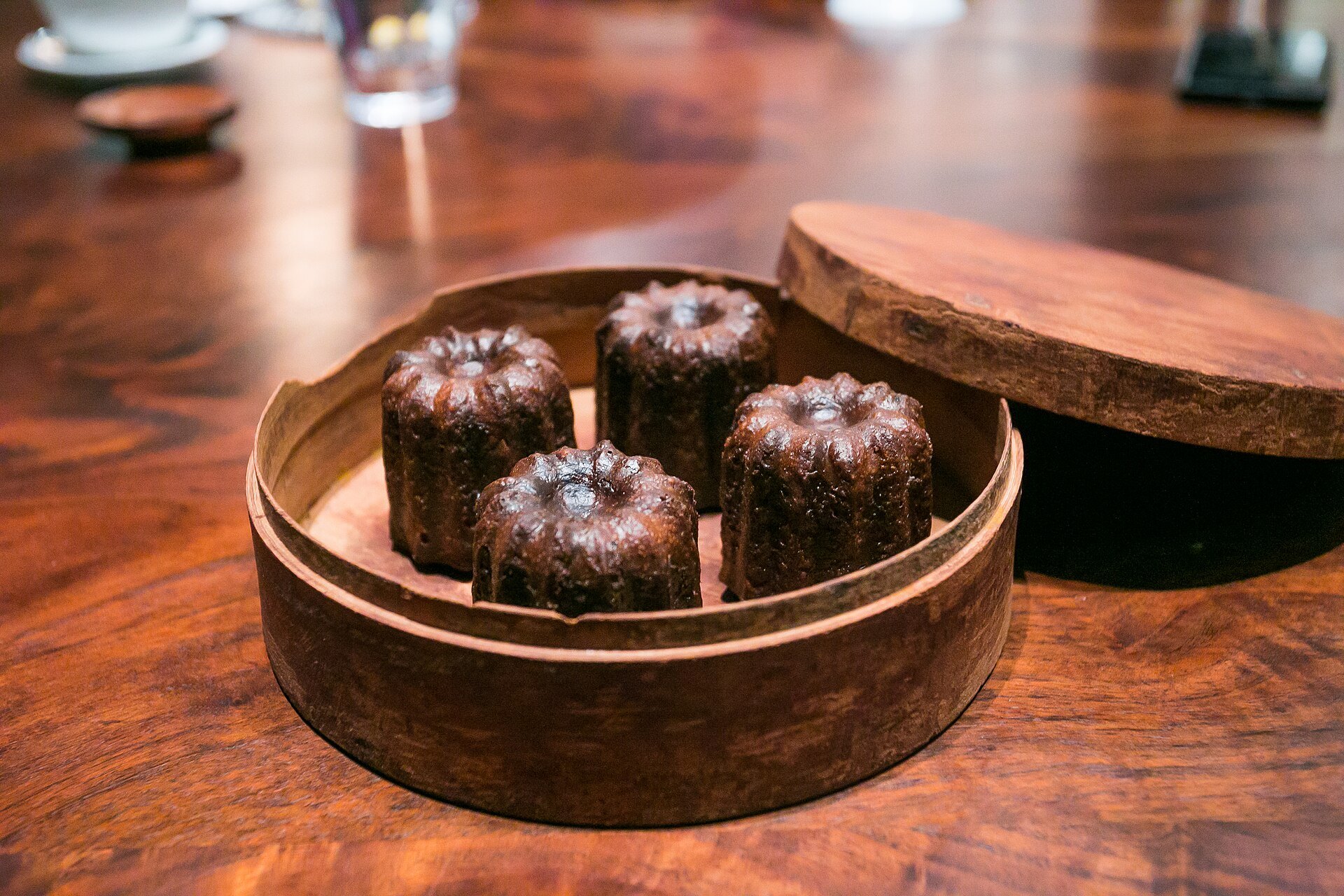
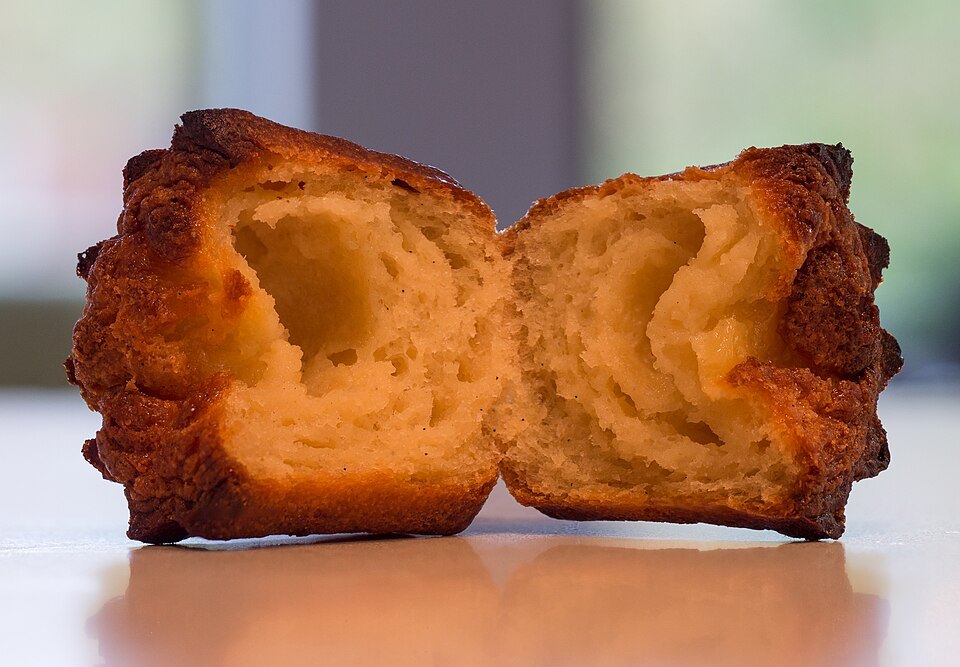
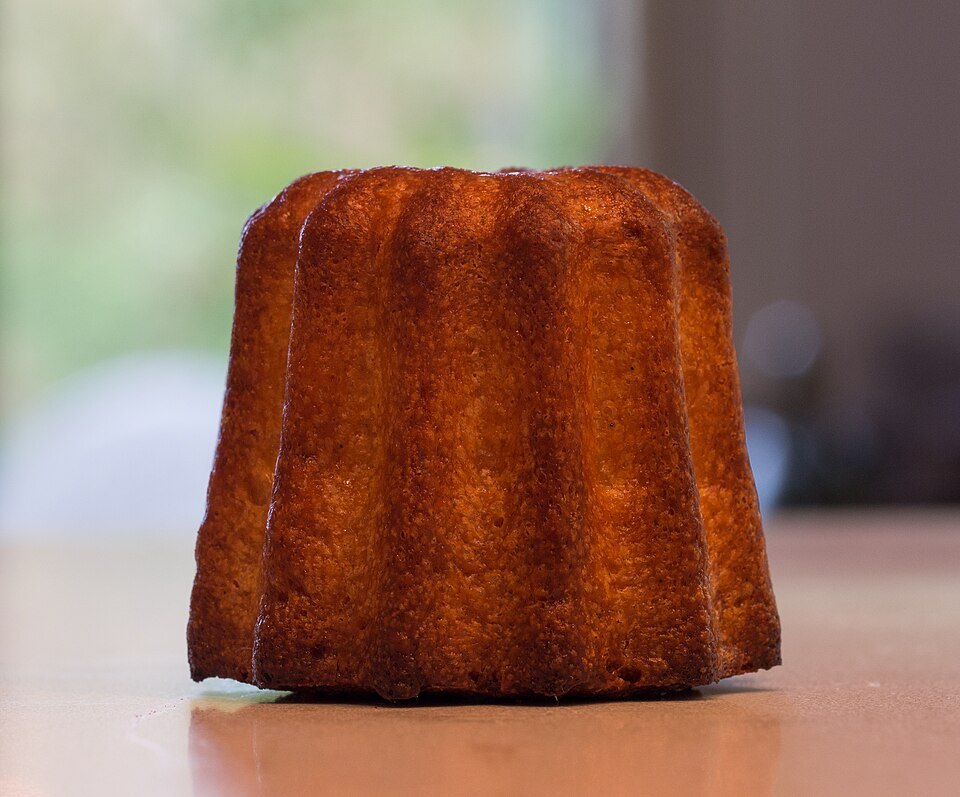
A canelé is a small cake of Bordeaux, a fluted cylinder about five centimeters tall with a hollow on top, dark and caramelized outside and soft, almost custardy, inside. It is flavored with rum and vanilla and baked in a small ribbed mold, traditionally of copper. Where it comes from is less certain than the bakeries' signs suggest: its ancestors are old, but the canelé you will buy today is in many ways a twentieth-century revival, and its spelling with a single n dates only from 1985.
You will find canelés everywhere in the city, from bakery windows in the old town to the stalls of the markets, in several sizes and, increasingly, in savory versions. See eating and drinking for the rest of the Bordeaux table.
What goes into it
The batter is close to a crêpe batter: milk, eggs, flour, butter, cane sugar, vanilla and rum, in proportions that every baker adjusts. It is very liquid and very sweet. What makes a canelé is the baking. The batter goes into small molds that conduct heat extremely well, so that the outside caramelizes into a thin, dark, almost crunchy shell while the heart stays moist and tender.
Copper molds are the traditional choice, prized for exactly that quick, even heat, and they are brushed with beeswax before the batter goes in; as beeswax grew more expensive, bakers began to mix it with butter. A good canelé is a contrast: bitter-edged crust, soft yellow center, the scent of vanilla and rum.
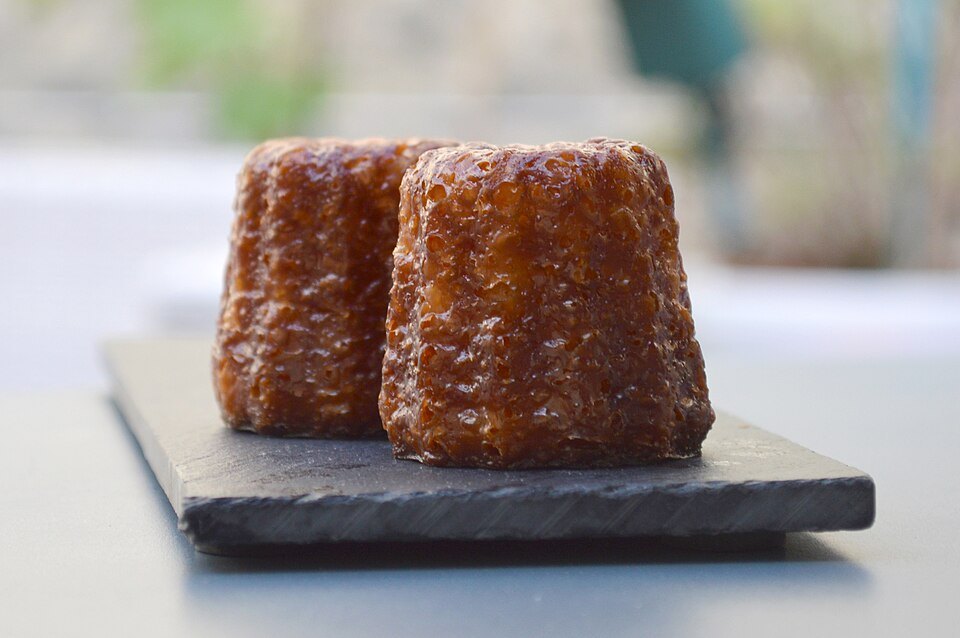
They come in several sizes. The classic canelé weighs about sixty grams and stands about five centimeters high; a smaller one, often called a lunch, is about half that weight, and the bite-sized bouchée stands only about two centimeters tall. Traditionally they are sold by the bunch, in eights or sixteens. They are eaten at breakfast, as a snack or as a dessert, and in Bordeaux they are sometimes paired with a glass of red wine.
The convent legend
Ask about the canelé's origins and you will usually hear the same story: that it was invented by the nuns of the Couvent des Annonciades in Bordeaux, who baked it to feed the poor, and that the recipe was lost when the convent was closed in 1791. The legend is attractive and widely repeated, but it lacks firm evidence, and French sources treat it as a legend rather than as history.
Another story links the cake to the wine trade. The châteaux of the region used egg whites to fine their wine, clearing it before it aged, and the leftover yolks, the story goes, went into cakes such as the canelé. It is a neat explanation of why a wine city should have an egg-rich cake, but it too is told after the fact. So is the link to the port: sugar, vanilla and rum all came into Bordeaux from the Caribbean and the Indian Ocean in the age of the colonial and Atlantic trade, and the canelé's ingredients are often read as a memory of that trade.
The canauliers
What is documented is a family of older cakes and the craftsmen who made them. In Bordeaux in the eighteenth century a bread made with flour and egg yolks was sold under the name canaule, also written canaulé or canaulet, perhaps related to a similar food of Limoges called the canole. The bakers who specialized in it, the canauliers, registered a guild with the Parliament of Bordeaux in 1663, which gave them the right to make a few specific foods but kept them out of the pastry chefs' territory: they were forbidden to use milk and sugar.
The canauliers fought that ban, and on 3 March 1755 the royal council at Versailles ruled in their favor and ended the pastry chefs' monopoly. An edict of 1767 limited the number of canaulier shops in a city to eight, yet by 1785 there were at least thirty-nine in Bordeaux, at least ten of them in the faubourg of Saint-Seurin, the quarter around the old basilica near the Palais Gallien. The Revolution abolished the guilds, though later records still show canauliers at work. Whether their canaule is the ancestor of today's cake cannot be proved: the ingredients are common, and a fluted mold mentioned in a legal document of 1792 cannot be tied to the canelé with any certainty.
A modern revival
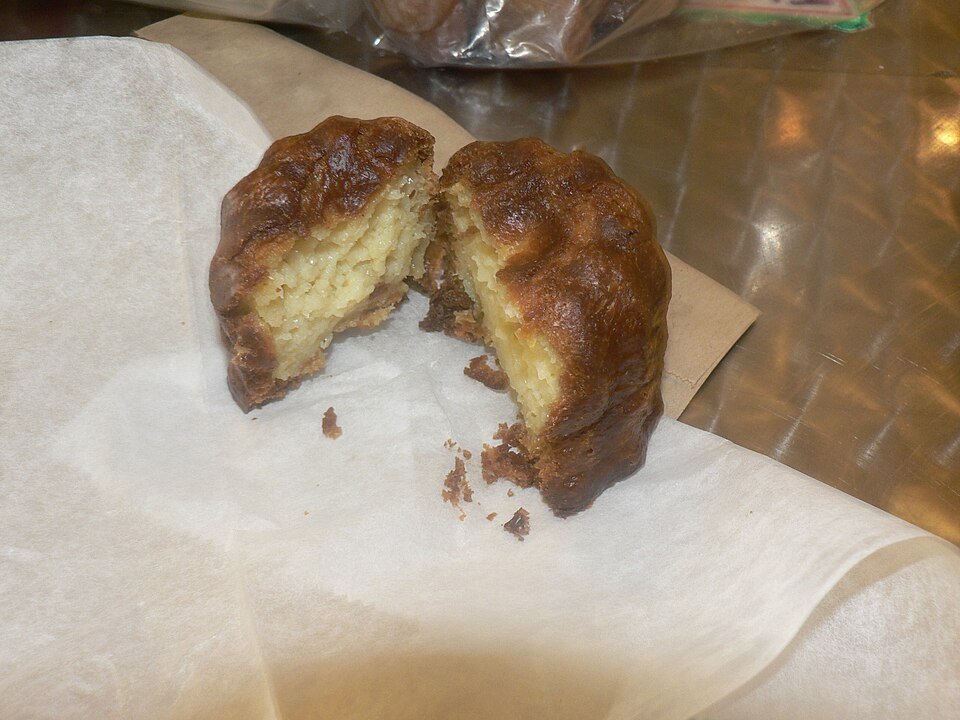
Specialist sources of the late nineteenth and early twentieth centuries say little or nothing about the cake, which can be read either as a sign that the recipe had fallen out of use or as a hint that the canelé in its present form is younger than the legends. One English account credits an unknown pastry cook of the early twentieth century with reviving the old recipe and adding the rum and vanilla; the first attested mention of the cannelé in French writing comes in a novel by Jean Balde published in 1937, and it remained an isolated mention for decades.
The real rise came in the 1980s. The mayor of Bordeaux, Jacques Chaban-Delmas, saw what the cake could do for the city's image and served it regularly at receptions in the town hall. On 24 March 1985 the Confrérie du Canelé de Bordeaux was founded and registered the name, spelled with a single n, as a collective brand, to distinguish cakes made in Bordeaux. By the early 1990s about eight hundred makers were producing canelés in Aquitaine, six hundred of them in the Gironde, most of them bakers selling only in their own shops, and in 1992 the Gironde alone was estimated to have eaten four and a half million of them.
One word, two spellings
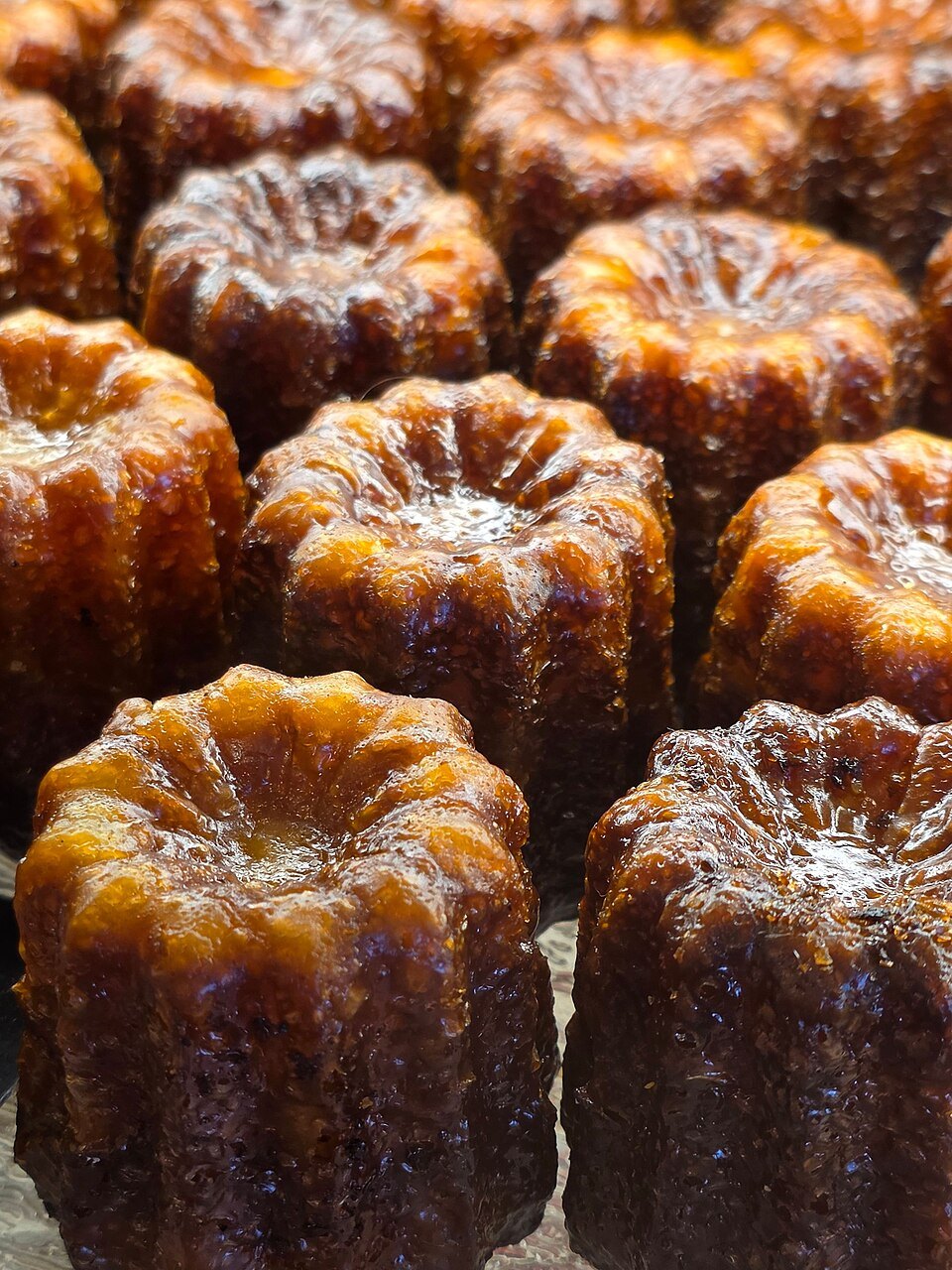
That is why you will see the name written two ways. Canelé, with one n, is the spelling of the Bordeaux brotherhood; cannelé, with two, is the spelling recommended by the Académie française, and many pâtisseries outside the city, including famous Paris houses, still write cannelé de Bordeaux. The word itself is usually tied to the cake's fluted shape, a cannelure being a groove or flute, although some argue the molds were fluted because of the name rather than the other way round.
The cake has kept evolving. Bakers now make savory canelés with cheese, ham, chorizo or salmon, versions with Armagnac, and desserts built around the canelé; there are canelé ice creams and canelé-flavored teas. From 2012 to 2018 the public radio station France Bleu even ran a yearly world canelé championship in Bordeaux, with a contest for amateurs baking the traditional sweet version and one for chefs inventing savory recipes.
Buying and eating one
Two large makers in the Gironde, Baillardran and La Toque Cuivrée, sell canelés widely across the region, and many independent bakers make their own. A canelé is at its best on the day it is baked, when the crust is still crisp, and it softens in a sealed box, so buy them fresh rather than to carry home for a week.
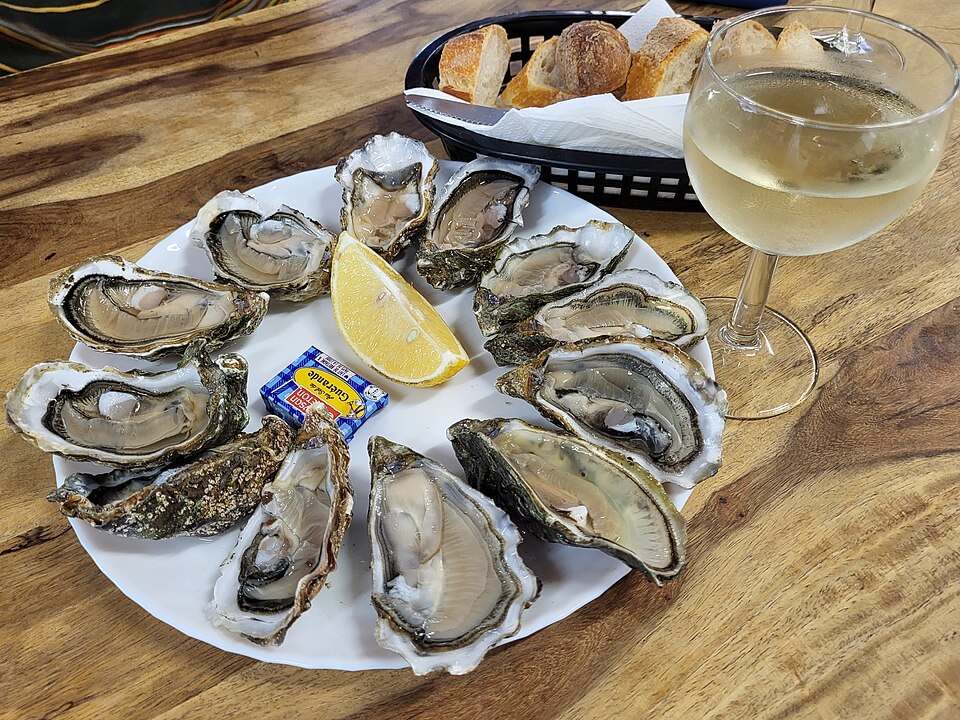
The markets are a good place to try one alongside the rest of the Bordeaux table, from oysters to lamprey; see the wine city for the glass of Bordeaux the canelé is sometimes eaten with.
More from the journal
- The Port of the MoonWhy is Bordeaux called the Port of the Moon?The name comes from the crescent-shaped bend of the Garonne, and it runs from the medieval arms of the city to its modern logo and its UNESCO listing. Here is where to see the curve, and why the river is the color of caramel.Read the piece
- When to ComeWhat happens at Bordeaux Fête le Vin, the wine festival on the quays?Every year at the end of June, Bordeaux turns its riverfront into a wine festival: tasting pavilions for the wines of Bordeaux and the region, tall ships at the quay, regional food and a show over the river at night. What to expect, and how to plan around it.Read the piece