How did the Pont de Pierre get its seventeen arches?
The true story behind the Pont de Pierre's seventeen arches, from Napoleon's decree to the merchants who built it.
Read on
A bridge the city was told was impossible
For most of its history Bordeaux had no bridge over the Garonne. The river here is wide, fast, tidal and given to sudden floods, and for centuries the only way across was by ferry. Jean-Rodolphe Perronet, the engineer who founded the French school of bridge building, judged a bridge at Bordeaux impossible, and when the governor of Guyenne was asked in the 1770s to lay the first stone of one, he said he would rather lay the last.
It took an emperor passing through to change the calculation. Napoleon came through Bordeaux in April 1808 on his way to Bayonne and was struck by how awkward the river crossing was, particularly for moving troops toward Spain. A decree that same month listed the public works the city needed, a bridge among them. The number seventeen that the bridge eventually carried had nothing to do with Napoleon personally, whatever is said about it today, as the final section below explains.
A false start under the Empire
Work began in October 1810 under the engineer Claude Deschamps, planned at first as a timber deck on stone piers. It went badly. A flood in December 1813 tore away the scaffolding and the foundations of five piers, and when the Empire fell soon after, only six piers were standing and the money had run out. The project sat unfinished, a half-built reminder of how hard the river was to tame.
It was private money, not the state, that rescued it. A group of Bordeaux merchants and shipowners led by Pierre Balguerie-Stuttenberg formed the Compagnie du Pont de Bordeaux in 1816 and put up two million francs, in exchange for the right to charge a toll for ninety-nine years. Three years later Deschamps came back with a different, bolder plan.
Seventeen arches, three years, a diving bell
In 1819 Deschamps proposed abandoning timber altogether and building the whole bridge in masonry, promising seventeen arches completed within three years. The earlier design had called for nineteen arches; two were dropped at this stage for reasons of cost and engineering, which is the real origin of the number the bridge carries today. Deschamps and his son-in-law Jean-Baptiste Billaudel, who later became mayor of Bordeaux, kept the promise, working with the help of a diving bell borrowed from the British to lay foundations in the riverbed. Around four thousand men worked on the site.
The bridge was finished on schedule. A mass in the cathedral on 30 April 1822 marked the end of the works, a banquet for one hundred fifty guests was laid out on the bridge itself, and it opened to the public on 1 May 1822. It joined the old town to the right bank, and in 1865 Bordeaux annexed La Bastide on the far side, giving the city and its port room to grow, a story told further in the article on staying on the right bank if the link applies, or simply explored on foot today.
What the seventeen arches actually look like
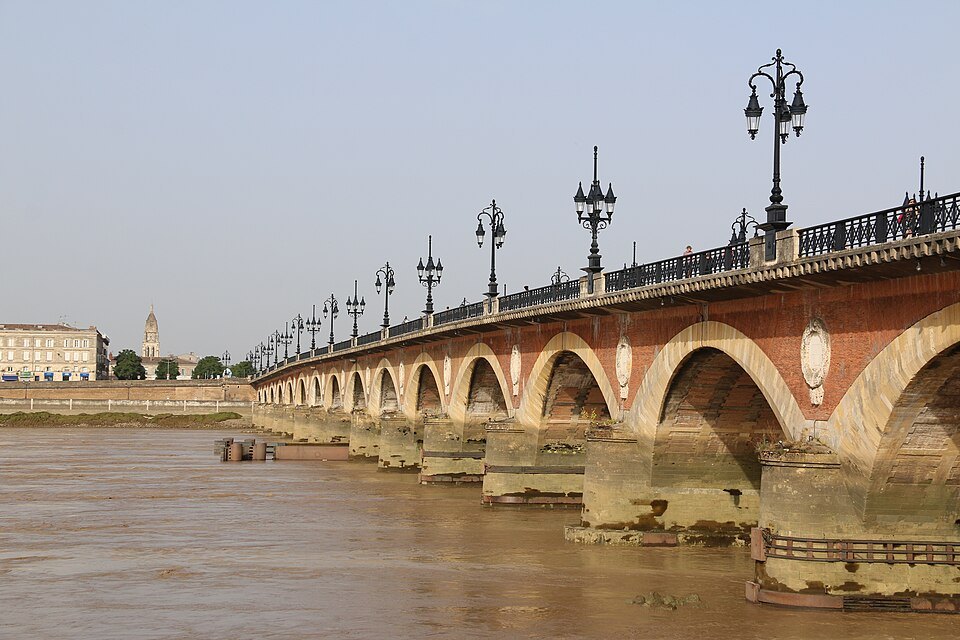
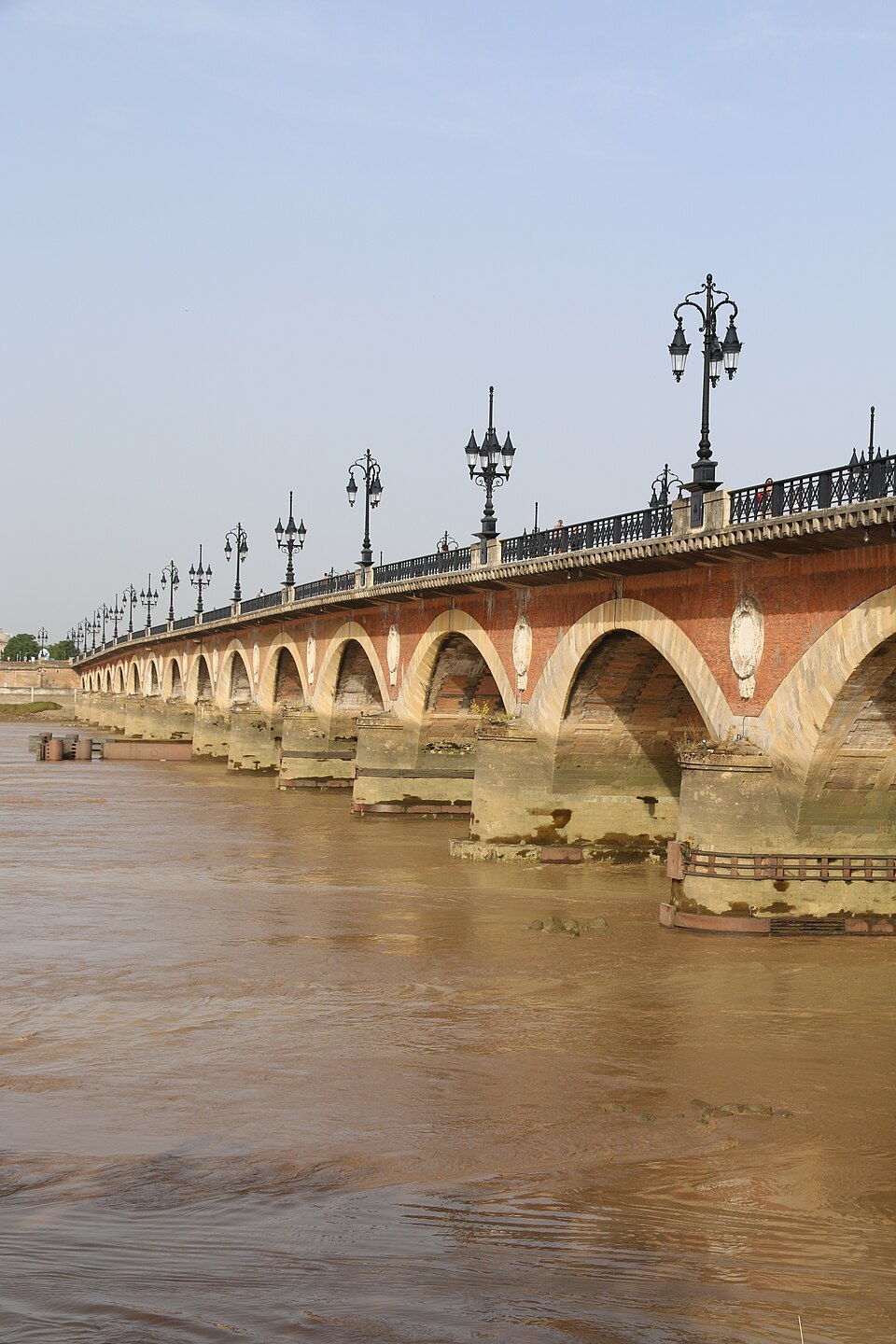
The finished bridge runs four hundred eighty-seven meters across the Garonne on seventeen arches carried by sixteen piers, built of stone and brick. Walking along it, look at the brick piers: each carries a white medallion that was meant to hold the monogram of Louis the Eighteenth, under whose reign the bridge was completed. The facing bricks came from the Dropt valley, the inner bricks were made locally at La Bastide from Garonne silt, and the stone was brought from quarries upriver, a stone that hardens on contact with air and water.
The deck itself is hollow, built that way to keep its weight down, and galleries run underneath the pavements leading to a vaulted chamber above each pier. Those galleries once carried water and gas pipes, and a fire ran through them in 1921. None of this is visible from the surface, but it explains why the bridge has needed attention over the past two centuries and still does.
The myth, and what is actually true
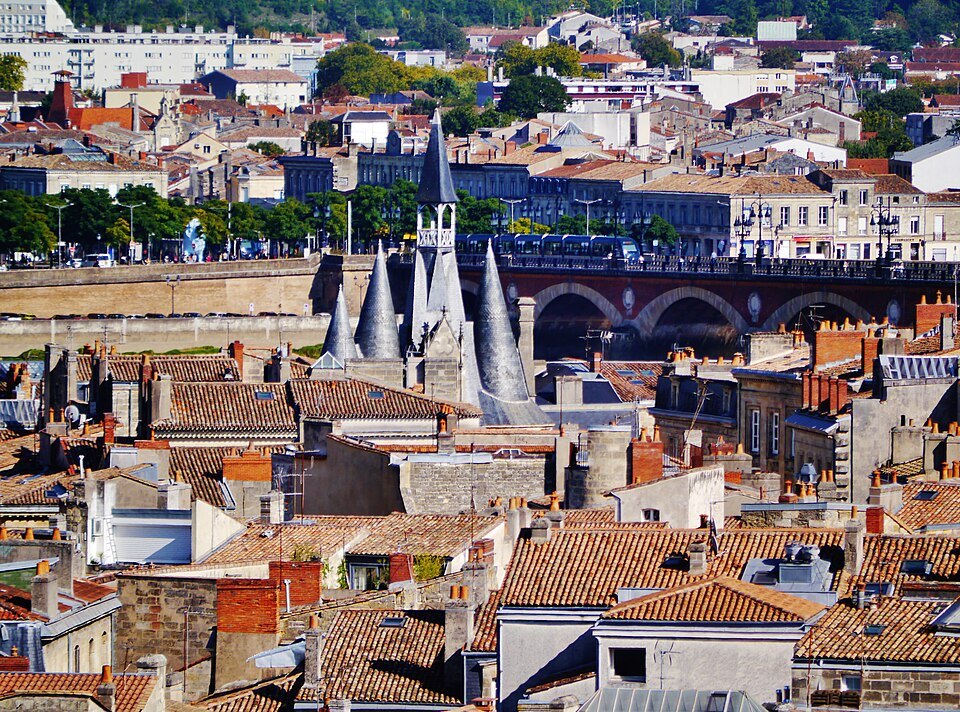
The story most visitors are told is that the bridge has seventeen arches because the name Napoléon Bonaparte has seventeen letters. It is a tidy story and a false one: the arch count came down from nineteen to seventeen in 1819, on grounds of cost and engineering, well after Napoleon's fall from power. A second story, about a Spanish resistance fighter who is said to have disarmed German explosives on the bridge in August 1944, has more truth in it: a man did die near the bridge that day, though historians now think the rescue itself was embellished in the retelling.
Neither story needs repeating as fact to a traveler standing on the bridge, but both are worth knowing, since guides and plaques around the city still repeat them.
The bridge in use today
The city bought out the toll in 1863, and the bridge was widened in 1954, when the toll pavilions were removed. It remained the only road bridge in Bordeaux until the Pont Saint-Jean opened in 1965, and it has since been joined by others described in the article on getting around the city. Since 2018 the Pont de Pierre has been closed to private cars and reserved for trams, bicycles and pedestrians, with exceptions for buses, taxis and emergency vehicles, and a tram line crosses it between the Porte de Bourgogne and the Place Stalingrad.
Two piers settled noticeably in the early 1990s and were reinforced soon after, and the city has since raised funds and planned a fuller renovation. Visitors should expect sections of the deck to be fenced off for works from time to time; anyone planning a specific photograph or crossing is better off checking current conditions with the tourist office or city hall before relying on the bridge being fully open.
How to visit
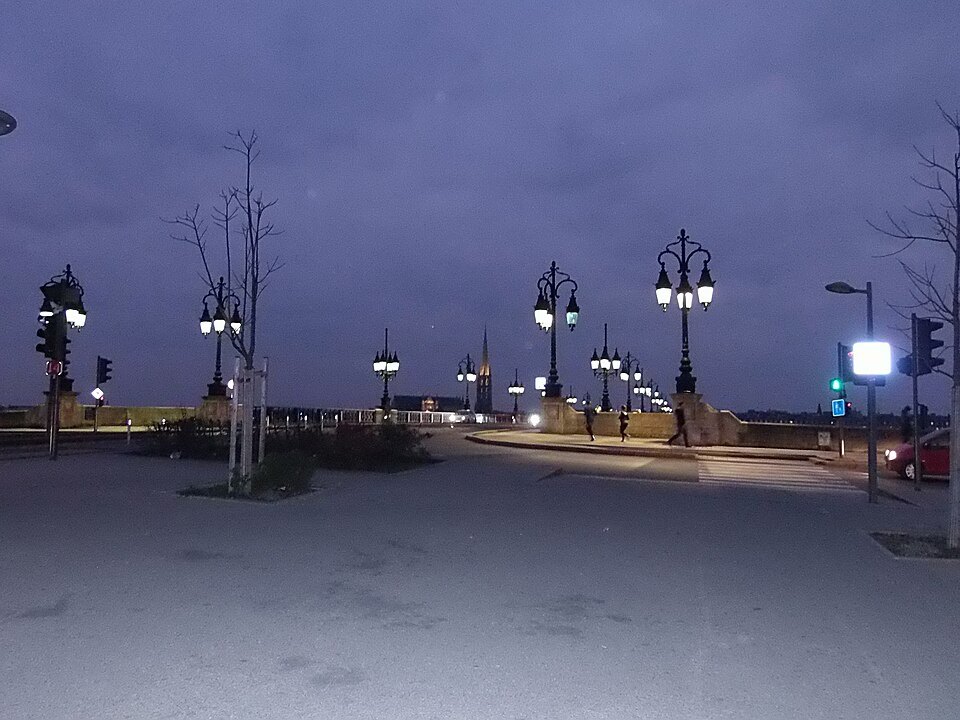
There is nothing to book and nothing to pay to walk across. The crossing takes about twenty minutes without stopping, longer with the views, and is loveliest early in the morning or at dusk, when the lamps are lit and the bridge becomes one of the defining images of the city, alongside the Place de la Bourse. Walking it is also the best way to take in the whole curve of the Port of the Moon from the water.
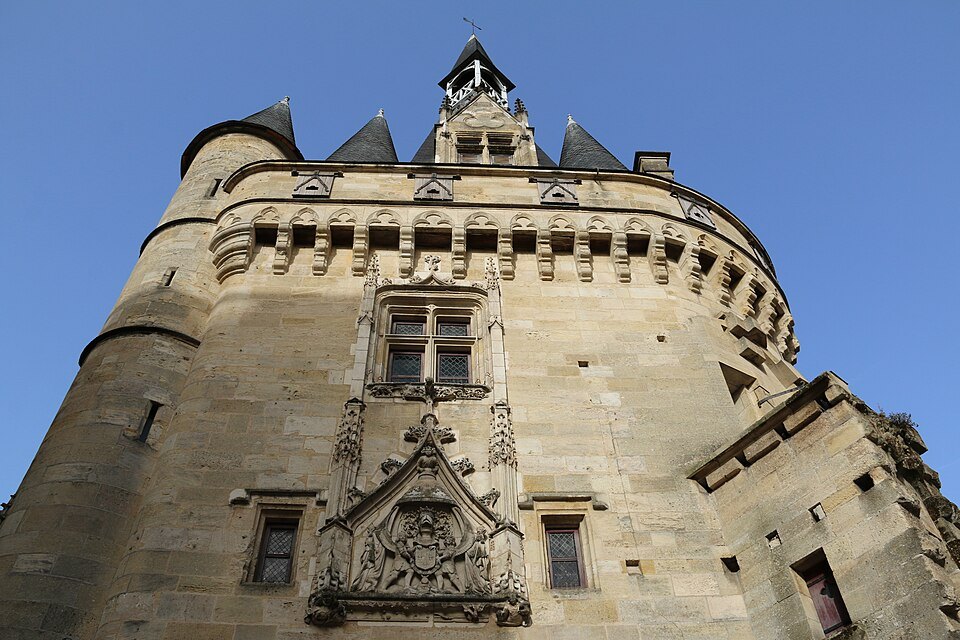
From the left bank end, the Porte Cailhau is a short walk downstream, and the eighteenth-century Porte de Bourgogne stands right at the foot of the bridge. For a view of the arches from below, come down to the quay at the left-bank end rather than staying on the deck.
More from the journal
- The Port of the MoonWhy is Bordeaux called the Port of the Moon?The name comes from the crescent-shaped bend of the Garonne, and it runs from the medieval arms of the city to its modern logo and its UNESCO listing. Here is where to see the curve, and why the river is the color of caramel.Read the piece
- Where to StayIs it worth staying on the right bank in La Bastide?A look at La Bastide across the Garonne, and whether its greener, quieter character suits a Bordeaux stay.Read the piece
- Getting AroundHow does the Bordeaux tram work for a visitor?A visitor's guide to Bordeaux's tram network: how it works, where to board, and how to pay for a ride.Read the piece