Can you visit the Grand Théâtre of Bordeaux without seeing a show?
How to see Victor Louis's neoclassical opera house, its façade, staircase and dome, without booking a seat for a show.
Read on
Yes, and more than a glance
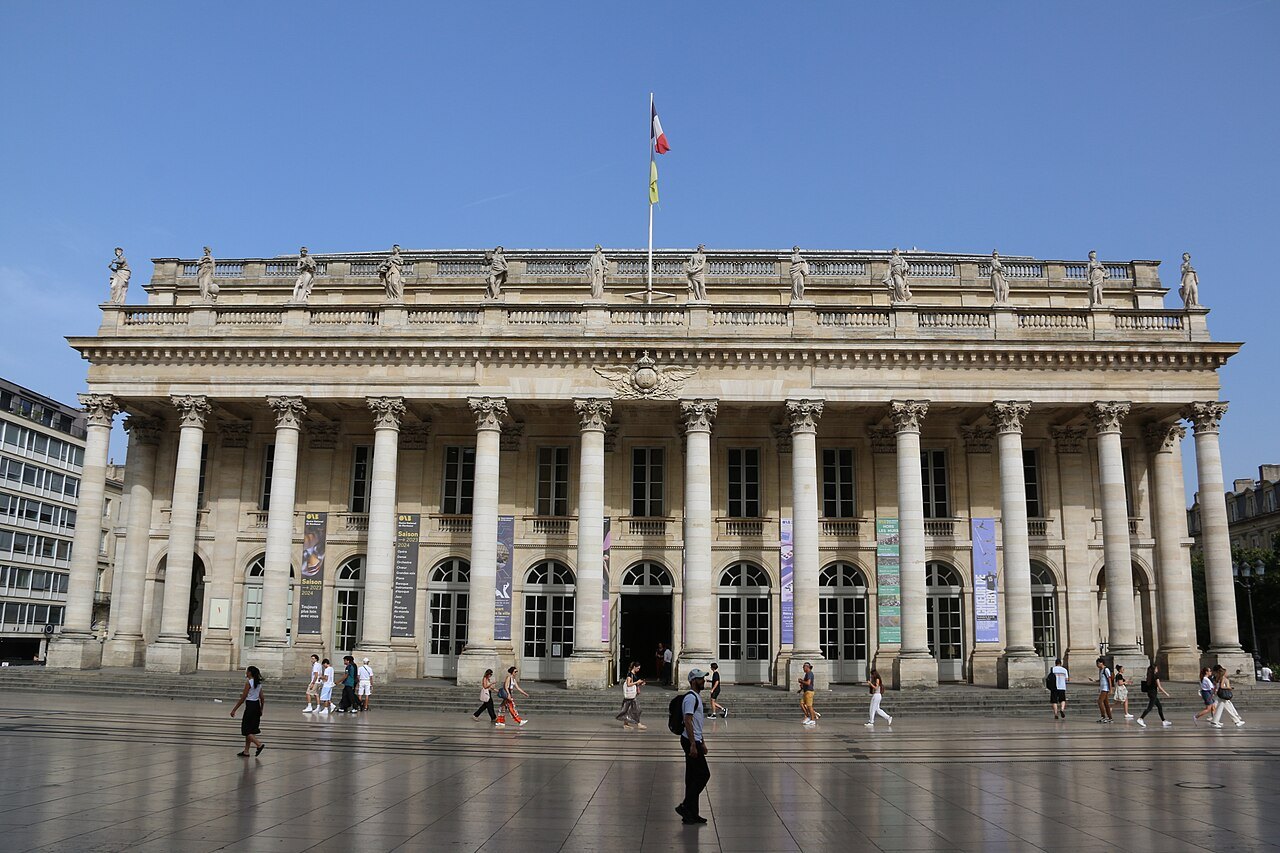
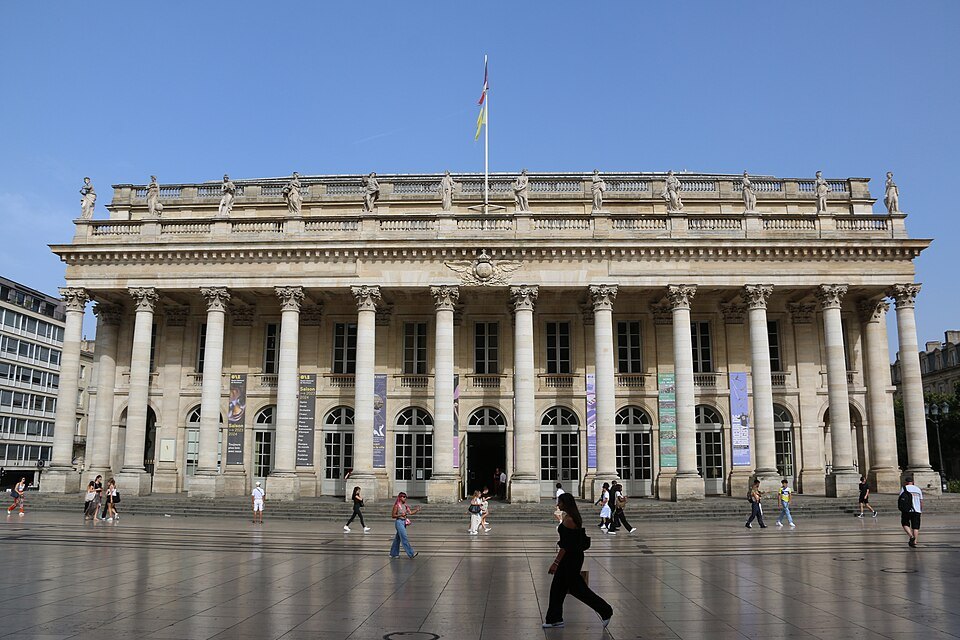
The Grand Théâtre is a working opera house, but it was also built as a place to be looked at and to walk around, and that half of its purpose is still open to anyone who turns up on the Place de la Comédie. The portico, the twelve statues, the side galleries and, on some days, the staircase and the auditorium itself can all be seen without a ticket to a performance.
What is harder to arrange without a show is the experience the building was designed to deliver: the auditorium lit, the dome overhead, the horseshoe of boxes full. Short of that, the structure still has a great deal to offer a visitor who only wants to look.
The façade, free and always there
Stand back on the square itself, the single best vantage point. The twelve Corinthian columns carry an entablature topped by twelve stone statues over two meters tall: the nine Muses of Greek myth and three Roman goddesses, Juno, Venus and Minerva. Four were carved by the sculptor Pierre-François Berruer and the rest by his assistant Van den Drix, working from his models.
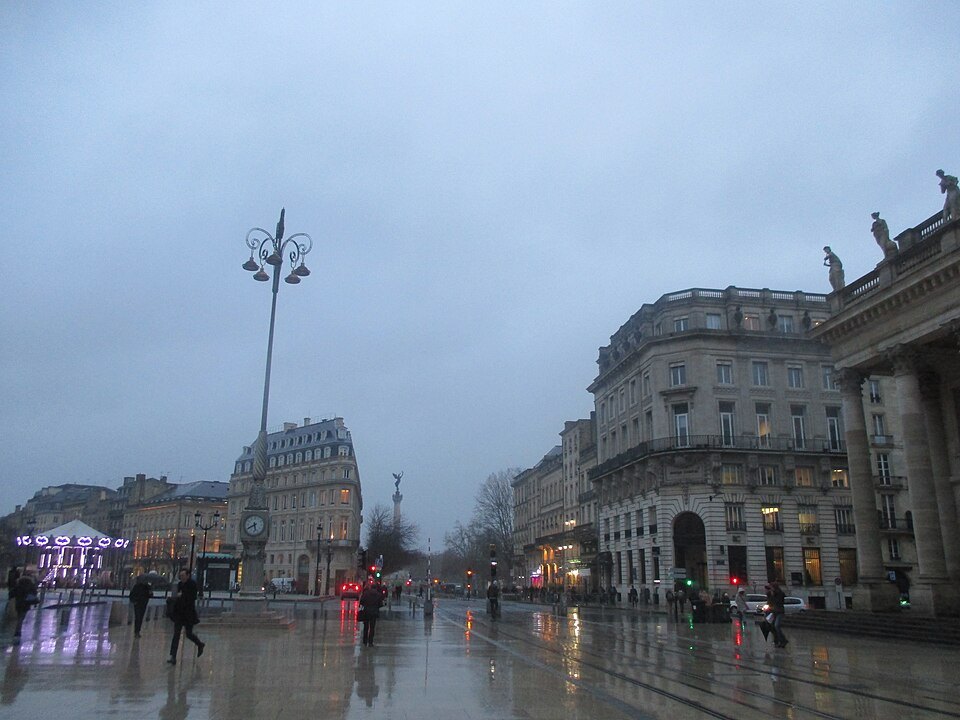
The flight of steps now leading up to the portico was not part of Victor Louis's original design; it was added in 1848, when the square was lowered, since originally the theater and the square sat at the same level. The side galleries, built to hold shops, are worth a walk in their own right: this was meant as a place to stroll and meet, with cafés and apartments as well as a stage, and hawkers once worked the spaces between the columns.
Late afternoon is the best time to see the front, when the light sits on the stone and the colonnade throws deep shadow across the steps. Twenty minutes is enough to take in the portico and the square properly.
Getting inside without a performance
The Opéra National de Bordeaux, which uses the building for its opera and ballet seasons, also runs guided tours of the theater on certain days. These are the way to see the grand staircase, the auditorium and the painted dome without buying a seat for a show, but the program changes, so check directly with the opera house for current dates and how to join.
The staircase itself is one of the building's set pieces: three flights rising to a landing and a great door framed by two caryatids carved by Berruer, representing Thalia and Melpomene, then dividing into two ramps toward the auditorium and the foyer. Charles Garnier studied this staircase before designing the Paris Opéra, and a later director of that house said Victor Louis had already invented almost everything Garnier went on to develop.
Inside the horseshoe-shaped auditorium, decorated in blue, white and gold, the dome shows Apollo and the Muses accepting a temple dedicated by the city of Bordeaux, a scene that also pictures the city's sources of wealth: sea trade, wine, and enslaved people. What visitors see today is not Jean-Baptiste-Claude Robin's original work, blackened by candle smoke over the years, but a faithful copy painted by Maurice Roganeau in 1917.
What a performance adds
A performance remains the only way to see the auditorium as it was meant to be used, lit for an evening rather than for a daytime tour, with the dome and the boxes full around the stage. The opera and ballet seasons are announced by the Opéra National de Bordeaux, and popular evenings sell out well ahead, so anyone set on a particular date should see booking ahead rather than hope to buy at the door.
The theater has real weight in the history of both forms: the ballet La Fille mal gardée had its premiere here in 1789, and a young Marius Petipa staged some of his first work on this stage. The concert room, remade in the 1860s by Charles Burguet, has its own ceiling, an oval painting of Apollo among the gods of Olympus by William Bouguereau, ringed by medallion portraits of composers including Mozart, Rossini, Beethoven and Meyerbeer.
Making the most of a visit without a seat
Pair the outside of the theater with the rest of the square and its surroundings. Rue Sainte-Catherine, the city's long shopping street, begins right at the Grand Théâtre, and the Grand Théâtre tram stop sits just off the square on the cours de l'Intendance, making this an easy stop to combine with a wider walk through the center; for how the tram network fits together, see getting around.
The Esplanade des Quinconces and the Place de la Bourse are both within a few minutes on foot, so a visit to the theater's exterior can be the midpoint of a longer walk through eighteenth-century Bordeaux rather than a destination on its own.
Anyone drawn to the building's history should also look for the statue of Victor Louis in the vestibule during a guided tour, carved in dark volcanic stone for the theater's centenary. It shows him slender and refined; contemporaries described him as stocky and round-faced, a reminder that even the building's own tributes take some liberties.
Honest notes
Sources differ on the exact opening date in April 1780, giving either the seventh or the seventeenth; both agree only on the month. The ceiling now seen in the auditorium is Roganeau's 1917 copy rather than Robin's original, and the vestibule statue of the architect is more flattering than accurate. None of this affects what a visitor without a ticket can see of the façade, the galleries, or, on the right day, the staircase and auditorium.
More from the journal
- Where to StayWhich area of Bordeaux is best for a first visit?A guide to Bordeaux's districts, from the lively old town to quieter riverside and residential quarters, for first-time visitors.Read the piece
- Getting AroundHow does the Bordeaux tram work for a visitor?A visitor's guide to Bordeaux's tram network: how it works, where to board, and how to pay for a ride.Read the piece
- The Esplanade des Quinconces and the Monument aux GirondinsWhat does the Monument aux Girondins commemorate?The story behind the tall column at the Quinconces, the Girondin deputies it honors, and its empty niches.Read the piece